



Strategies to Defend Against UDAAP Claims for Consumer Credit Products?
For over two decades in the consumer finance legal landscape, I've witnessed firsthand how a single Unfair, Deceptive, or Abusive Acts or Practices (UDAAP) claim can unravel years of hard work, erode consumer trust, and lead to crippling penalties. The regulatory scrutiny, particularly from bodies like the CFPB, has never been more intense, making robust defense strategies not just advisable, but absolutely essential for any entity operating in the consumer credit space.
The challenge isn't merely about avoiding overt fraud; it's about navigating the nuanced interpretations of 'unfairness,' 'deception,' and 'abusiveness' that can be applied to everything from marketing materials and disclosures to servicing practices and collections. Many businesses, despite their best intentions, find themselves blindsided by claims stemming from practices they considered standard, or from communication gaps they didn't even realize existed.
In this comprehensive guide, I will share the frameworks, actionable steps, and expert insights I've developed and refined over my career. My goal is to equip you with the knowledge to not only understand the intricacies of UDAAP but to proactively build an ironclad defense, mitigate risks, and confidently navigate the complex world of consumer credit compliance.
Understanding the UDAAP Landscape: More Than Just Regulations
Before we delve into specific defensive strategies, it’s crucial to grasp the expansive and often subjective nature of UDAAP. Originating from the Dodd-Frank Act, UDAAP prohibitions empower regulators to police a broad spectrum of practices deemed harmful to consumers, even if they don't violate other specific laws.
An act or practice can be considered unfair if it causes substantial injury to consumers that is not reasonably avoidable by consumers themselves and not outweighed by countervailing benefits to consumers or competition. Deceptive acts or practices involve a representation, omission, or practice that is likely to mislead a consumer acting reasonably under the circumstances, and that is material. Finally, abusive acts or practices materially interfere with a consumer’s ability to understand a term or condition of a financial product or service, or take unreasonable advantage of a consumer’s lack of understanding, inability to protect their interests, or reasonable reliance on a covered person to act in their interests.
The sheer breadth of these definitions means that almost any aspect of your consumer credit product lifecycle – from initial advertising to final collection – can come under scrutiny. This isn't just about ticking boxes; it's about cultivating a deep understanding of consumer perception and potential harm. As a seasoned legal professional, I've seen how easily a seemingly innocuous marketing phrase or a standard operational procedure can be reinterpreted in the light of a consumer complaint, transforming into a significant UDAAP vulnerability. It’s a constant tightrope walk, demanding vigilance and a proactive compliance culture.
Proactive Compliance: Building an Impenetrable First Line of Defense
The best defense against UDAAP claims is a robust, proactive compliance program. This isn't a one-time setup; it's an ongoing commitment to embedding a compliance mindset into every facet of your organization. I've often advised clients that compliance should be a strategic advantage, not just a cost center.
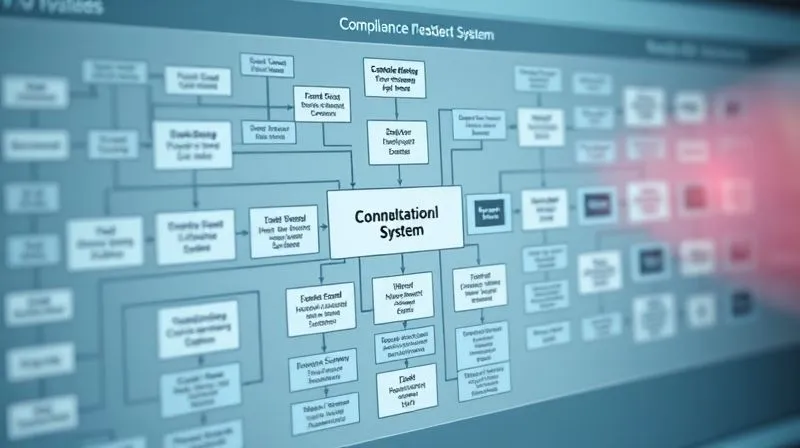
Establishing a Comprehensive Compliance Management System (CMS)
Your CMS is the backbone of your UDAAP defense. It needs to be tailored to your specific products and services, reflecting the unique risks you face. Here's how to build it:
- Risk Assessment: Conduct regular, thorough assessments to identify UDAAP risks across all product lifecycles – from design and marketing to servicing and collections. Document potential consumer harm points.
- Policy & Procedure Development: Create clear, concise, and enforceable policies and procedures that address identified risks. These should be regularly reviewed and updated to reflect regulatory changes and internal findings.
- Training & Communication: Implement mandatory, recurring training for all employees, especially those in consumer-facing roles. Training should cover UDAAP definitions, examples, and company-specific policies. Emphasize the 'why' behind compliance.
- Monitoring & Testing: Establish mechanisms for continuous monitoring of compliance with policies and procedures. This includes internal audits, quality assurance reviews of calls and communications, and transactional testing.
- Corrective Action: Define clear processes for addressing identified deficiencies, implementing corrective actions, and tracking their effectiveness.
"A UDAAP claim often begins with a systemic failure, not an isolated incident. Your compliance management system must be designed to catch and correct these systemic issues before they escalate." - Industry Specialist Insight
The Power of Documentation: Your Unsung Hero in UDAAP Defense
In any legal challenge, the adage holds true: 'If it wasn't documented, it didn't happen.' This is acutely relevant for UDAAP claims. Meticulous and consistent documentation provides the evidentiary trail necessary to demonstrate compliance and refute allegations of unfair, deceptive, or abusive practices. I've personally seen cases turn entirely on the strength – or weakness – of a company's records.
What to Document and How to Maintain It
- Product Development & Review: Document all stages of product design, including legal and compliance reviews of terms, conditions, disclosures, and marketing materials. Keep records of changes and rationales.
- Marketing & Advertising: Retain copies of all advertisements, promotional materials, scripts, and digital content. Document the channels used and the target audience. Prove that claims were substantiated at the time of publication.
- Consumer Communications: Record all interactions with consumers – call recordings, email correspondence, chat logs, physical mail. Ensure these are easily retrievable and securely stored.
- Policy & Procedure Implementation: Document the rollout of new policies, employee training completion records, and audit findings.
- Complaint Management: Detailed records of every complaint received, the investigation conducted, the resolution offered, and consumer acceptance/rejection.
The key here is not just collecting data, but organizing it in a way that allows for rapid retrieval and clear presentation. Regulators and litigators will demand proof, and your ability to quickly produce comprehensive, timestamped documentation can significantly strengthen your position.
Effective Communication & Transparency: A Shield Against Deception Allegations
Many UDAAP claims, particularly those alleging 'deception,' stem from perceived lack of transparency or misleading communication. As a legal expert, I advocate for a “radical transparency” approach, especially for consumer credit products where terms can be complex. Clarity isn't just good customer service; it's a potent legal defense.
Best Practices for Transparent Consumer Communication
- Plain Language Disclosures: Avoid legal jargon. Present key terms, fees, interest rates, and potential risks in clear, concise language that the average consumer can easily understand. Use visual aids where helpful.
- Prominent Placement: Ensure all material terms and disclosures are prominently displayed, not buried in fine print or obscure links. The 'reasonable consumer' standard implies that critical information should be easily discoverable.
- Consistent Messaging: Verify that messaging across all channels (website, ads, customer service scripts, contracts) is consistent and accurate. Inconsistencies are a red flag for deception.
- Proactive Clarification: Anticipate potential areas of confusion and proactively address them in your communications. FAQs, explainer videos, or dedicated sections on your website can be invaluable.
Case Study: How ClearCredit Inc. Mitigated Deception Claims
ClearCredit Inc., a mid-sized online lender, faced a surge of consumer complaints alleging deceptive practices regarding their loan origination fees. Consumers felt these fees were not adequately disclosed. By implementing a revised disclosure strategy, ClearCredit Inc. developed a 'Key Terms Summary' document, presenting all fees in a large, easy-to-read table at the beginning of the loan application process, alongside a simple visual breakdown. They also updated their call center scripts to ensure agents verbally confirmed understanding of these fees. Within six months, new deception-based UDAAP complaints related to fees dropped by 70%, demonstrating the direct impact of enhanced transparency.
Robust Complaint Management: Turning Grievances into Insights
Consumer complaints are not just annoyances; they are invaluable early warning signals for potential UDAAP issues. A well-structured complaint management system is a critical component of your defense strategy, allowing you to identify and address problems before they escalate into regulatory actions or class-action lawsuits. I've often told clients that every complaint is a free consultation on where their vulnerabilities lie.
Key Elements of an Effective Complaint Management System
- Accessibility & Ease of Submission: Make it easy for consumers to submit complaints through various channels (phone, email, web form, mail).
- Prompt Acknowledgment & Resolution: Acknowledge receipt of complaints quickly and set clear internal timelines for investigation and resolution. Communicate progress to the consumer.
- Thorough Investigation: Each complaint should trigger a detailed investigation, gathering all relevant documentation and interviewing involved personnel.
- Root Cause Analysis: Don't just resolve the individual complaint; analyze the root cause. Is it an isolated incident, a training issue, a systemic process flaw, or a product design problem?
- Documentation & Reporting: Document every step of the complaint lifecycle. Regularly aggregate and analyze complaint data to identify trends and systemic issues.
According to a CFPB report on consumer complaints, recurring themes often highlight areas where industry practices may be perceived as unfair or deceptive. By proactively analyzing your own complaint data, you gain a significant advantage in anticipating regulatory concerns and refining your practices.
| Complaint Category | Volume (Q1) | Root Cause | Action Taken |
|---|---|---|---|
| Undisclosed Fees | 120 | Disclosure Placement | Revised Disclosure Form |
| Misleading Advertising | 85 | Marketing Script Ambiguity | Mandatory Script Review |
| Servicing Errors | 70 | Training Gap | Enhanced Agent Training |
| Collection Practices | 50 | Third-Party Vendor | Vendor Audit & Review |
Leveraging Data Analytics for Risk Identification and Mitigation
In the digital age, data is your greatest asset in defending against UDAAP claims. Advanced analytics can transform raw operational data into actionable insights, helping you identify potential UDAAP risks long before they manifest as consumer complaints or regulatory actions. I've seen companies with sophisticated data strategies pinpoint vulnerabilities that their competitors completely missed.
How to Implement Data-Driven UDAAP Risk Management
- Transactional Data Analysis: Analyze transaction patterns for anomalies. Are certain fees disproportionately impacting specific consumer segments? Are there unusual spikes in chargebacks or disputes related to specific product features?
- Communication Analytics: Use natural language processing (NLP) on recorded calls, emails, and chat logs to detect keywords or phrases associated with UDAAP risk (e.g., 'didn't understand,' 'misled,' 'hidden fees').
- Website & App User Experience (UX) Analytics: Track user journeys on your digital platforms. Are consumers struggling to find disclosures? Are they abandoning applications at specific points, potentially due to confusing terms?
- Sentiment Analysis: Monitor social media, review sites, and public forums for negative sentiment related to your products or practices. This can provide an early warning system for broader consumer dissatisfaction.
- Predictive Modeling: Develop models that predict which product features, marketing campaigns, or servicing practices are most likely to generate UDAAP complaints based on historical data.
The ability to quantify and visualize potential UDAAP risks allows you to prioritize remediation efforts and demonstrate to regulators that you are proactively managing your compliance obligations. This forward-looking approach is a hallmark of sophisticated UDAAP defense.
When a Claim Arises: Strategic Response and Litigation Preparedness
Despite the most robust proactive measures, UDAAP claims can still arise. When they do, your response strategy is paramount. A poorly handled initial response can significantly exacerbate the situation, whereas a well-orchestrated defense can mitigate harm and preserve your reputation. Having been involved in numerous UDAAP litigations, I can attest that preparedness is half the battle.
Key Steps for Responding to UDAAP Claims
- Immediate Internal Review: Convene your UDAAP response team (legal, compliance, product, operations) to conduct a rapid, objective internal investigation. Gather all relevant documentation.
- Legal Counsel Engagement: Engage experienced legal counsel specializing in consumer finance and UDAAP defense immediately. Their expertise is invaluable in navigating regulatory inquiries or litigation.
- Cooperation with Regulators (if applicable): If a regulatory body like the Federal Reserve or CFPB initiates an inquiry, cooperate fully and transparently, but always through counsel.
- Settlement vs. Litigation Analysis: Carefully weigh the costs, risks, and precedents of settlement versus litigation. Sometimes a strategic settlement is the most prudent course, but not always.
- Remediation & Future Prevention: Regardless of the outcome, use the claim as an opportunity to further strengthen your compliance program and prevent recurrence.
"The moment a UDAAP claim lands on your desk is not the time to start building your defense. It's the moment to execute a pre-planned, well-rehearsed strategy." - Industry Specialist Insight

Continuous Monitoring & Adaptation: Staying Ahead of the Curve
The consumer finance landscape is dynamic, with regulations, consumer expectations, and technological advancements constantly evolving. What constitutes 'unfair' or 'deceptive' today might shift tomorrow. Therefore, your UDAAP defense strategies cannot be static; they must be subject to continuous monitoring and adaptation. My experience teaches me that complacency is the greatest risk.
Strategies for Ongoing UDAAP Vigilance
- Regulatory Tracking: Dedicate resources to continuously monitor new legislative developments, regulatory guidance, and enforcement actions from agencies like the CFPB, OCC, and state attorneys general.
- Industry Best Practices: Stay abreast of evolving industry best practices for disclosures, marketing, and servicing. Participate in industry associations and forums.
- Technology Integration: Explore new compliance technologies (RegTech) that can automate monitoring, enhance data analysis, and streamline documentation.
- Periodic External Audits: Complement internal monitoring with independent external audits of your UDAAP compliance program. An objective third-party perspective can identify blind spots.
- Consumer Feedback Loops: Beyond formal complaints, actively solicit and analyze consumer feedback through surveys, focus groups, and usability testing to gauge perception of fairness and clarity.
This iterative process of monitoring, assessing, and adapting ensures that your defense against UDAAP claims remains robust and relevant in an ever-changing environment. It transforms compliance from a reactive burden into a proactive, strategic advantage that protects your business and fosters consumer trust. For further insights into the evolving regulatory environment, I often refer to detailed analyses from leading legal and compliance firms, such as those published by The American Bar Association's Business Law Section.
Frequently Asked Questions (FAQ)
What is the primary difference between 'unfair,' 'deceptive,' and 'abusive' practices? While often grouped, they have distinct legal definitions. 'Unfair' practices cause substantial, unavoidable consumer injury not outweighed by benefits. 'Deceptive' practices involve misleading representations or omissions material to a consumer's decision. 'Abusive' practices materially interfere with a consumer's ability to understand a term or condition of a financial product or service, or take unreasonable advantage of their vulnerabilities. Understanding these nuances is critical for targeted defense.
Can an unintentional error lead to a UDAAP claim? Absolutely. Intent is not always a prerequisite for a UDAAP violation, especially for 'unfair' and 'deceptive' acts. Regulators often focus on the impact on the consumer, regardless of the company's intent. This is why robust processes, documentation, and continuous monitoring are so vital.
How do state UDAAP laws interact with federal UDAAP regulations? State UDAAP laws (often called 'Little FTC Acts') can be broader or have different enforcement mechanisms than federal UDAAP. Compliance with federal law does not automatically guarantee compliance with all state laws. Companies operating across state lines must understand and adhere to the most stringent applicable requirements, which often means maintaining a multi-layered compliance framework.
What role does third-party vendor management play in UDAAP defense? A significant one. Financial institutions are generally held responsible for the UDAAP compliance of their third-party vendors (e.g., servicers, marketers, debt collectors). Robust vendor due diligence, clear contractual obligations regarding UDAAP, and ongoing monitoring of vendor performance are essential to mitigate this extended risk.
How can small businesses or fintechs with limited resources effectively defend against UDAAP? While resources may be limited, the principles remain the same. Focus on foundational elements: clear, simple disclosures; documented processes; effective complaint handling; and regular, basic training. Leverage accessible resources like CFPB guidance and industry associations. Consider cost-effective RegTech solutions and prioritize legal counsel for high-risk areas. The goal is to build a scalable, defensible framework.
Key Takeaways and Final Thoughts
- Proactive Compliance is Non-Negotiable: Build a robust CMS, embed compliance culture, and conduct regular risk assessments.
- Documentation is Your Best Friend: Meticulously record every step of your product lifecycle and consumer interactions.
- Transparency Builds Trust & Defense: Use plain language, prominent disclosures, and consistent messaging.
- Embrace Complaints as Learning Opportunities: Implement a strong complaint management system and use root cause analysis.
- Leverage Data for Early Warning: Utilize analytics to identify UDAAP risks before they escalate.
- Be Prepared for the Inevitable: Have a strategic response plan ready for when claims arise.
- Stay Agile: Continuously monitor regulatory changes and adapt your strategies.
Defending against UDAAP claims for consumer credit products is an ongoing journey, not a destination. It demands vigilance, integrity, and a deep commitment to consumer protection. By embracing these strategies, you not only protect your business from significant legal and financial repercussions but also build a reputation for trustworthiness and ethical practice – assets far more valuable than any short-term gain. I urge you to review your current practices against these insights and take decisive action to fortify your defenses. The future of your financial service hinges on it.
Recommended Reading
- Denied Naturalization? 5 Steps to Appeal Minor Offense Cases
- Can Drug Addiction Be a Defense? Unlocking Its Impact on Criminal Cases
- 6 Steps: Reconciling Conflicting Legal ESG Reporting Frameworks
- 5 Critical Steps: Ensuring Digital Evidence Admissibility in Cybercrime Trials
- 7 Steps: Ensuring School Board Compliance with New Open Meeting Laws





Comments
Leave a comment below. Your email will not be published. Required fields marked with *