



Urgent Legal Advice for Sports Team Stadium Lease Disagreement?
For over two decades in the intricate world of sports law, I've witnessed firsthand the often-catastrophic fallout when sports team ownership groups face a critical stadium lease disagreement. It's not just a commercial dispute; it's a battle for the very soul and future of a franchise, impacting everything from fan loyalty to player recruitment.
The stakes in these conflicts are astronomically high. A stadium isn't just a building; it's the beating heart of a sports team, a multi-million-dollar asset, and a cultural cornerstone for its city. When the foundational agreement governing its use begins to fracture, the ripple effects can threaten financial stability, brand reputation, and even the team's ability to compete. This isn't merely about contract clauses; it's about navigating complex relationships, public perception, and the future viability of an entire enterprise.
In this comprehensive guide, I'll walk you through the essential legal frameworks, strategic considerations, and proactive measures crucial for any sports team owner grappling with a stadium lease disagreement. You'll gain expert insights into identifying the root causes, crafting robust negotiation strategies, understanding litigation pathways, and ultimately, protecting your team's legacy. My goal is to equip you with the knowledge to transform a potential crisis into a controlled, strategic resolution.
Understanding the Anatomy of a Sports Stadium Lease
Before diving into dispute resolution, it's paramount to understand the intricate beast that is a sports stadium lease. These aren't your typical commercial property agreements; they are bespoke, multi-faceted documents often spanning hundreds of pages, replete with unique clauses tailored to the specific demands of professional sports. I've seen countless teams overlook critical details during the initial signing, only for those oversights to become monumental liabilities years down the line.
Key Clauses Often Ignored (Until They're Problems)
Many disagreements stem from a misunderstanding or misinterpretation of specific lease provisions. Here are some of the most common flashpoints I encounter:
- Rent & Revenue Sharing: Beyond base rent, look for clauses governing concession revenue, parking, naming rights, signage, premium seating, and non-game day events. Disputes frequently arise over how these revenues are calculated and distributed.
- Maintenance & Capital Improvements: Who is responsible for routine upkeep versus major structural repairs or upgrades? Ambiguity here can lead to massive cost disputes, especially as stadiums age.
- Exclusivity & Competing Events: Does the lease grant the team exclusive use for certain dates or types of events? Conflicts can emerge if the landlord books competing events or restricts team-generated revenue opportunities.
- Termination & Relocation: These are the 'nuclear options.' Understanding the conditions under which either party can terminate the lease, the penalties involved, and any relocation clauses (often tied to specific geographic areas) is absolutely critical.
- Force Majeure: The 'act of God' clause has become increasingly relevant. Does it adequately cover pandemics, natural disasters, or other unforeseen events that impact game schedules and revenue?
- Dispute Resolution Mechanisms: Many leases stipulate mediation or arbitration before litigation. Ignoring these can prejudice your case if you jump straight to court.
In my experience, a significant percentage of stadium lease disagreements could be mitigated or even avoided entirely if ownership groups conducted thorough, independent legal due diligence on every single clause, not just the headline terms, before signing. The devil truly is in the details, and those details are often worth hundreds of millions of dollars.
Initial Steps: Identifying the Root Cause of the Disagreement
When a stadium lease dispute arises, the immediate impulse might be to react defensively. However, the most effective first step is to pause, gather information, and meticulously identify the true root cause of the disagreement. Is it a genuine breach of contract, a difference in interpretation, a financial squeeze on one side, or perhaps a change in strategic direction? Without this clarity, any legal or negotiation strategy will be built on shaky ground.
- Internal Document Review: Assemble all relevant documents: the original lease agreement, all amendments, correspondence, financial statements related to revenue sharing, maintenance records, and any internal memos pertaining to the dispute. Create a chronological timeline of events.
- Stakeholder Interviews: Speak with key personnel from your organization – finance, operations, legal, and even coaching staff if their input is relevant to stadium usage. Gather their perspectives and any unrecorded information.
- Legal Counsel Consultation: Engage experienced sports law counsel immediately. Their objective analysis of the lease terms against the facts will be invaluable in determining the strength of your position and identifying potential vulnerabilities.
- Independent Expert Assessment: For issues involving stadium condition, valuation, or complex financial calculations (e.g., revenue sharing), consider bringing in independent engineers, appraisers, or forensic accountants. Their expert reports can provide irrefutable evidence.
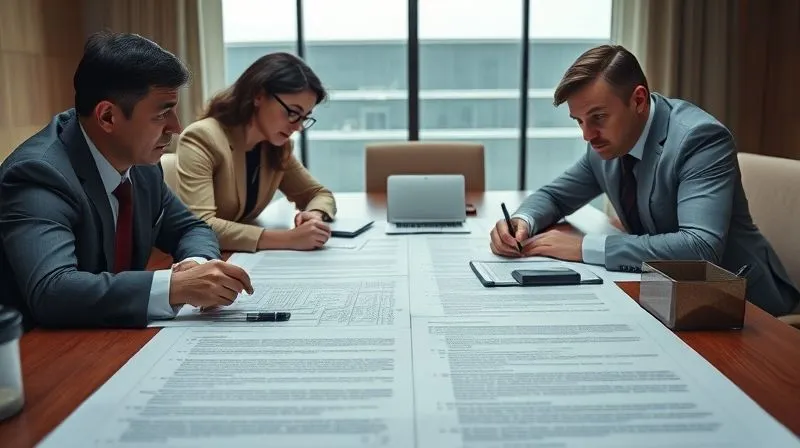
According to a study by Deloitte's Sports Business Group, the average value of a top-tier stadium lease for a major league team can exceed $1 billion over its lifetime, underscoring why meticulous analysis of every clause is not just advisable, but essential. Missing a single detail can have nine-figure consequences.
Pre-Litigation Strategies: Negotiation and Mediation
My advice, almost without exception, is to exhaust all avenues for amicable resolution before resorting to costly and public litigation. Court battles are not only expensive and time-consuming but can also irreparably damage the relationship between a team and its venue owner, and often, the team's public image. Negotiation and mediation offer structured pathways to find common ground.
Crafting a Strong Negotiation Position
Successful negotiation isn't about aggression; it's about preparation, leverage, and understanding the other party's motivations. I always advise my clients to build their negotiation strategy on a foundation of clarity and multiple options.
- Identify Your 'Walk-Away' Point: Know your absolute minimum acceptable outcome and be prepared to disengage if it's not met.
- Understand the Other Party's Interests: What does the stadium landlord truly want? Is it more revenue, better public relations, a specific event schedule, or risk mitigation? Tailor your proposals to address their underlying needs.
- Develop Multiple Scenarios: Don't just have one solution. Prepare several alternative proposals that offer varying levels of compromise, allowing for flexibility during discussions.
- Leverage External Factors: Public opinion, potential alternative venues, or even pending legislative changes can all be sources of leverage. Use them strategically.
| Leverage Point | Strategic Use |
|---|---|
| Financial Data & Projections | Demonstrate impact of current dispute on team/landlord revenue, propose mutually beneficial adjustments. |
| Public Relations & Fan Base | Highlight potential negative publicity of dispute, emphasize shared interest in positive fan experience. |
| Alternative Venue Options | Show readiness to explore other options, increasing pressure on landlord for favorable terms. |
| Legal Precedent & Case Strength | Present strong legal arguments, outlining risks/costs of litigation for the landlord. |
The Power of Professional Mediation
If direct negotiations stall, professional mediation is often the next logical step. A neutral, third-party mediator can facilitate communication, identify areas of compromise, and guide both parties toward a mutually acceptable resolution. Unlike arbitration, mediation is non-binding, allowing both sides to retain control over the outcome. It's particularly effective in complex sports lease disputes because it allows for creative, business-focused solutions that a court might not be able to order.
When Litigation Looms: Preparing for Battle
Despite best efforts, sometimes litigation becomes unavoidable. This is often the case when there's a fundamental disagreement over contract interpretation, significant financial damages are at stake, or one party is simply unwilling to negotiate in good faith. When you find yourself on this path, preparation is your strongest weapon.
Building Your Legal Dream Team
For a stadium lease dispute, you don't just need a lawyer; you need a specialized team. I've found that the most successful litigation efforts involve a multidisciplinary approach.
- Sports Law Specialist: Someone with deep expertise in the unique legal and commercial landscape of professional sports.
- Real Estate Litigator: An attorney experienced in complex commercial property disputes, especially those involving large-scale venues.
- Contract Law Expert: To dissect the lease agreement and identify breaches, ambiguities, and potential remedies.
- Forensic Accountant/Financial Analyst: Crucial for calculating damages, proving financial impact, or scrutinizing the opposing party's claims.
- Public Relations Consultant: To manage the narrative and protect the team's brand during what will likely be a public battle.

Case Study: The 'Arena Alliance' Dispute
Consider the fictional 'Arena Alliance' case, a dispute between the fictional 'Metropolitan Mavericks' basketball team and 'City Sports Holdings,' the stadium owner. The Mavericks faced a 20% increase in their annual lease payments, citing a 'market adjustment clause.' City Sports Holdings claimed the clause allowed for unilateral increases based on external market data. The Mavericks, however, argued that the clause required mutual agreement and specific economic triggers. By meticulously reviewing historical correspondence and industry norms, the Mavericks' legal team discovered that the clause had been consistently interpreted as requiring negotiation for over a decade. They presented a compelling case built on precedent and the implied covenant of good faith and fair dealing. This proactive legal stance, backed by strong evidence, led City Sports Holdings to agree to mediation, where a revised, mutually agreeable payment structure was established, averting a costly and damaging court battle. This demonstrated the power of deep contractual analysis and strategic use of historical context.
Critical Legal Avenues and Remedies
When legal action is pursued, understanding the available remedies is crucial. The goal isn't just to win, but to achieve a specific, beneficial outcome for the team.
Declaratory Judgments and Injunctive Relief
Often, the first step in a stadium lease dispute is to seek a declaratory judgment. This is a court order that clarifies the rights and obligations of the parties under the lease agreement, without necessarily ordering any specific action or awarding damages. For instance, if there's ambiguity around who is responsible for a specific type of maintenance, a declaratory judgment can resolve that interpretation. As explained by the Legal Information Institute at Cornell Law School, it's a powerful tool for resolving uncertainties.
Injunctive relief, on the other hand, is a court order compelling a party to do something or to stop doing something. This could be critical if, for example, a stadium owner is threatening to lock out a team, or if a team is attempting to unilaterally relocate in violation of the lease. A temporary restraining order or a preliminary injunction can preserve the status quo until the core dispute is resolved, preventing irreparable harm.
Damages and Specific Performance
If a breach of contract has occurred and caused financial harm, the most common remedy is monetary damages. This can include direct damages (e.g., lost revenue from cancelled games due to stadium unavailability) and consequential damages (e.g., reputational harm or increased costs of finding an alternative venue). Calculating these damages accurately requires expert financial analysis.
Specific performance is a less common but powerful remedy where the court orders the breaching party to fulfill their contractual obligations exactly as agreed. This is particularly relevant in stadium lease disputes, as a team's primary interest is often to continue playing in its home venue, not just to receive money. If a stadium owner is refusing to perform essential maintenance, for instance, a court might order specific performance, compelling them to complete the repairs. However, courts are often reluctant to order specific performance for contracts involving ongoing services, making it a challenging remedy to obtain. For more on contract remedies, see resources like JSTOR articles on contract law.
| Remedy Type | Purpose | Use Case | Outcome |
|---|---|---|---|
| Declaratory Judgment | Clarify rights/obligations without ordering action | Interpret ambiguous lease clause (e.g., maintenance responsibility) | Legal certainty |
| Injunctive Relief | Compel or prohibit specific actions | Prevent lockout, stop unauthorized stadium use | Preserve status quo, prevent harm |
| Monetary Damages | Compensate for financial losses | Recover lost revenue from breach, cover relocation costs | Financial compensation |
| Specific Performance | Force party to fulfill contract terms | Compel stadium owner to complete repairs | Contractual compliance (rare for services) |
Protecting Your Team's Brand and Fan Base Amidst Conflict
Legal battles are rarely confined to the courtroom, especially in the high-profile world of professional sports. A stadium lease disagreement can quickly spill into the public domain, potentially alienating fans, damaging corporate sponsorships, and impacting player morale. As an expert, I can't stress enough the importance of a well-orchestrated public relations strategy alongside your legal efforts.
Strategic Communications During a Dispute
Maintaining control of the narrative is vital. Your communications strategy should be proactive, consistent, and empathetic.
- Designate a Single Spokesperson: Ensure all public statements come from one authoritative, knowledgeable individual to avoid conflicting messages.
- Be Transparent (Within Legal Limits): While you can't disclose every legal detail, be honest with your fan base about the challenges, emphasizing your commitment to the team and city.
- Focus on the Future: Reassure fans and stakeholders that the team's long-term future and commitment to winning remain paramount, regardless of the venue dispute.
- Engage Key Stakeholders: Communicate directly with sponsors, season ticket holders, and local government officials to keep them informed and maintain their support.
- Monitor Media & Social Media: Stay abreast of public perception and be prepared to respond to misinformation swiftly and professionally.

Long-Term Lease Management and Risk Mitigation
The best way to handle a stadium lease disagreement is to prevent it from escalating in the first place. Proactive, vigilant lease management is not just good practice; it's an absolute necessity for sports team owners. I've often advised clients that the initial signing is just the beginning of a long-term relationship that requires continuous oversight.
Proactive Lease Audits and Reviews
Regular, scheduled reviews of your stadium lease agreement can help identify potential issues before they become full-blown disputes.
- Annual Legal Review: Have your legal counsel review the entire lease annually for any clauses that might be nearing expiration, require renewal notices, or have become ambiguous due to changing circumstances.
- Financial Audit: Conduct regular audits of all revenue-sharing calculations, maintenance cost allocations, and other financial provisions to ensure compliance and identify discrepancies.
- Operational Compliance Checks: Ensure that both the team and the stadium owner are adhering to all operational clauses related to facility usage, event scheduling, and service level agreements.
- Communication Protocols: Establish clear, documented communication channels with the stadium owner for all issues, big or small. This creates a paper trail and fosters a cooperative environment.
- Anticipate Future Needs: Consider how potential future developments (e.g., expansion of the league, new technology, changes in fan experience expectations) might impact your lease and proactively discuss amendments.
A robust lease agreement isn't a static document; it's a living contract that requires constant attention. The most successful sports franchises view lease management as an ongoing, strategic function, not a reactive measure. This proactive approach is the hallmark of effective ownership.

As noted in various academic journals on real estate and contract law, the complexity of long-term commercial leases necessitates continuous monitoring and periodic renegotiation to adapt to evolving market conditions and operational needs. For sports stadiums, this dynamic is amplified by the public interest and high financial stakes.
Frequently Asked Questions (FAQ)
Question? What if our stadium lease disagreement involves a municipality or government entity as the landlord?
Detailed answer: When a government entity is involved, the complexities multiply. Public-private partnerships often come with additional layers of regulation, public transparency requirements, and political considerations. Your legal team must have experience navigating municipal law, public procurement, and administrative processes. The dispute might involve public hearings, specific public records requests, and a different set of political pressures than a dispute with a private landlord. Strategies might need to include public advocacy and lobbying alongside legal arguments.
Question? Can a stadium lease disagreement force a team to relocate to another city?
Detailed answer: Absolutely, this is one of the most severe potential outcomes. If a team cannot secure a viable lease agreement in its current market, or if the terms become financially unsustainable, relocation becomes a serious consideration. Many leases contain clauses that either restrict or permit relocation under certain conditions, often with significant penalties or buyouts. The threat of relocation is often a major leverage point in negotiations, but it's a drastic step with immense financial, legal, and public relations consequences, impacting fan loyalty and local economic ties.
Question? What role does public opinion play in resolving these disputes?
Detailed answer: Public opinion plays a colossal role. Sports teams are community assets, and stadium disputes can quickly become front-page news. Negative public sentiment can pressure both the team and the landlord, affect ticket sales, sponsorship deals, and even political will if public funds are involved. A strong public relations strategy, focused on transparency, community commitment, and reasonable resolution, is crucial. Ignoring public perception can severely undermine legal arguments and negotiation positions.
Question? Are there specific insurance policies that can mitigate risks associated with stadium lease disagreements?
Detailed answer: While there isn't a single 'stadium lease dispute insurance' policy, various types of insurance can indirectly mitigate related risks. Business interruption insurance can cover lost revenue if a dispute leads to stadium unavailability. Property insurance covers physical damage, which might be a point of contention in maintenance clauses. Additionally, some teams carry D&O (Directors and Officers) liability insurance that might cover legal costs for executives facing lawsuits related to lease mismanagement, though this is less direct. It's vital to review all existing policies with an expert to understand coverage gaps.
Question? How do changes in league rules or collective bargaining agreements (CBAs) impact stadium leases?
Detailed answer: Changes in league rules or CBAs can have significant, indirect impacts. For example, if a league mandates specific facility upgrades for player safety or broadcast technology, it can trigger disputes over who bears the cost under the lease's capital improvement clauses. Similarly, changes in game schedules or season length due to a CBA can affect revenue projections or facility availability, potentially conflicting with existing lease terms. It’s imperative that lease agreements anticipate these possibilities and include mechanisms for addressing future league/CBA mandates.
Key Takeaways and Final Thoughts
- Proactive Due Diligence is Paramount: Understand every clause of your lease, not just the obvious ones.
- Identify Root Causes Systematically: Don't react; investigate thoroughly before acting.
- Prioritize Amicable Resolution: Negotiation and mediation save time, money, and relationships.
- Build a Multidisciplinary Legal Team: Expertise in sports law, real estate, and finance is non-negotiable for litigation.
- Manage Public Perception: Control the narrative to protect your brand and fan base.
- Implement Continuous Lease Management: Regular audits and reviews prevent future disputes.
Navigating an urgent legal dispute over a sports team stadium lease is one of the most challenging hurdles an ownership group can face. It demands not only legal acumen but also strategic foresight, a deep understanding of the sports business landscape, and a commitment to preserving the team's long-term viability. By applying the expert advice and actionable frameworks I've outlined, you can approach these challenges with confidence, transforming potential crises into opportunities for stronger, more resilient operations. Remember, the goal is always to protect the heart of your franchise and ensure its continued success for generations of fans. Stay vigilant, stay prepared, and always seek specialized counsel when the stakes are this high. For further reading on the complex interplay of sports and law, consider exploring resources from institutions like the American Bar Association's Forum on the Entertainment and Sports Industries.
Recommended Reading
- 5 Accelerated Strategies: Resolving Cross-Border Patent Disputes Swiftly
- 7 Critical Clauses: Preventing Shareholder Disputes Before They Start
- Litigating Qualified Immunity: 7 Strategies for Civil Liberties Cases
- 7 Proven Strategies: Defending Your EIA Against Activist Legal Challenges
- 7 Strategies: Mitigating Legal Liability from State-Sponsored Cyber Attacks




Comments
Leave a comment below. Your email will not be published. Required fields marked with *