



What Antitrust Risks Does a New Sports League Player Draft Face?
For over two decades in the sports legal landscape, I've had a front-row seat to the exhilarating launch of new leagues and, regrettably, the often-painful stumbles they make. One of the most common and potentially league-ending pitfalls I've witnessed isn't about funding or fan engagement; it's about overlooking the intricate web of antitrust laws, especially concerning the very mechanism designed to distribute talent: the player draft.
The problem is stark: a new sports league, eager to establish parity and control costs, often defaults to traditional draft models without fully appreciating the profound legal challenges these systems pose under antitrust scrutiny. This oversight can lead to devastating lawsuits, crippling fines, and a complete derailment of the league's aspirations, leaving players, owners, and fans in limbo.
This article isn't just a theoretical exploration; it’s a practical guide forged from years of experience. I'll walk you through the five most critical antitrust risks a new sports league player draft faces, provide real-world insights, and offer actionable frameworks to mitigate these dangers, ensuring your league builds a sustainable and legally sound foundation from day one.
The Foundation: Understanding Antitrust Law in Professional Sports
Before we dive into the specific risks, it’s crucial to understand the bedrock principles of antitrust law in the unique context of professional sports. These laws are designed to promote competition and prevent monopolies or cartels from stifling innovation and fair market practices. In sports, this often translates to protecting player rights and preventing teams from colluding to suppress wages or restrict movement.
Key Principles: Sherman Act and Clayton Act
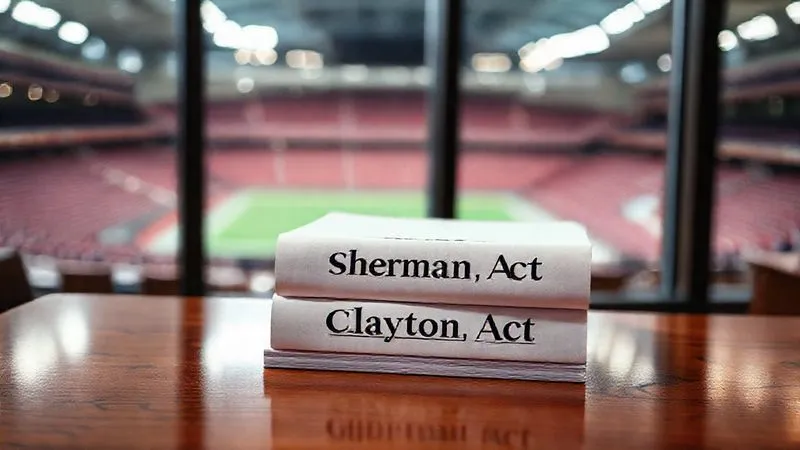
At the heart of U.S. antitrust law are the Sherman Act and the Clayton Act. The Sherman Act, specifically Sections 1 and 2, prohibits agreements that restrain trade (like price-fixing or market allocation) and outlaws monopolization. The Clayton Act addresses specific practices like mergers and acquisitions that substantially lessen competition. When a new league designs its player draft, it must constantly ask: Does this system, either explicitly or implicitly, restrain competition in the market for player services?
The Unique Landscape of Sports: Labor Exemption vs. Non-Statutory Exemption
Sports leagues operate in a peculiar legal space. While they are businesses subject to antitrust laws, their relationship with players is also governed by labor law. This is where the concept of a 'labor exemption' comes into play. There are two types: statutory and non-statutory.
The non-statutory labor exemption is a critical shield for sports leagues. It essentially says that certain agreements between a union and an employer (like a league and its players' association) that would otherwise violate antitrust laws are exempt, provided they are the product of good-faith collective bargaining and primarily concern wages, hours, and other terms and conditions of employment.
This exemption is not automatic. It's carefully carved out by courts and relies heavily on the existence of a robust collective bargaining agreement (CBA) with a legitimate player union. Without a CBA, many traditional league structures, including player drafts, salary caps, and free agency restrictions, are highly vulnerable to antitrust challenges. Understanding this distinction is paramount for any new league. As a veteran in this field, I've seen leagues underestimate the power of a strong CBA to protect their competitive balance mechanisms.
Risk 1: Monopsony Power and Player Compensation Restrictions
The most immediate and significant antitrust risk a new sports league player draft faces is the creation of monopsony power. A monopsony is a market structure where there is only one buyer for a particular good or service – in this case, the league's teams are the sole buyers of player services. A draft, by its very nature, restricts player choice and can lead to suppressed wages.
The Draft as a Restraint on Trade
When a player is drafted, their ability to negotiate with other teams is severely limited or eliminated. They are essentially 'bound' to the drafting team, often for a predetermined period and salary scale. From an antitrust perspective, this is a clear restraint on trade in the market for player services. It prevents players from selling their skills to the highest bidder, which is the essence of a competitive market.
Wage Suppression Concerns
This lack of choice directly leads to wage suppression. If players cannot freely move between teams or leverage offers from multiple suitors, their bargaining power is significantly diminished. New leagues often implement rookie wage scales or fixed-term contracts for drafted players, which, while seemingly logical for cost control, are ripe targets for antitrust challenges without the protection of a CBA.
Mitigating this risk requires careful design:
- Fair Market Valuation: Implement a robust, transparent system for player valuation that aims to reflect true market value, even within the draft structure.
- Short Initial Contracts: Limit the duration of initial draft contracts to allow players to reach free agency sooner, introducing competition earlier in their careers.
- Performance-Based Incentives: Include significant performance-based incentives in rookie contracts to allow players to earn more based on merit, even if base salaries are restricted.
- Early Collective Bargaining: Prioritize negotiating a comprehensive CBA with a player union to gain the non-statutory labor exemption, which protects agreed-upon draft and salary structures.
I advise my clients to consider a 'softer' draft model initially, one that might allow for more player movement or shorter team control, until a CBA can be established. This proactive approach can save millions in potential litigation.
| Feature | Impact on Player Choice | Impact on Wages | Antitrust Risk Level |
|---|---|---|---|
| Player Draft (No CBA) | Highly Restricted | Suppressed | High |
| Player Draft (With CBA) | Restricted by Agreement | Negotiated within Framework | Low to Medium |
| Pure Free Agency | Unrestricted | Market-Driven | Very Low |
Risk 2: Eligibility Rules and Limiting Player Entry
Another area where new leagues often inadvertently create antitrust exposure is through player eligibility rules. While some rules are necessary for player development and competitive balance, overly restrictive or arbitrary rules can be seen as exclusionary practices that limit competition in the player market.
Age Restrictions and Educational Requirements
Common examples include minimum age requirements (e.g., 'must be 18 and one year removed from high school') or requirements to have completed a certain level of education (e.g., 'must have completed four years of college'). Without proper justification, these rules can be challenged as an unreasonable restraint on trade, preventing otherwise qualified individuals from entering the market for professional sports services.
Exclusionary Practices and Market Foreclosure
If a league's eligibility rules effectively foreclose a significant portion of potential talent from entering the league, it creates an antitrust issue. This is particularly relevant if the league becomes the dominant or only viable professional outlet for a particular sport. The NCAA has faced numerous antitrust challenges regarding its amateurism rules and restrictions on player compensation, highlighting the sensitivity around eligibility.
The key is to ensure that any eligibility rule serves a legitimate, pro-competitive purpose – such as promoting player safety, skill development, or academic achievement – and is not merely a tool to limit player supply or depress wages.
When crafting eligibility rules, a new league must be able to articulate a clear, defensible pro-competitive rationale for each restriction. Simply mimicking established leagues without understanding the legal basis (often rooted in years of collective bargaining or specific legal precedents like those in college athletics which are under increasing scrutiny) is a recipe for disaster. For instance, the NBA's 'one-and-done' rule has faced continuous debate and legal pressure, demonstrating the thin ice these rules often stand on. Academic research consistently scrutinizes the legality of such player restrictions.
Risk 3: Collusion and Information Sharing Among Teams
The very nature of a league, where independent teams cooperate to produce a joint product (the games), creates an inherent tension with antitrust law. While cooperation is necessary, explicit or implicit agreements among teams that suppress competition for players can be deemed illegal collusion.
Avoiding "Gentlemen's Agreements"
I've seen situations where team owners or general managers, often informally, agree not to poach players from rival teams, or to adhere to unwritten salary ceilings for certain positions outside the official draft or CBA. These 'gentlemen's agreements' are notoriously difficult to prove but are highly illegal under antitrust statutes. Any form of coordinated behavior among teams regarding player acquisition, salaries, or contract terms that isn't explicitly sanctioned by a collectively bargained agreement is a major red flag.
Data Sharing Protocols and Best Practices
Information sharing also presents a risk. While sharing scouting reports or injury updates for league-wide operational purposes might be acceptable, sharing detailed salary offers, contract negotiation strategies, or free agent preferences among teams can quickly cross into collusive behavior. New leagues must establish strict protocols for what information can be shared and how it is used.
To mitigate this:
- Clear Antitrust Policies: Implement and regularly communicate strict antitrust compliance policies to all team owners, executives, and staff.
- Independent Decision-Making: Emphasize that each team must make independent decisions regarding player acquisition and compensation.
- Limited Information Exchange: Restrict information exchange between teams to only what is necessary for league operations and explicitly permitted by a CBA.
- Whistleblower Protections: Encourage reporting of suspicious activities and protect those who come forward.

Risk 4: Restricting Player Movement Post-Draft (Free Agency)
Even after a player is drafted and completes their initial contract, the league's rules around free agency and player movement can present significant antitrust risks. Historically, mechanisms like the 'reserve clause' (which essentially bound a player to one team indefinitely) were the subject of landmark antitrust challenges that ultimately led to modern free agency.
The Balance Between Team Investment and Player Rights
New leagues often want to protect their investment in drafted players, especially in player development. This can lead to rules like restricted free agency, franchise tags, or compensation for signing a player from another team. While these mechanisms can be legitimate tools for competitive balance, they must be carefully balanced against a player's right to freely market their services.
Designing a Legally Sound Free Agency System
Without the protection of a CBA, any significant restriction on a player's ability to move teams after their initial contract expires is highly vulnerable. The courts will scrutinize whether these restrictions are more anti-competitive than pro-competitive. A new league must consider:
- Reasonable Contract Lengths: Avoid excessively long initial contracts that unduly delay a player's access to free agency.
- True Free Agency: Ensure that after a reasonable period, players genuinely have the ability to negotiate with any team without prohibitive restrictions or penalties.
- Limited Restricted Free Agency: If restricted free agency is used, ensure the compensation required to sign a restricted free agent is not so high as to effectively prevent movement.
- No Collusive Practices: Reinforce that teams cannot collude to suppress offers to free agents.
The evolution of free agency in established leagues like the NFL and NBA is a testament to the ongoing legal push and pull over these issues. A new league can learn from these historical battles. The American Bar Association's Antitrust Law section frequently publishes updates on sports antitrust cases, offering valuable context.
Risk 5: Collective Bargaining Agreements (CBAs) and Antitrust Waivers
Perhaps the most potent tool for mitigating antitrust risk for a new sports league player draft, and indeed for most league operations, is a comprehensive Collective Bargaining Agreement (CBA) with a legitimate, independent player union. As I mentioned earlier, the non-statutory labor exemption provides a critical shield.
The Role of Player Unions
A player union, properly formed and recognized, acts as the exclusive bargaining representative for the players. When the league and the union negotiate a CBA, the terms of that agreement—even those that might otherwise appear to be restraints on trade (like the draft, salary caps, or free agency rules)—are generally exempt from antitrust scrutiny. This is because these terms are seen as the product of good-faith bargaining between labor and management.
Negotiating a CBA: A Shield Against Antitrust Claims
For a new league, establishing a player union and negotiating a CBA should be a top priority, not an afterthought. While the process can be complex and challenging, the long-term legal protection it offers is invaluable. A well-crafted CBA can define the rules of the draft, salary structures, free agency, player discipline, and other critical aspects of the player-league relationship, all under the umbrella of antitrust immunity.
Case Study: Navigating CBA Negotiations for the Fictional 'Global eSports League'
Let's consider a fictional scenario: The 'Global eSports League' (GEL) is launching with a revolutionary player draft. Initially, GEL implemented a draft with strict three-year rookie contracts and no free agency. Within six months, they faced a class-action lawsuit from a group of undrafted players and a few high-performing drafted players, alleging monopsony and restraint of trade. GEL's legal team, having anticipated this, immediately initiated discussions to recognize a nascent player association and began good-faith negotiations for a CBA. The league offered concessions on rookie contract length, introduced performance bonuses, and committed to establishing a robust arbitration system for player disputes. In return, the player association agreed to a modified draft system and salary cap. While the initial lawsuit was costly, the proactive CBA negotiation allowed GEL to secure the non-statutory labor exemption, ultimately leading to a settlement and a legally stable operational framework. This resulted in a more robust league and a satisfied player base, proving that early and strategic CBA engagement is key.
It's important to remember that the exemption only applies to terms that are the result of arm's-length negotiations. Imposing terms on players without a legitimate union or without good-faith bargaining will not trigger the exemption. Understanding the National Labor Relations Act (NLRA) is fundamental for this process.
Proactive Strategies: Building an Antitrust-Compliant Draft System
Beyond understanding the risks, a new league must adopt a proactive, multi-faceted strategy to ensure its player draft system is legally robust and minimizes antitrust exposure.
Engaging Legal Counsel Early
This might seem obvious, but I've seen leagues try to cut corners. Antitrust counsel specializing in sports law should be involved from the very conceptualization of the draft and player acquisition model. They can help identify potential pitfalls before they become costly liabilities. This isn't just about reacting to problems; it's about building a preventative framework.
Transparency and Due Process
Ensure all draft rules, eligibility criteria, and player contract terms are transparent, clearly communicated, and applied uniformly. Establish clear due process mechanisms for players to appeal decisions or raise grievances. A system perceived as fair and transparent is less likely to invite legal challenges, even if it has some restrictive elements.
Continuous Monitoring and Adaptation
The legal landscape, especially in sports antitrust, is constantly evolving. What was permissible a decade ago might not be today. Leagues must continuously monitor legal developments, court rulings (like the landmark NCAA v. Alston decision, which significantly impacted college athlete compensation, available from the Supreme Court), and industry trends. Be prepared to adapt your draft and player acquisition rules as needed. Rigidity in the face of legal evolution is a significant risk.

The Evolving Landscape: Future Trends in Sports Antitrust
The sports industry is dynamic, and so is the application of antitrust law within it. New leagues must not only address current risks but also anticipate future challenges.
Athlete Empowerment and Advocacy
There's a growing movement towards greater athlete empowerment, driven by social media, increased awareness of player rights, and successful legal challenges against established entities. New leagues should expect players to be more informed and more willing to challenge restrictive practices. Designing systems that offer players a genuine voice and fair compensation will be crucial for long-term success and avoiding legal battles.
Impact of New Technologies (e.g., AI in scouting)
As leagues increasingly use AI and sophisticated data analytics for scouting, player evaluation, and even contract projections, new antitrust questions may arise. Could the sharing of highly granular player data among teams, even if anonymized, lead to tacit collusion or create barriers to entry for new teams or players? These are the frontier questions that will shape sports law in the coming years.

Frequently Asked Questions (FAQ)
Q: Is every player draft inherently an antitrust risk? A: Not necessarily, but every draft system, by its nature, restricts player choice and thus inherently carries antitrust risk. The key is how those restrictions are structured and whether they are protected by a collective bargaining agreement (CBA) or can be justified by legitimate pro-competitive rationales that outweigh their anti-competitive effects. Without a CBA, the risk is significantly higher.
Q: How does the labor exemption specifically protect sports leagues? A: The non-statutory labor exemption shields agreements between a legitimate player union and a league that primarily concern wages, hours, and other terms of employment, from antitrust scrutiny. This means that draft rules, salary caps, and free agency restrictions, if collectively bargained, are generally immune to antitrust lawsuits, allowing leagues to implement systems that promote competitive balance without legal challenges.
Q: What's the key difference between statutory and non-statutory labor exemptions? A: The statutory labor exemption is explicitly written into law (e.g., in the Clayton Act and Norris-LaGuardia Act) and protects union activities themselves from antitrust challenges. The non-statutory labor exemption is a court-created doctrine that protects agreements made between a union and an employer (like a league) through good-faith collective bargaining, even if those agreements might otherwise restrain trade. The non-statutory exemption is what's most relevant for protecting league-player agreements.
Q: Can a new league avoid a union to bypass antitrust issues? A: Quite the opposite. Avoiding a player union and a collective bargaining agreement actually *increases* a new league's antitrust exposure significantly. Without the protection of the non-statutory labor exemption that a CBA provides, any restrictive practices, including player drafts, salary caps, and free agency rules, are highly vulnerable to antitrust lawsuits from players. Establishing a union and negotiating a CBA is generally the strongest defense against such claims.
Q: What are the biggest mistakes new leagues make regarding antitrust? A: The most common mistakes include: 1) Underestimating the importance of a CBA and delaying its negotiation; 2) Copying draft and free agency rules from established leagues without understanding the legal protections those leagues have (e.g., a long-standing CBA); 3) Not engaging experienced sports antitrust counsel early enough in the league's formation; and 4) Allowing informal 'gentlemen's agreements' among teams that violate antitrust principles.
Key Takeaways and Final Thoughts
Launching a new sports league is an ambitious undertaking, filled with challenges and immense potential. However, the dream can quickly turn into a legal nightmare if the critical area of antitrust compliance, particularly concerning the player draft, is overlooked. My experience has shown time and again that proactive legal planning is not a luxury, but a necessity.
- Prioritize a CBA: Secure a comprehensive Collective Bargaining Agreement with a legitimate player union as early as possible to leverage the non-statutory labor exemption.
- Design for Competition: Structure your draft and player acquisition rules to foster, rather than stifle, competition in the market for player services.
- Ensure Transparency: Implement clear, fair, and transparent eligibility rules and processes, with justifiable pro-competitive rationales.
- Prevent Collusion: Establish strict policies and oversight to prevent any form of collusive behavior among teams regarding player compensation or movement.
- Seek Expert Counsel: Engage experienced sports antitrust legal experts from the outset to navigate this complex legal landscape.
The journey of a new sports league is fraught with legal complexities, but with careful planning, expert guidance, and a commitment to fair and competitive practices, you can build a robust foundation that not only avoids antitrust pitfalls but also fosters a thriving and dynamic environment for both players and fans. The future of sports depends on leagues that are not only innovative but also legally resilient.
Recommended Reading
- IRS Suspects Business Tax Fraud? 7 Critical Steps to Protect Your Company
- ESG Regulations & Corporate Legal Strategy: 7 Key Impacts to Know
- Student Loan Discharge: What is Undue Hardship? Your 3-Test Guide
- 7 Legal Strategies: Defending Against Consumer Advocacy Claims
- How to Legally Defend Your Land Trust from Easement Violation Challenges: 7 Pillars





Comments
Leave a comment below. Your email will not be published. Required fields marked with *