


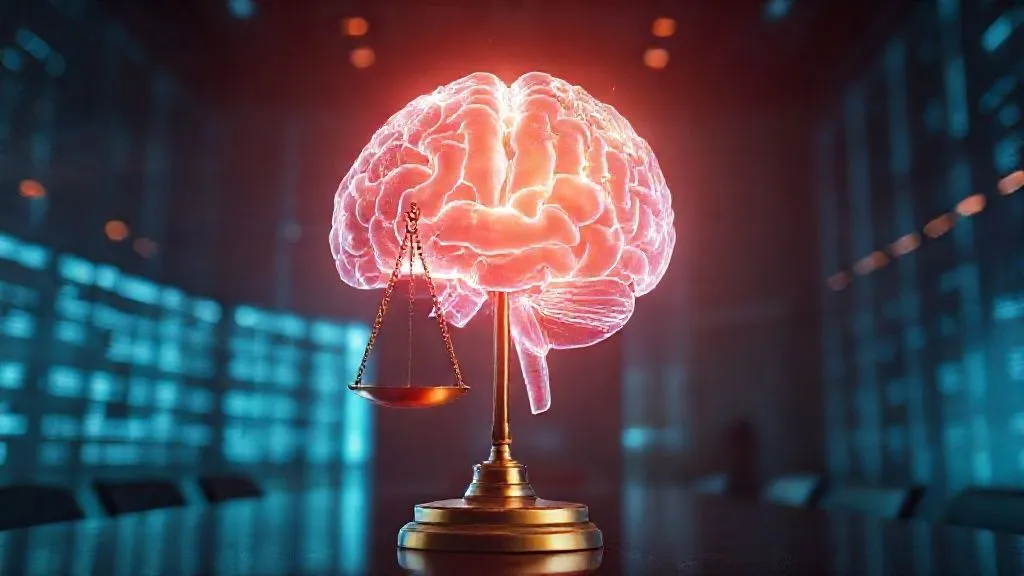
What Are the Copyright Implications of Using AI-Generated Content?
For over 15 years in intellectual property law, I've witnessed countless technological shifts that have challenged our understanding of creation, ownership, and protection. From the advent of digital music to the rise of user-generated content, each era brought its unique legal quandaries. Today, we stand at the precipice of another seismic shift: the explosion of AI-generated content. I've seen firsthand how quickly businesses and creators can find themselves in uncharted legal waters, often without realizing the significant risks involved.
The rapid proliferation of AI tools capable of generating text, images, music, and even video has created an unprecedented legal gray area. Creators, businesses, and even major corporations are grappling with fundamental questions: Who owns the copyright to an image generated by Midjourney? Can you sue for infringement if an AI replicates your artistic style? Is the data used to train these AI models itself infringing? These aren't just academic debates; they represent tangible pain points that can lead to costly lawsuits, invalidated intellectual property, and significant financial losses if not navigated correctly.
In this comprehensive guide, I'll cut through the noise and provide you with a clear, actionable framework to understand the copyright implications of using AI-generated content. Drawing from the latest legal interpretations, real-world case studies, and my extensive experience, you'll gain expert insights into current legal stances, learn practical strategies for protecting your AI-assisted creations, and identify the critical risks you must mitigate. My goal is to equip you not just with facts, but with the confidence to make informed decisions in this rapidly evolving landscape.
The Core Dilemma: Human Authorship vs. Machine Creation
At the heart of copyright law, globally, is the foundational principle of human authorship. For a work to be eligible for copyright protection, it traditionally requires a human creator. This isn't just a historical relic; it's deeply embedded in the very definition of 'authorship' and the 'originality' required for a work to qualify for protection. Copyright is designed to incentivize human creativity by granting exclusive rights to authors for their original works of authorship.
The advent of sophisticated AI models challenges this principle directly. When an AI generates a piece of music, a stunning visual, or a coherent article, where is the human author? Is it the programmer who coded the AI? The user who provided the prompt? Or is there no human author at all? This isn't merely a philosophical question; it dictates whether a work can be protected, licensed, or enforced against infringement. Without a clear human author, the very concept of copyright, as we know it, struggles to apply.
"The 'spark of human creativity' is the bedrock of copyright. When AI performs the creative heavy lifting, we're forced to re-evaluate who, if anyone, holds the rights."
The legal systems around the world are grappling with how to reconcile this human-centric framework with machine-generated output. It forces us to consider the nature of creativity itself. Is creativity solely a human endeavor, or can a tool, even an intelligent one, be considered a co-creator? The answer to this question has profound implications for every creator and business leveraging AI today.
Who Owns AI-Generated Content? Current Legal Stances and Challenges
Understanding ownership in the realm of AI-generated content requires a deep dive into current legal interpretations, which are, to be frank, still nascent and evolving. However, key jurisdictions have begun to stake out positions, providing some much-needed, albeit often complex, guidance.
The U.S. Copyright Office's Position
The United States Copyright Office (USCO) has been at the forefront of attempting to clarify this issue. Their current stance is unequivocal: copyright protection is reserved for works of human authorship. This means that content *purely* generated by an AI, without substantial human creative input, is generally not eligible for copyright registration. They've issued guidance, notably in their Copyright Registration Guidance: Works Containing AI Generated Material, emphasizing that if a human's contribution to an AI-generated work is merely to provide a prompt, and the AI determines the expressive elements, then the resulting work lacks the human authorship necessary for copyright.
I've seen many clients mistakenly believe that simply typing a prompt into a generative AI tool automatically grants them ownership. The USCO's position clarifies that the 'human authorship requirement' is not a formality; it's a fundamental prerequisite. This has significant implications, as it means purely AI-generated works effectively fall into the public domain immediately, unable to be exclusively licensed or protected against unauthorized use.
The Role of Human Intervention
The critical nuance lies in the degree and nature of human intervention. The USCO guidance does acknowledge that human-authored elements within a work that *also* contains AI-generated material may be copyrightable. The key is whether the human input constitutes original, creative expression that transforms the AI's output or uses the AI as a mere tool.
Think of it like this: a photographer uses Adobe Photoshop, an advanced software tool, to manipulate an image. The software doesn't create the photograph; it's a tool the photographer uses to express their creativity. Similarly, if a human significantly modifies, arranges, selects, or otherwise creatively directs the AI's output, infusing their own original expression, then *those human-authored elements* might be copyrightable. The AI-generated portions themselves, however, might still be excluded. This requires meticulous record-keeping of your creative process.
International Perspectives
While the USCO has been quite clear, other jurisdictions are still actively debating and exploring various approaches. The World Intellectual Property Organization (WIPO), for instance, has initiated discussions on the broader implications of AI for IP law. Some countries, particularly in the EU and UK, are exploring concepts like 'secondary rights' or 'inventor rights' for AI-generated works, or considering extending existing copyright frameworks to accommodate AI in different ways. However, a global consensus is far from being reached, making the international landscape even more complex for creators operating across borders.
Navigating Potential Infringement: AI's Training Data and Fair Use
Beyond the question of who owns AI-generated content, a more immediate and pressing concern for many is the potential for AI models to infringe existing copyrights, both in their training and their output. This area is currently a hotbed of legal disputes and evolving interpretations.
The Training Data Conundrum
Generative AI models, whether for text (like large language models) or images (like stable diffusion models), are trained on unimaginably vast datasets. These datasets often comprise billions of images, texts, and other media scraped from the internet, which inevitably include countless copyrighted works. The core legal question here is whether the act of copying these copyrighted works into a dataset for training purposes constitutes copyright infringement.
Copyright holders argue that this is a clear act of unauthorized reproduction, forming the basis of many high-profile lawsuits against AI developers. They contend that their work is being used without permission or compensation, devaluing their intellectual property and potentially leading to direct competition from AI-generated content derived from their original work.
Fair Use as a Defense
AI developers, conversely, frequently invoke the doctrine of fair use (or fair dealing in other common law jurisdictions) as a defense. Fair use is a legal doctrine that permits limited use of copyrighted material without acquiring permission from the rights holders. Key factors in determining fair use include:
- The purpose and character of the use (e.g., commercial vs. non-profit educational).
- The nature of the copyrighted work.
- The amount and substantiality of the portion used in relation to the copyrighted work as a whole.
- The effect of the use upon the potential market for or value of the copyrighted work.
AI developers argue that training models is a 'transformative' use, akin to teaching or research, as the AI doesn't reproduce the original works but learns patterns and concepts from them to generate *new* content. They also argue that the training data is not publicly accessible in its original form and doesn't directly compete with the original works. However, courts are still grappling with these arguments, and recent lawsuits, such as those against OpenAI and Stability AI, are testing the boundaries of fair use in this new context.
Case Study: The "Synthetic Symphony" Lawsuit
How MelodyGen AI Faced a Copyright Battle
MelodyGen AI, a popular music generation platform, found itself embroiled in a significant copyright infringement lawsuit. A renowned indie artist, 'Synthwave Siren,' discovered that several tracks generated by MelodyGen AI for commercial use bore striking similarities to her distinctive melodic patterns and synth textures. Synthwave Siren alleged that MelodyGen AI's training data included her copyrighted discography without permission, leading to an infringing output.
MelodyGen AI's defense centered on fair use, arguing that their AI merely 'learned' from the data and didn't directly copy or distribute Siren's original works. They claimed the AI's output was transformative, creating entirely new compositions. The court, however, focused on two key aspects: the 'substantial similarity' between the AI's output and Siren's original works, and the 'effect on the potential market.' Evidence showed that the AI-generated tracks could potentially compete with Siren's music, particularly in sync licensing for media.
Ultimately, a settlement was reached, with MelodyGen AI agreeing to significant licensing fees and implementing stricter content filtering to minimize future risks. This case highlighted that while AI training might be argued as transformative, the *output* of the AI still needs to pass the traditional infringement tests, especially regarding substantial similarity and market impact. It underscored the critical need for AI developers and users to be acutely aware of their training data sources and the potential for their AI's output to infringe existing copyrights.
Practical Strategies for Protecting Your AI-Assisted Creations
Given the current legal ambiguities, what concrete steps can creators and businesses take to safeguard their intellectual property when utilizing AI? My advice is to adopt a proactive, 'copyright-aware' approach. Don't wait for legal clarity; build resilience into your creative and operational workflows now.
- Document Your Human Input Meticulously: This is perhaps the single most crucial step. For any work where you intend to claim copyright, you must be able to demonstrate significant human creative input. Keep detailed records of:
- The specific prompts you used, including iterative refinements.
- The creative decisions you made in selecting, arranging, or modifying AI outputs.
- Any original human-created elements you integrated into the AI-generated content (e.g., original text, unique visual overlays, specific artistic direction).
- The 'seed' or initial concept you provided to the AI.
- Scrutinize AI Tools' Terms of Service (ToS) and Licenses: Before integrating any AI tool into your workflow, thoroughly read its terms of service. These agreements often contain critical clauses regarding the ownership of outputs, the licensing of your inputs, and the AI provider's liability. Some AI providers may claim a license to your inputs or even partial ownership of your outputs. Understand what you're agreeing to.
- Consider Hybrid Approaches: The safest path to copyrightability currently lies in combining AI-generated elements with substantial original human work. Use AI as a sophisticated assistant, not a sole creator. For instance, use AI to generate concepts or raw components, but then apply your unique artistic vision, significant editing, arrangement, and refinement to create the final product. The more human creative 'fingerprints' on the final work, the stronger your claim to copyright.
- Utilize Licensing and Contracts Effectively: If you're commissioning AI-generated content or distributing it, ensure your contracts clearly define ownership, usage rights, and indemnification clauses related to potential infringement. For example, if you hire a freelancer using AI, specify who owns the final output and who bears responsibility for any copyright issues arising from the AI's generation.
- Be Transparent About AI Use (Especially for Registration): When seeking copyright registration, particularly in the U.S., be prepared to disclose the extent of AI involvement. Attempting to conceal AI usage could lead to invalidation of your registration if discovered later. Transparency builds trust and aligns with the USCO's current guidance.
- Conduct Due Diligence on AI Training Data (Where Possible): While often difficult, try to understand, if the information is public, what datasets an AI model was trained on. If an AI is known to have been trained on ethically sourced or licensed data, it might mitigate some infringement risks for its outputs.
"In the evolving world of AI copyright, meticulous documentation of your creative process isn't just a good practice; it's your strongest defense and your clearest path to asserting ownership."
Risks and Liabilities: What Happens When Things Go Wrong?
Ignoring the copyright implications of AI-generated content is not a viable strategy. The risks are substantial and can manifest in several critical ways, affecting both creators and businesses.
Infringement Claims Against Your AI Output
One of the most immediate risks is that your AI-generated (or AI-assisted) content could be deemed to infringe on existing copyrighted works. If the output of an AI model is substantially similar to an original human-created work, you, as the user, could be held liable for copyright infringement. The 'substantial similarity' test is a cornerstone of infringement analysis, and AI output is not exempt from it.
The question of who is liable is complex: Is it the user who prompted the AI? The developer who created and trained the AI? Or both? Current lawsuits are exploring these very questions, and the landscape is still developing. However, as the end-user or commercial entity publishing the content, you are often the most visible and accessible target for legal action.
Lack of Protection for Purely AI Works
As discussed, if your work is deemed to be purely AI-generated without sufficient human creative input, it may not be eligible for copyright protection. This means you cannot prevent others from freely using, copying, adapting, or distributing your AI-generated content. For businesses investing heavily in AI content creation, this represents a significant threat to their intellectual property portfolio and competitive advantage. Imagine investing thousands in AI-generated marketing materials only to find they can be freely copied by competitors.
Reputational Damage and Ethical Concerns
Beyond legal and financial risks, there's a growing public and industry awareness of the ethical implications of AI. Being associated with content that infringes on artists' rights or is produced in a way that is perceived as exploitative of copyrighted training data can severely damage your brand's reputation and trust with your audience.
| Risk Category | Description | Mitigation Strategy |
|---|---|---|
| Infringement by AI Output | Your AI-generated content is substantially similar to existing human-created work, leading to a lawsuit. | Thoroughly review AI outputs for similarity; use AI as a tool for human refinement; secure appropriate licenses for AI training data (if possible). |
| Lack of Copyright Protection | Your purely AI-generated content is deemed uncopyrightable, placing it in the public domain. | Ensure significant human creative input in all stages; document your creative process; consider hybrid content creation models. |
| Terms of Service Violations | Breaching the AI tool's ToS regarding ownership, usage, or data privacy. | Carefully read and understand all AI tool ToS; seek legal counsel for complex integrations. |
| Reputational Harm | Public backlash or negative perception due to questionable AI content sourcing or ethical concerns. | Maintain transparency about AI use; prioritize ethical sourcing of training data; engage with industry best practices. |
The Future Landscape: Anticipated Legal Developments and Best Practices
The legal framework surrounding AI and copyright is not static; it's a dynamic and rapidly evolving domain. What is true today might shift tomorrow as courts issue new rulings, legislative bodies propose new laws, and international conventions grapple with these complex issues. Staying informed and adaptable is paramount.
We can anticipate several key developments. Courts will continue to refine the 'human authorship' test, potentially offering more detailed guidance on what constitutes 'sufficient' human creative input. There may be legislative efforts to create new categories of rights or exceptions specifically for AI-generated works or AI training data. International cooperation, or lack thereof, will also shape how IP rights are protected across borders, which is crucial for global businesses.
Staying Ahead of the Curve
For individuals and organizations, continuous learning is not just a recommendation; it's a necessity. Regularly monitor official guidance from copyright offices (like the USCO), follow major court decisions, and engage with reputable legal publications. Consider subscribing to legal updates from IP law firms specializing in technology. More importantly, don't hesitate to consult with experienced intellectual property counsel whenever you're embarking on significant AI content projects or when legal questions arise. A proactive legal review can save you immense headaches and costs down the line.
Organizations like the Copyright Alliance and the Electronic Frontier Foundation (EFF) are actively involved in these discussions, offering valuable insights into policy debates and future directions. Engaging with such resources can provide a broader perspective on the evolving legal and ethical considerations.
Adopting a "Copyright-First" Mindset for AI Content
Ultimately, the most effective best practice is to adopt a 'copyright-first' mindset for all AI-generated content. Treat AI outputs with the same diligence, scrutiny, and respect for intellectual property rights as you would any human-created work. This means:
- Always assume potential copyright implications until proven otherwise.
- Prioritize the ethical sourcing and licensing of training data for AI models you develop or use.
- Ensure clear contractual agreements for AI-assisted work, defining ownership and indemnities.
- Educate your teams on the nuances of AI copyright to foster a culture of compliance and responsibility.
By integrating these principles into your operations, you position yourself not just to comply with current law, but to adapt gracefully to future legal landscapes.
Frequently Asked Questions (FAQ)
Question: Can I register copyright for an image I created using Midjourney or DALL-E? The U.S. Copyright Office generally requires significant human creative input. If you merely typed a simple prompt and the AI generated the image with minimal human modification or selection of expressive elements, it's unlikely to be copyrightable. However, if you extensively edited, arranged, or combined AI outputs with your own original elements, those human-authored contributions might be eligible for registration. Documentation of your human creative process is key.
Question: If my AI is trained exclusively on public domain works, is its output automatically copyrightable? Not necessarily. While training an AI on public domain works avoids infringement claims related to the training data, the output itself still needs to meet the 'human authorship' and 'originality' requirements for copyright protection. If the AI independently generates the work without significant human creative input, it may still be deemed uncopyrightable, even if the source material was public domain.
Question: What if I use AI to generate ideas or outlines, but create the final work myself? This is generally a safer approach. If the AI merely serves as a brainstorming tool, providing concepts, themes, or structural outlines, and you then use your own creativity, skill, and judgment to develop and express the final work, that final work will likely be copyrightable based on your human authorship. The AI's role would be akin to a research assistant, not a co-author.
Question: Do AI tools themselves, or their developers, have copyright over the content generated by their users? Generally, no. Most AI tools' Terms of Service (ToS) state that users retain ownership of the content they generate, provided it's copyrightable. However, many ToS grant the AI developer a broad, perpetual license to use, reproduce, and distribute the user's outputs for purposes like improving the AI model. Always check the specific ToS of the AI platform you are using, as these can vary significantly.
Question: How does this affect AI developers who are training models on vast datasets? AI developers face significant legal challenges regarding the sourcing and use of their training data. They are increasingly being sued for copyright infringement, with plaintiffs arguing that the unauthorized copying of copyrighted works into training datasets constitutes infringement. Developers often rely on fair use as a defense, but this is a contested area of law, and outcomes can vary based on jurisdiction and specific facts of each case. Ethical data sourcing and licensing agreements are becoming critical for AI developers.
Key Takeaways and Final Thoughts
The landscape of AI and copyright is undeniably complex, but it is not impenetrable. As an experienced IP specialist, I can tell you that clarity emerges not from avoiding the challenge, but from confronting it with knowledge and proactive strategies. The core message is clear: while AI offers incredible creative power, the human element remains paramount for copyright protection.
- Human Authorship is Key: Copyright still fundamentally requires a human creator. Purely AI-generated content is unlikely to be protected.
- Document Your Creative Input: Keep meticulous records of your prompts, modifications, and creative decisions to prove your human contribution.
- Understand Infringement Risks: Be aware that both AI training data and AI outputs can lead to copyright infringement claims.
- Read ToS Carefully: Always review the terms of service for AI tools to understand ownership and licensing clauses.
- Embrace Hybrid Creation: Combine AI's capabilities with your unique human creativity to strengthen your copyright claims.
- Stay Informed: The law is evolving. Continuous learning and, when necessary, consulting legal counsel are essential.
The integration of AI into creative processes is not a fleeting trend; it's a fundamental shift. By understanding the copyright implications, embracing best practices, and approaching AI content creation with a 'copyright-first' mindset, you can navigate this exciting new frontier confidently. Protect your innovation, mitigate your risks, and continue to leverage the power of AI to create truly impactful and legally sound works.
Recommended Reading
- Stateless Children: What Human Rights Protect Them? Find Out!
- 7 Proactive Steps: Minimizing Concussion Liability for Youth Sports?
- Denied H1B RFE? 7 Expert Steps to Appeal & Secure Your Visa
- 7 Steps: How to Legally Challenge Inequitable Special Education Services
- 7 Tactics: Overcoming Federal Preemption in Medical Device Litigation


Comments
Leave a comment below. Your email will not be published. Required fields marked with *