


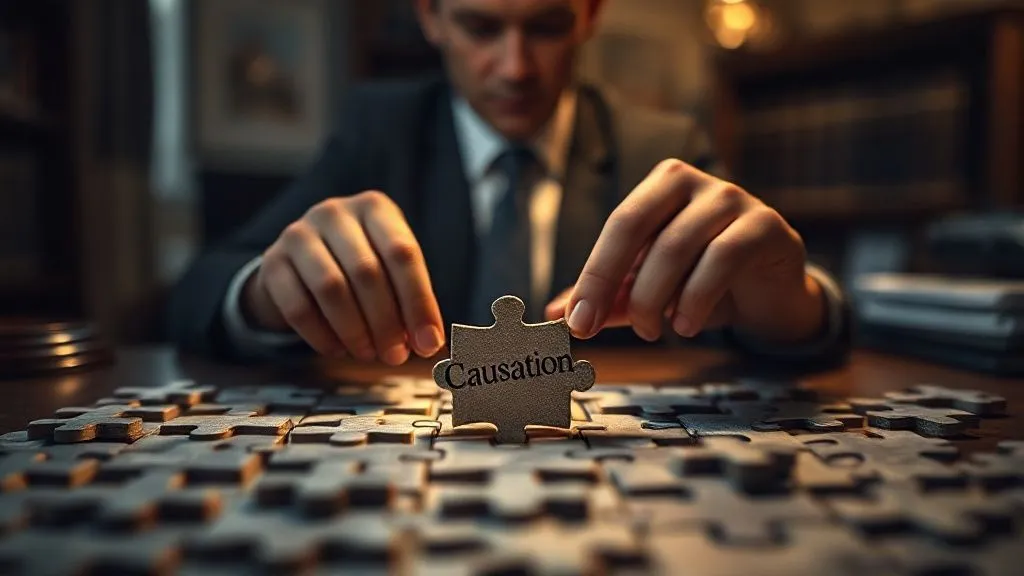
Winning Medical Malpractice When Causation Evidence Is Weak? Expert Strategies
For over two decades in personal injury law, particularly medical malpractice, I've witnessed the profound distress and frustration clients face when their physical and emotional suffering is clear, yet the direct link to a medical error seems elusive. It’s a recurring nightmare: you know you’ve been wronged, but proving that specific wrong directly caused this specific harm feels like an insurmountable mountain.
The cornerstone of any medical malpractice claim is causation. Without it, even the clearest negligence won't lead to a successful outcome. Unfortunately, in many complex medical scenarios, the evidence connecting a healthcare provider's breach of duty to a patient's injury isn't always a straight line. This 'weak causation' dilemma is precisely where many otherwise meritorious cases falter, leaving victims without the justice and compensation they desperately need.
But I'm here to tell you that weak causation doesn't automatically mean a lost cause. In my experience, it demands a more sophisticated, strategic, and often creative legal approach. This article will equip you with actionable frameworks, expert insights, and real-world strategies to navigate these treacherous waters, offering a path forward even when the direct causal link appears tenuous at best. We'll explore how to build a robust case where others might see only insurmountable obstacles.
Understanding the Cornerstone: What is Causation in Medical Malpractice?
Before we delve into strategies for weak evidence, it's crucial to firmly grasp what causation entails in a medical malpractice context. Broadly, it requires proving two things: but-for causation and proximate causation.
But-for causation asks: 'But for the defendant's negligence, would the injury have occurred?' If the answer is no, then but-for causation is established. Proximate causation, on the other hand, is about foreseeability and legal responsibility. It asks whether the injury was a reasonably foreseeable consequence of the negligent act, and if there were any intervening events that broke the chain of causation.
The challenge often arises because patient health is inherently complex. Individuals have pre-existing conditions, other illnesses, and varied responses to treatment. Pinpointing a single negligent act as the direct, sole cause of a specific injury can be incredibly difficult, especially when multiple factors might have contributed to an adverse outcome. This is why a deep understanding of medical science, combined with astute legal strategy, is indispensable.
"Causation is not merely a factual inquiry; it's a legal construct designed to assign responsibility. When direct evidence falters, the art of law lies in constructing a compelling inferential bridge between breach and harm." – An Experienced Medical Malpractice Attorney
The Expert Witness: Your Most Potent Weapon
In nearly all medical malpractice cases, expert witness testimony is not just helpful; it's legally required to establish the standard of care, its breach, and crucially, causation. When causation evidence is weak, the selection and preparation of your expert witness become paramount. They are not just explaining medicine; they are explaining the causal link in a way that is scientifically sound and legally persuasive.
I've seen countless cases turn on the strength and credibility of an expert. You need someone who isn't just board-certified but also possesses exceptional communication skills, can articulate complex medical concepts clearly, and can withstand rigorous cross-examination. They must be able to demonstrate how, to a reasonable degree of medical certainty, the defendant's negligence more likely than not caused or contributed to the plaintiff's injury.
- Specialized Expertise: Beyond general practitioners, seek sub-specialists whose expertise directly aligns with the specific medical issue at hand.
- Communication Skills: Can they explain complex medical concepts simply to a lay jury? This is non-negotiable.
- Experience & Credibility: A history of credible testimony and academic contributions strengthens their authority.
- Thorough Review: Ensure they have meticulously reviewed all medical records, diagnostic images, and relevant literature.
- Ability to Address Alternatives: A strong expert can proactively address and convincingly refute alternative theories of causation proposed by the defense.
Sometimes, it requires multiple experts – for instance, a surgeon to discuss the procedure, and an infectious disease specialist to discuss post-operative complications and their link to a breach in sterile technique. Their collective testimony weaves a stronger causal narrative. 
Leveraging Circumstantial and Inferential Evidence
When direct, unequivocal causation evidence is elusive, the legal system allows for the use of circumstantial and inferential evidence. This means proving causation not through a direct 'smoking gun,' but by presenting a collection of facts that, when viewed together, lead to the compelling conclusion that the defendant's negligence was the cause.
One powerful doctrine in this area is res ipsa loquitur, Latin for "the thing speaks for itself." This doctrine can apply when an injury would not ordinarily occur without negligence, the instrument causing the injury was under the defendant's exclusive control, and the plaintiff did not contribute to the injury. While not directly proving how negligence occurred, it infers negligence and, by extension, causation, allowing the jury to draw a reasonable conclusion. Cornell Law School's Legal Information Institute provides an excellent overview of this principle.
Beyond res ipsa loquitur, look for patterns of negligence, deviations from standard protocol, and the absence of alternative explanations. If a patient's condition rapidly deteriorates following a specific intervention, and all other potential causes have been meticulously ruled out, an inference of causation can often be drawn, especially when supported by expert medical opinion.
Case Study: The Overlooked Infection
Acme Surgical Center faced a medical malpractice claim where a patient developed a severe post-operative infection leading to permanent disability. Direct evidence of a specific breach in sterile technique was weak; no single individual could be definitively blamed for a 'drop' or 'touch.' However, through diligent discovery, our team uncovered a pattern of understaffing in the surgical suite, rushed procedures, and documented instances of instruments not being properly sterilized in the preceding months, albeit without direct proof of this specific instrument being contaminated. The expert witness testified that, given the nature of the infection and the documented systemic issues, it was more likely than not that the infection resulted from a breach in standard sterile protocols at Acme. The jury, presented with this circumstantial evidence and the expert's compelling testimony, found in favor of the plaintiff, inferring causation from the totality of the circumstances.
Building a Compelling Narrative: The Power of the Patient Story
While legal arguments and medical facts are critical, never underestimate the power of a well-told patient story. Jurors are human, and connecting with the human element of suffering can be incredibly persuasive, especially when direct causation is challenging. The narrative helps to bridge the gaps, allowing a jury to understand the impact of the negligence, even if the precise scientific link is complex.
Your role as a legal professional is to meticulously document and present the patient's journey: their health before the alleged malpractice, the incident itself, the immediate aftermath, and the long-term consequences. This chronological detailing helps the jury visualize the 'before and after,' making the causal connection more intuitive. It’s about showing the stark contrast between the expected outcome and the actual, devastating reality.
- Pre-Injury Baseline: Clearly establish the patient's health, activities, and quality of life before the alleged negligence.
- Chronological Progression: Detail the timeline of events, symptoms, and medical interventions immediately following the alleged malpractice.
- Impact on Daily Life: Illustrate, don't just state, how the injury has affected the patient's work, hobbies, family life, and emotional well-being.
- Corroborating Witnesses: Family members, friends, and colleagues can provide powerful testimony about changes in the patient's condition and capabilities.
- Visual Aids: Use medical illustrations, 'day in the life' videos, or photographs (where appropriate and ethical) to convey the reality of the patient's suffering.
A compelling narrative doesn't replace scientific evidence, but it contextualizes it, making the expert testimony more relatable and the causal argument more resonant. It helps the jury understand why the causal link matters and what it means for a real person.
Advanced Legal Tactics: Beyond the Standard Playbook
In challenging causation cases, it's often necessary to explore advanced legal doctrines that might apply in your jurisdiction. These doctrines can provide alternative pathways to establishing liability even when traditional 'but-for' causation is difficult to prove definitively.
One such doctrine is the 'Loss of Chance' doctrine. While not universally accepted across all U.S. states, it allows a plaintiff to recover damages if the defendant's negligence reduced their chance of a better outcome, even if that outcome wasn't guaranteed. For instance, if a delayed diagnosis of cancer reduced a patient's chance of survival from 40% to 10%, some states allow recovery for the lost 30% chance. This concept directly addresses situations where causation is probabilistic rather than absolute. William & Mary Law Review has published insightful articles on the nuances of this doctrine.
Another approach involves arguing 'Increased Risk of Harm.' This posits that the defendant's negligence, while not directly causing the ultimate injury, substantially increased the risk that the injury would occur. This is particularly relevant in cases where the injury might have eventually occurred anyway, but the negligence significantly accelerated or worsened it. It requires careful legal framing and robust expert testimony to quantify that increased risk.
Furthermore, in cases involving multiple contributing causes, you might argue that the defendant's negligence was a 'substantial factor' in causing the injury, even if it wasn't the sole cause. This moves away from the strict 'but-for' test to a more flexible standard, acknowledging that injuries often result from a confluence of factors. This is a common strategy when a patient has multiple complex health issues. Your expert must be able to articulate how the negligent act significantly contributed to the overall harm.
"When direct causal links are obscured by medical complexity, the proficient legal mind must explore the periphery of established doctrines, seeking principles that acknowledge probabilistic harm and shared responsibility." – A Veteran Legal Strategist
| Doctrine | Description | Difficulty with Weak Evidence | Applicability |
|---|---|---|---|
| But-For Causation | Injury would not have occurred without negligence. | High, requires direct link. | Universal |
| Proximate Causation | Injury was a foreseeable consequence of negligence. | Moderate, can be argued via inference. | Universal |
| Loss of Chance | Negligence reduced chance of better outcome. | Lower, focuses on probability. | Jurisdiction-dependent |
| Increased Risk of Harm | Negligence substantially increased risk of injury. | Moderate, requires quantifying risk. | Jurisdiction-dependent, often via expert |
| Substantial Factor | Negligence was a significant contributor, not necessarily sole cause. | Moderate, allows for multiple causes. | Common in many jurisdictions |
The Role of Medical Records and Diagnostic Imaging: Digging Deeper
The medical record is the undisputed bedrock of any medical malpractice claim. When causation evidence seems weak, it means you need to dig even deeper into these documents. Often, what appears to be a lack of evidence is merely evidence that hasn't been properly identified, interpreted, or correlated. This requires meticulous, forensic-level review.
I've often found crucial insights hidden in plain sight: an overlooked nurse's note, a subtle change in lab values, or a diagnostic image that was initially dismissed but, upon re-evaluation by a fresh set of eyes, reveals a critical detail. Look not just for what is written, but for what is missing – a failure to document, an unexplained gap in care, or an alteration that raises suspicion. These omissions can sometimes be as powerful as direct statements in inferring negligence and causation.
Consider obtaining second or even third opinions on diagnostic imaging (X-rays, MRIs, CT scans) from independent radiologists or specialists. What one radiologist interpreted as 'non-specific' might, to another, be a clear indicator of a developing pathology directly linked to a prior negligent act. Consulting with specialists in the relevant medical field can provide nuanced interpretations that uncover the causal chain where generalists might miss it. This commitment to exhaustive review demonstrates due diligence and builds a stronger foundation for your expert's testimony. 
Navigating the Defense's Causation Arguments
When you're trying to establish causation with weak direct evidence, you can be certain the defense will aggressively challenge your theory. They will likely present alternative explanations for the patient's injury, seeking to break the causal chain between their client's actions and the harm suffered. Understanding and proactively countering these arguments is a critical part of your strategy.
Common defense tactics include attributing the injury to the patient's pre-existing conditions. They might argue that the patient's underlying health issues, rather than any alleged negligence, were the true cause of the adverse outcome. Another frequent defense is that the injury was an unavoidable complication of a medical procedure, or that alternative causes unrelated to the defendant's care were responsible. They may also point to alleged patient non-compliance with medical advice as the cause of deterioration.
- Proactive Expert Rebuttal: Your expert witness must be prepared to directly address and scientifically refute the defense's alternative causation theories, explaining why they are less plausible.
- Comprehensive Medical History: Have an exhaustive understanding of the patient's entire medical history to anticipate and counter arguments about pre-existing conditions.
- Documentation of Compliance: If patient non-compliance is raised, ensure you have documentation or witness testimony to demonstrate adherence to medical instructions.
- Focus on Worsening Condition: Even if a pre-existing condition existed, focus on how the negligence worsened it or prevented a better outcome, rather than solely causing the initial condition.
By anticipating these defense arguments, you can build your case in a way that minimizes their impact, strengthens your own causal narrative, and ensures your expert is well-prepared for cross-examination. This proactive approach is a hallmark of successful litigation in complex medical malpractice cases.
Strengthening Your Claim: A Step-by-Step Approach
Successfully navigating a medical malpractice case with weak causation evidence requires a methodical and persistent approach. Here's a step-by-step framework I've found effective:
- Early and Thorough Legal Consultation: Don't delay. The sooner an experienced medical malpractice attorney reviews your case, the better. They can quickly identify potential causation issues and begin building a strategy from day one, often leveraging resources you might not know exist.
- Acquire All Medical Records: This means every single document from every provider involved, not just the primary one. Hospital charts, nursing notes, lab results, imaging reports, consultation notes – leave no stone unturned. Omissions can be as telling as inclusions.
- Identify Potential Expert Witnesses: Even before formal filing, start researching and consulting with potential medical experts. Their preliminary review can help shape your causation theory and guide further investigation. They can pinpoint where negligence may have occurred and how it links to the injury.
- Develop a Comprehensive Causation Theory: Work closely with your legal team and medical experts to craft a coherent and scientifically defensible theory of causation. This theory should account for all available evidence, even if circumstantial, and anticipate defense arguments.
- Prepare for Extensive Discovery: Be ready for a thorough discovery process. This involves depositions, interrogatories, and requests for production of documents. This phase is crucial for uncovering information that can strengthen your causation argument, often by exposing systemic failures or inconsistencies in the defense's narrative.
- Utilize Forensic Specialists: In some cases, forensic medical consultants, biomechanical engineers, or statisticians can provide additional layers of evidence or help quantify the likelihood of causation, particularly when traditional medical testimony struggles to connect the dots.
- Focus on Incremental Harm: If proving direct causation for the entire injury is too difficult, focus on proving that the negligence caused some harm or worsened an existing condition. Partial victory is better than no victory.
Each step builds upon the last, creating a cumulative effect that can transform seemingly weak causation evidence into a powerful, persuasive argument for justice. 
Frequently Asked Questions (FAQ)
Question: Can I win if the doctor's action wasn't the sole cause of my injury? Absolutely. In many jurisdictions, you don't need to prove that the defendant's negligence was the *sole* cause, but rather a 'substantial factor' or a cause that 'more likely than not' contributed to the injury. Medical conditions are often multifactorial, and the law recognizes that multiple causes can contribute to an adverse outcome. Your legal team will work to demonstrate that the negligent act significantly contributed to your harm.
Question: How important are medical journals and literature in establishing causation? Extremely important. Medical literature, peer-reviewed studies, and established clinical guidelines are crucial for establishing the standard of care and supporting your expert's causation testimony. They provide the scientific backing for your claims, showing that your expert's opinions are not just subjective beliefs but are grounded in accepted medical science. They can also be used to refute defense arguments. JAMA Network and other reputable medical journals are invaluable resources.
Question: What if my state doesn't recognize the 'loss of chance' doctrine? If your state does not recognize the 'loss of chance' doctrine, your legal strategy will need to focus more heavily on traditional but-for and proximate causation, or the 'substantial factor' test if applicable. This makes the role of your expert witness even more critical in establishing a direct or inferential link between the negligence and the worsened outcome, rather than just a reduction in probability. It might also involve demonstrating how the negligence caused a distinct, identifiable injury or exacerbated a pre-existing one.
Question: How do I find the right expert witness for a complex causation issue? Finding the right expert is often done through professional networks, medical-legal consulting firms, and specialized databases used by attorneys. Look for experts who are actively practicing, board-certified in the relevant specialty, have experience as expert witnesses, and crucially, possess excellent communication skills. A good medical malpractice attorney will have a network of highly credible experts they trust for complex cases. The American Bar Association (ABA) often provides resources on expert witness selection. The ABA website is a good starting point for general legal resources.
Question: Is it ever too late to find new evidence for causation? While there are statutes of limitations that dictate how long you have to file a claim, and discovery deadlines during litigation, it's rarely 'too late' to uncover *new interpretations* of existing evidence or to seek out different types of expert analysis. Medical records can be re-examined, new specialists consulted, and additional diagnostic tests sometimes ordered if medically appropriate and legally permissible. However, the earlier you start, the more opportunities you have to build a strong case.
Key Takeaways and Final Thoughts
Navigating a medical malpractice case where causation evidence is weak is undoubtedly one of the most formidable challenges in personal injury law. It demands more than just legal knowledge; it requires forensic precision, strategic foresight, and an unwavering commitment to uncover the truth. In my decades of practice, I've seen that the difference between a dismissed claim and a successful one often lies in the willingness to look beyond the obvious, to leverage every available tool, and to build a compelling narrative supported by expert testimony and a meticulous review of all evidence.
- Prioritize Expert Witnesses: Their credibility and ability to explain complex causation are paramount.
- Embrace Circumstantial Evidence: When direct proof is scarce, a mosaic of indirect evidence can be equally powerful.
- Master the Patient's Story: A well-articulated narrative humanizes the case and contextualizes medical facts.
- Explore Advanced Legal Doctrines: Doctrines like 'Loss of Chance' can provide alternative pathways to justice.
- Conduct Forensic Medical Review: Dig deep into medical records for overlooked details or omissions.
- Anticipate Defense Arguments: Proactively counter alternative causation theories.
- Adopt a Step-by-Step, Persistent Strategy: Success comes from a methodical and comprehensive approach.
Remember, the legal landscape of medical malpractice is complex, but it is not impenetrable. With the right legal counsel, a strategic approach, and a commitment to thorough investigation, winning medical malpractice when causation evidence is weak is not just a theoretical possibility – it is an achievable reality. Never give up on seeking justice for your injuries; the path may be challenging, but it is often navigable with expert guidance and relentless advocacy.
Recommended Reading
- 5 Legal Pathways: Responding to State-Backed Cyber Warfare Data Exfiltration
- Client SSN Stolen? 7 Immediate Legal Steps to Protect Your Business
- 5 Critical Strategies: Resolve Commercial Property Title Defects Fast
- Stolen Trade Secrets? 7 Urgent Steps to Protect Your Business Now
- 7 Legal Strategies: How to Minimize Multi-State Property Tax Burden?




Comments
Leave a comment below. Your email will not be published. Required fields marked with *