


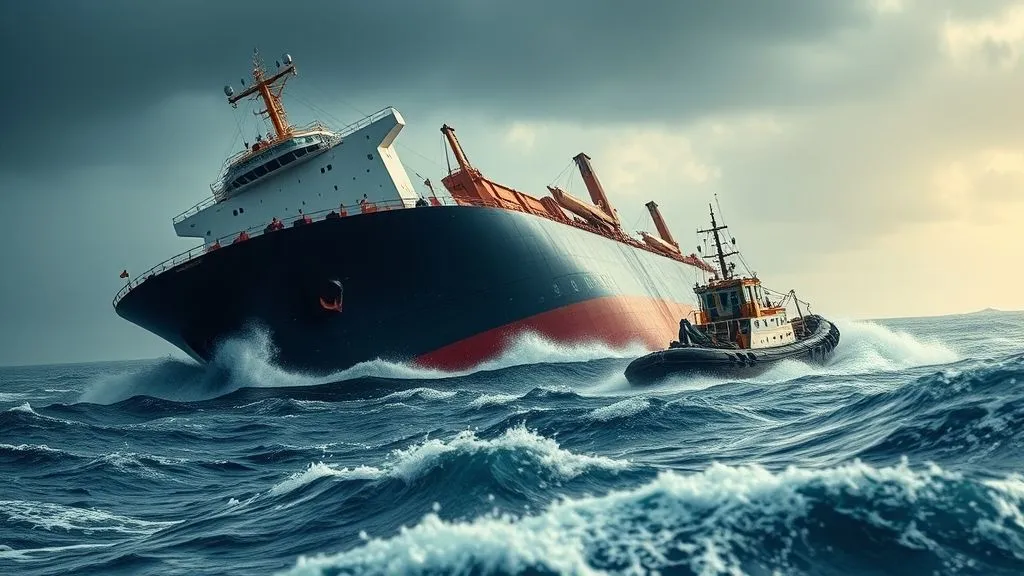
Disputing Excessive LOF Salvage Claims: Legal Strategies for Vessel Owners
For over two decades in maritime law, I've witnessed firsthand the profound financial and operational distress that an excessive LOF (Lloyd's Open Form) salvage claim can inflict upon a vessel owner. I recall a specific instance where a client, whose bulk carrier suffered a minor engine room fire quickly extinguished by the crew, found themselves facing a salvage demand that felt utterly disproportionate to the actual peril and the services rendered. It was a stark reminder that even a seemingly straightforward incident can spiral into a complex legal battle if not handled strategically.
The problem isn't just the initial claim; it's the daunting prospect of navigating the intricacies of salvage law, understanding the arbitration process, and ultimately, safeguarding your assets against what often feels like an opportunistic grab. Vessel owners, already reeling from an incident, are suddenly thrust into a high-stakes negotiation where the odds can feel stacked against them, especially when facing experienced salvors represented by formidable legal teams. The stress, the potential for colossal financial loss, and the disruption to business can be immense.
This article isn't just about identifying the problem; it's about empowering you with the knowledge and actionable frameworks to effectively challenge and mitigate excessive LOF salvage claims. Drawing from my extensive experience, I will guide you through understanding the LOF mechanism, identifying red flags, exploring robust legal grounds for dispute, and outlining strategic negotiation and arbitration tactics. My goal is to equip you with the insights necessary to turn a daunting challenge into a manageable legal process, ensuring fair remuneration for salvors without crippling your operations.
Understanding the LOF Framework: A Foundation for Dispute
Before you can effectively dispute a salvage claim, you must first grasp the foundational principles of the Lloyd's Open Form. The LOF is a widely used standard form of salvage agreement, renowned for its 'No Cure, No Pay' principle. This means salvors are only remunerated if they successfully save property from peril. While seemingly straightforward, the nuances within this framework are critical when a claim becomes excessive.
The 'No Cure, No Pay' Principle and Its Nuances
The 'No Cure, No Pay' principle is the cornerstone of LOF. It incentivizes salvors to undertake risky operations, knowing that success brings reward, but failure brings nothing. However, this isn't a blank cheque. The reward, or 'salvage award,' is determined by a set of criteria outlined in Article 13 of the 1989 Salvage Convention, which is incorporated into the LOF. These criteria include the salved value of the property, the skill and efforts of the salvors, the nature and extent of the danger, the promptness of the service, the value of the salvors' equipment, and the risk run by the salvors. Understanding how each of these factors is assessed is your first step in identifying potential overstatements.
It's vital to remember that the LOF also includes provisions for Special Compensation (Article 14), which allows salvors to recover their expenses, plus an uplift, when they prevent or minimize environmental damage, even if the 'No Cure, No Pay' principle doesn't yield a sufficient reward. This can complicate matters, as salvors might try to inflate environmental considerations to justify a higher claim, regardless of the actual success in saving property.
Key Elements of a Valid Salvage Claim
For any salvage claim under LOF to be valid, three fundamental elements must be present: peril, voluntariness, and success. Absence or significant diminution of any of these can be strong grounds for disputing the claim.
- Peril: The property must be in real and imminent danger of loss or damage. A vessel merely inconvenienced or in a situation that could be resolved by its own resources or routine assistance might not meet the threshold of 'peril' justifying a full salvage award.
- Voluntariness: The salvors must act voluntarily, without pre-existing contractual duty to the vessel in distress. A towage contract, for example, typically precludes a salvage claim unless the circumstances escalate significantly beyond the scope of the original agreement.
- Success: As the name suggests, the salvors must achieve some degree of success in saving the property. Partial success typically warrants a partial award, but a complete failure means no award under 'No Cure, No Pay'.
I've often seen disputes arise where salvors attempt to inflate the perception of peril long after the immediate danger has passed, or where their services were more akin to commercial towage than genuine salvage. These are crucial areas to scrutinize.
| Clause/Principle | Key Scrutiny Point |
|---|---|
| Article 13 Factors | Are all factors (peril, skill, value, risk, etc.) accurately represented and justified? |
| Article 14 Special Comp. | Was there actual environmental threat? Were expenses reasonably incurred? |
| Peril Definition | Was the vessel in real, imminent, and unmanageable danger? |
| Voluntariness | Did salvors have a pre-existing duty? Was their service truly voluntary? |
| Success Metrics | What was the extent of property saved? Was the 'cure' complete or partial? |
Initial Assessment: Identifying Red Flags in a Salvage Claim
Once an LOF claim is presented, your immediate task is a rigorous assessment. This isn't just about challenging the final figure; it's about dissecting the narrative presented by the salvors and comparing it against the objective reality of the incident. Early identification of discrepancies can significantly strengthen your position.
Evaluating the Peril and Services Rendered
The perceived level of peril is often the most subjective and therefore most exaggerated element of a salvage claim. Salvors naturally want to present their efforts in the most heroic light. Your job is to objectively assess the true danger the vessel faced. Ask:
- Was the vessel truly adrift in a shipping lane, or was it merely inconvenienced in a sheltered anchorage?
- Were its engines completely disabled, or could they have been repaired with onboard resources or routine assistance?
- What was the actual weather condition? Was it a Force 9 gale, or a moderate swell?
- How long did the 'perilous' situation last before salvors arrived?
Similarly, scrutinize the services rendered. Were they truly complex, requiring exceptional skill and resources, or were they relatively straightforward towage or fire-fighting efforts that could have been handled by less specialized assets? I've seen claims where a simple tow to port was described as a daring rescue from a lee shore, necessitating a detailed counter-narrative.
Scrutinizing Salvage Assets and Values
Salvors often emphasize the value and capability of their assets – powerful tugs, specialized equipment, experienced crew. While these contribute to the award, their deployment must be proportionate to the actual peril. A salvage claim involving a multi-million dollar ocean-going tug for a small pleasure craft in calm waters, for instance, immediately raises questions of proportionality. Furthermore, the claimed 'value' of the salved property itself is a key factor. Salvors will invariably seek to maximize this figure, as it directly influences the award. You must be prepared with your own independent valuation of the vessel and cargo post-incident, accounting for any damage incurred during the salvage operation.
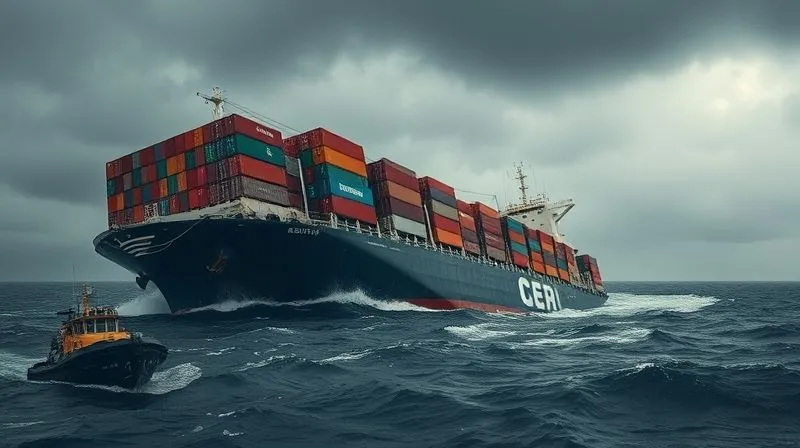
The LOF Arbitration Process: Your First Line of Defense
Should negotiations fail, the LOF framework mandates arbitration in London, typically under the auspices of Lloyd's of London. This is a specialized, often technical process, and approaching it without expert legal guidance is a grave error. Your preparation here is paramount.
Appointment of Arbitrators and Legal Representation
The LOF specifies the appointment of a Lloyd's Arbitrator, usually a highly experienced barrister or solicitor specializing in maritime law. You have the right to appoint your own legal team. This is not the time for general practitioners. You need lawyers with deep expertise in salvage law, who understand the nuances of Article 13, the precedents set by past awards, and the specific dynamics of LOF arbitration. They will be instrumental in presenting your case, cross-examining salvors' witnesses, and challenging their evidence.
Gathering Evidence: Logs, Surveys, and Expert Reports
The strength of your dispute rests entirely on the evidence you can present. This includes:
- Vessel's Logs: Bridge, engine, and deck logs provide an objective timeline of events, weather conditions, crew actions, and communications. Discrepancies between log entries and the salvors' narrative can be highly impactful.
- Survey Reports: Immediately after the incident, arrange for independent surveys of the vessel and cargo. These reports document the extent of damage, the true condition of the vessel, and can provide a realistic valuation of the salved property.
- Expert Witness Reports: Engage independent maritime experts – naval architects, master mariners, meteorologists – to provide opinions on the true peril, the necessity of the salvors' services, the effectiveness of their efforts, and the fair value of the salved property. Their unbiased technical assessments can counteract exaggerated claims.
- Crew Statements: Detailed statements from your crew, outlining their actions, the conditions, and their perception of the danger, are invaluable.
- AIS Data/VDR Recordings: These provide objective, verifiable data on the vessel's movements, speed, and internal communications, offering irrefutable evidence of the actual situation.
As marketing guru Seth Godin often says, "People do not buy goods and services. They buy relations, stories, and magic." In legal terms, the 'story' you present, backed by irrefutable evidence, is what convinces the arbitrator. Your narrative must be coherent, logical, and demonstrably true.
Legal Grounds for Disputing Excessive Claims
Beyond simply questioning the figures, there are specific legal grounds within maritime law that can be invoked to challenge and reduce an excessive salvage award. These are powerful tools when supported by compelling evidence.
Misrepresentation of Peril or Service Exaggeration
This is a common ground for dispute. If salvors have deliberately misrepresented the extent of the danger or exaggerated the complexity and risk of their services, this can lead to a significant reduction in the award. For instance, claiming a vessel was 'on the verge of sinking' when it merely had a small, contained ingress of water, or describing a routine tow as a 'complex maneuver under extreme conditions,' constitutes misrepresentation. You need to prove that their narrative diverges significantly from the objective facts, using your logs, independent surveys, and expert reports.
Gross Misconduct by Salvors
Article 18 of the Salvage Convention allows for the reduction or even forfeiture of a salvage award if the salvors have been guilty of gross misconduct. This could include:
- Theft or pilferage of cargo/property: Any unauthorized removal of goods from the salved vessel.
- Failure to take reasonable care: Causing unnecessary damage to the salved property during the operation.
- Deliberate exaggeration of services: While often a point of contention, egregious and provable exaggeration can sometimes cross into misconduct.
- Refusal to cooperate: Unreasonably refusing to cooperate with other salvors or authorities.
Proving gross misconduct is challenging, as it requires a high evidentiary bar, but if successful, it can lead to a substantial reduction in the award or even its complete denial. I've personally seen cases where clear evidence of pilferage led to a forfeiture of a significant portion of the award.
Lack of Success or Minimal Effort
The 'No Cure, No Pay' principle directly links remuneration to success. If the salvors' efforts were minimal, ineffective, or contributed little to the ultimate safety of the vessel, their award should reflect this. This is particularly relevant when multiple parties were involved, and you need to argue that the LOF salvors' contribution was less significant than claimed. Similarly, if the vessel was already largely safe or capable of self-rescue, the 'success' attributed to the salvors might be overblown.
Case Study: The 'MV Neptune's Folly' Case: Challenging Exaggerated Peril
Case Study: The 'MV Neptune's Folly' Case: Challenging Exaggerated Peril
The 'MV Neptune's Folly' (a fictional name for a real-world scenario I advised on) was a large bulk carrier that experienced a sudden, but contained, engine room fire while anchored in a relatively sheltered bay. The crew quickly extinguished the fire using onboard systems. A salvage tug, responding to a general distress call, arrived and, under an LOF agreement, proceeded to tow the vessel to a nearby port for inspection. The salvors subsequently lodged a claim for a substantial sum, citing extreme peril, including a 'near-catastrophic engine failure' and 'imminent risk of explosion' in a busy shipping lane.
My client, the vessel owner, was aghast. We immediately initiated a thorough investigation. Our strategy involved:
- Detailed Crew Statements: We obtained sworn affidavits from the Chief Engineer and Master, detailing the fire's containment, the quick response, and the fact that the vessel's own systems were fully operational post-extinguishment, albeit with a need for professional inspection.
- Independent Fire Investigation: We commissioned an expert fire investigator who confirmed the fire was localized, extinguished efficiently, and posed no ongoing risk of explosion.
- VDR and AIS Data Analysis: This data irrefutably showed the vessel had remained securely anchored throughout the incident, not 'adrift in a busy shipping lane.'
- Meteorological Report: We obtained official weather data confirming calm sea conditions, directly contradicting the salvors' narrative of a 'stormy peril.'
By meticulously presenting this evidence during arbitration, we were able to demonstrate a significant misrepresentation of peril and exaggeration of services. The arbitrator, convinced by the objective data, drastically reduced the salvage award to a figure more commensurate with a precautionary towage service rather than a high-risk rescue. This resulted in savings of millions for the vessel owner and underscored the power of robust, factual counter-evidence.
Strategic Negotiation: Pre-Arbitration Settlement Tactics
While arbitration is the formal dispute resolution mechanism, effective negotiation before and during the arbitration process can often lead to a more favorable and faster outcome. This requires a blend of legal acumen, commercial awareness, and strategic communication.
Leveraging Expert Valuations and Counter-Proposals
Your independent valuation of the salved property (vessel and cargo) is a powerful negotiation tool. Salvors will present their own, often inflated, valuation. By having a credible, expert-backed figure, you can immediately anchor the negotiation to a more realistic base. Furthermore, be prepared to make sensible counter-proposals. These shouldn't be arbitrary low-ball offers but figures carefully calculated based on your assessment of the true peril, the services rendered, and comparable salvage awards from past cases. Your legal team can advise on the range of awards typically seen for similar incidents.
The Role of Without Prejudice Discussions
Engage in 'without prejudice' discussions. This legal principle ensures that anything said or offered during these negotiations cannot be used against you in arbitration if a settlement isn't reached. This creates a safe space for open dialogue and exploring settlement options without fear of prejudicing your formal case. A skilled maritime lawyer can navigate these discussions, probing the salvors' weaknesses and highlighting the strength of your counter-arguments, pushing them towards a more reasonable settlement.

The Importance of Security: Managing Your Exposure
Under LOF, vessel owners are typically required to provide security for the salvage claim. This is usually in the form of a bank guarantee or a guarantee from an insurer (e.g., a P&I Club). Managing this security effectively is a critical part of your overall strategy.
Understanding LOF Guarantees and Their Implications
The LOF specifies that security must be provided to the Council of Lloyd's or to the salvors' solicitors. This security typically covers the maximum potential salvage award, plus interest and costs. The sheer size of this guarantee can be a significant financial burden, tying up capital or affecting credit lines. It's crucial to understand that providing security does not admit liability or the quantum of the claim; it merely ensures that funds are available should an award be made against you.
Negotiating Security Reductions
One of the first strategic moves your legal team should consider is negotiating a reduction in the initial security demand. Salvors often demand a very high figure. By presenting your preliminary assessment of the true salved value and the likely award, backed by initial expert opinions, you can argue for a more realistic security amount. This can significantly reduce your immediate financial exposure and demonstrate your proactive approach to disputing the claim. According to a report by the International Maritime Organization (IMO), effective early engagement can often lead to more proportionate security demands, reflecting a clearer understanding of the incident's true scope.
Post-Arbitration Challenges: Appeals and Enforcement
Even after an arbitration award is made, your legal journey might not be over. The LOF process includes an appeal mechanism, and in rare cases, judicial review might be necessary.
Grounds for Appeal to the LOF Appeal Arbitrator
If you believe the initial arbitrator's award is fundamentally flawed, you have the right to appeal to a Lloyd's Appeal Arbitrator. The grounds for appeal are generally limited to:
- Error of law: The arbitrator misapplied a legal principle.
- Manifest error of fact: The arbitrator made a factual finding that was plainly wrong and unsupported by evidence.
- Disproportionate award: The award is so excessively high (or low) that it falls outside the reasonable bounds of awards for similar cases.
An appeal is not a re-hearing of the entire case; it's a review of the initial arbitrator's decision based on the evidence presented to them. Your legal team will need to meticulously identify the specific errors in the original award and present a compelling argument to the Appeal Arbitrator. As maritime expert Lloyd's of London consistently emphasizes, the appeal process is stringent, requiring precise legal argumentation.
Judicial Review: A Last Resort
In extremely rare circumstances, where there has been a serious procedural irregularity in the arbitration or appeal process, or where the award is contrary to public policy, it may be possible to seek judicial review in the English High Court. This is an exceptional remedy and not a pathway to simply re-litigate the merits of the case. It's a highly complex and costly undertaking, reserved for situations where there has been a fundamental injustice in the arbitration process itself, rather than merely dissatisfaction with the outcome.

Preventative Measures: Minimizing Future LOF Risks
The best dispute is the one that never happens. While incidents are unavoidable, proactive measures can significantly reduce your exposure to excessive LOF claims in the future.
Proactive Emergency Response Planning
Having a robust and well-practiced emergency response plan is paramount. This includes:
- Well-trained crew: A highly competent crew can often mitigate minor incidents before they escalate into true peril, potentially negating the need for external salvage.
- Pre-arranged towage contracts: For certain routes or types of vessels, having pre-negotiated commercial towage contracts in place can provide an alternative to LOF in less severe situations.
- Designated response teams: Establish clear protocols for communication, evidence gathering, and decision-making immediately following an incident. The quicker you can assess the situation and activate your own resources, the less reliant you'll be on opportunistic salvors.
A well-executed emergency response can often reduce the perceived peril, making any subsequent salvage claim inherently less justifiable for a high award.
Reviewing Insurance Coverage and Policies
Regularly review your P&I (Protection & Indemnity) and H&M (Hull & Machinery) insurance policies. Ensure they provide adequate coverage for salvage claims and associated legal costs. Understand the reporting requirements and procedures of your insurers. Your P&I Club, in particular, will be a vital ally, providing expertise, legal support, and often managing the security requirements on your behalf. Engage with them early and often. As Professor Martin Davies highlights in his work on Admiralty Law, the interplay between insurance and salvage is fundamental to managing risk.
| Preventative Measure | Benefit |
|---|---|
| Enhanced Crew Training | Faster incident resolution, reduced reliance on external salvors |
| Pre-arranged Commercial Towage Contracts | Alternative to LOF for non-perilous incidents, fixed costs |
| Robust Emergency Response Plan | Minimizes perceived peril, strengthens owner's narrative |
| Regular Insurance Policy Review | Adequate coverage, P&I Club support, managed security |
Frequently Asked Questions (FAQ)
What is the typical timeframe for an LOF salvage claim to be resolved? The timeframe can vary significantly. While the arbitration process itself is designed to be relatively swift, typically concluding within months of the incident, the overall process can extend. Factors like the complexity of the case, the volume of evidence, the need for expert reports, and whether an appeal is lodged can prolong resolution. From incident to final award (including appeal), it can range from 6 months to over 2 years.
Can I negotiate the terms of the LOF agreement after it's been signed? The LOF is a standard form, and its core terms are generally non-negotiable at the point of signature, especially in a genuine emergency where time is of the essence. However, what you are disputing are not the terms of the agreement itself, but the quantum of the salvage award that results from applying those terms to the specific facts of the incident. Post-incident, negotiation focuses on the amount of security and the eventual award, not the LOF form.
What if the salvors cause additional damage to my vessel during the operation? If the salvors cause damage to your vessel due to negligence or gross misconduct during the salvage operation, you may have a counterclaim against them. This damage would typically be assessed by independent surveyors and could lead to a reduction in the salvage award or a separate claim for damages. Documenting any damage immediately after the salvage is crucial.
Is it always better to sign an LOF than to refuse salvage assistance? In genuine peril, signing an LOF is almost always preferable to refusing assistance. Refusing assistance when a vessel is in real danger can lead to catastrophic loss of life, property, and significant environmental damage, for which the owner would be liable. The LOF provides a structured framework for remuneration, which, while potentially leading to disputes, is better than uncontrolled loss. The key is to manage the LOF aftermath effectively, not to avoid it when truly necessary.
How does the value of the salved property impact the salvage award? The salved value is a primary factor under Article 13 of the Salvage Convention. A higher salved value generally leads to a higher salvage award, as it reflects the greater benefit conferred by the salvors. This is precisely why salvors often seek to maximize the valuation of the vessel and cargo, and why having your own expert valuation is critical for dispute purposes. The award is typically a percentage of the salved value, but that percentage varies widely based on all other Article 13 factors.
Key Takeaways and Final Thoughts
Disputing excessive LOF salvage claims is a complex but entirely manageable endeavor, provided you approach it with a clear strategy, robust evidence, and expert legal counsel. My experience has repeatedly shown that preparedness and meticulous attention to detail are your strongest allies.
- Understand the LOF deeply: Know the 'No Cure, No Pay' principle and Article 13 factors inside out.
- Act quickly and gather evidence: Objective data from logs, surveys, and expert reports is paramount.
- Identify red flags early: Scrutinize peril, services rendered, and asset valuations.
- Leverage legal grounds: Misrepresentation, misconduct, and lack of success are powerful arguments.
- Negotiate strategically: Use expert valuations and 'without prejudice' discussions to your advantage.
- Manage security proactively: Aim for a proportionate guarantee to minimize financial strain.
- Plan for the future: Proactive emergency response and insurance reviews reduce future risks.
While an LOF incident can be a trying time, remember that you are not powerless. With the right legal strategies and a steadfast commitment to presenting the objective facts, you can challenge disproportionate claims and ensure that justice, in the form of a fair and reasonable salvage award, prevails. Your vessel, your cargo, and your bottom line deserve nothing less. Equip yourself, engage the right experts, and navigate these turbulent legal waters with confidence.
Recommended Reading
- 7 Proven Ways: How to Safeguard Senior Assets from Long-Term Care Costs
- Unveiling the Truth: How to Prove Sexual Harassment Without Witnesses
- 5 Legal Strategies: Protect Retirement Assets from Dementia Incapacity
- New Net Neutrality Rules: 7 Key Contractual Impacts for Content Delivery
- Winning 522(f) Motions: 7 Legal Arguments to Avoid Judicial Liens


Comments
Leave a comment below. Your email will not be published. Required fields marked with *