



How to challenge facially neutral law with disparate racial impact?
For over two decades in Constitutional Law, particularly within the intricate realm of equal protection, I've witnessed firsthand the profound challenges individuals and communities face when confronting systemic injustice. It's often not the overtly discriminatory statutes that cause the most insidious harm, but rather those seemingly neutral laws whose impact disproportionately falls upon racial minorities.
This isn't merely an academic exercise; it's a lived reality where access to housing, education, employment, and even basic public services can be subtly curtailed by policies that, on their surface, appear fair. The pain point for many is the sheer difficulty of articulating and proving that a law, despite its neutral language, is a vehicle for racial discrimination.
In this definitive guide, I will share my expert insights and provide a robust framework for how to challenge facially neutral law with disparate racial impact. We'll delve into the legal precedents, explore actionable strategies for gathering evidence, analyze compelling case studies, and equip you with the knowledge to navigate this complex legal landscape and fight for genuine equal protection.
Understanding the Battlefield: Facially Neutral Laws and Disparate Impact
Before we can strategize on how to challenge facially neutral law with disparate racial impact, we must first clearly define our terms. A "facially neutral" law is one that, on its text, does not differentiate between racial groups. It applies to everyone equally, without explicit mention of race.
However, the impact of such a law can be anything but neutral. When a facially neutral law or policy results in a disproportionately negative outcome for a particular racial group, we refer to this as "disparate impact." This effect, while often unintentional in its modern manifestation, can perpetuate historical inequalities and create new barriers.
The Nuance of 'Facially Neutral'
Consider a law requiring all government employees to pass a specific height and weight test, or a city ordinance dictating zoning that limits multi-family housing. On paper, these laws treat all applicants or property owners the same. They don't explicitly mention race, yet their practical application can lead to stark racial disparities.
For instance, a height requirement might disproportionately exclude certain ethnic groups who, on average, are shorter. Similarly, single-family zoning often entrenches existing patterns of segregation, making it harder for lower-income, often minority, communities to access affordable housing in well-resourced areas.
Disparate Impact vs. Discriminatory Intent: The Crucial Distinction
Here's where the legal battle truly begins. Under the Equal Protection Clause of the Fourteenth Amendment, merely demonstrating a disparate impact from a facially neutral law is generally not enough to prove a constitutional violation. This was firmly established by the Supreme Court in the landmark case of Washington v. Davis (1976).
To prevail in an Equal Protection challenge to a facially neutral law, you must generally prove that the law was enacted with a "discriminatory intent" or "discriminatory purpose." This means showing that the lawmakers or administrators adopted the law *because of*, not merely *in spite of*, its adverse effects on a particular racial group. This distinction is the bedrock of our strategy.
The Washington v. Davis Hurdle: Proving Discriminatory Intent
The requirement to prove discriminatory intent, rather than just disparate impact, is arguably the highest hurdle in constitutional litigation concerning racial discrimination. It shifts the focus from the observable outcome to the subjective motivations of the decision-makers, which are notoriously difficult to uncover and prove.
I've seen many well-intentioned challenges falter at this stage, precisely because they couldn't bridge the gap between a clear disparate impact and a provable discriminatory purpose. This is where a deep understanding of legal precedent and meticulous evidentiary work becomes paramount.
Beyond Effect: The Intent Requirement
The Supreme Court clarified that demonstrating discriminatory intent doesn't necessarily require proving outright malice or hatred. Instead, it involves showing that race was a motivating factor in the decision, even if it wasn't the sole factor. The Court has provided a framework, primarily in Village of Arlington Heights v. Metropolitan Housing Development Corp. (1977), to guide courts in this complex inquiry.
"Proving discriminatory intent is not about reading minds; it's about meticulously piecing together a mosaic of circumstantial evidence that paints a clear picture of racial motivation behind a seemingly neutral policy. It demands legal acumen, persistent investigation, and often, the courage to challenge the established narrative."
This framework is our roadmap. It outlines several types of circumstantial evidence that courts should consider when evaluating claims of discriminatory purpose. Mastering these evidentiary categories is central to knowing how to challenge facially neutral law with disparate racial impact effectively.
Building Your Case: Assembling the Evidence of Intent
Successfully proving discriminatory intent requires a comprehensive and multi-faceted approach to evidence gathering. It’s rarely one smoking gun, but rather a compelling accumulation of facts that, when viewed together, point unmistakably to a racial animus or purpose. Here are the key types of evidence, directly drawn from the Supreme Court's guidance, that you must meticulously collect:

Step 1: Historical Background of the Decision
Examine the historical context leading up to the enactment of the law or policy. Does this history reveal a consistent pattern of discriminatory actions by the governmental body in question? Evidence of a long-standing history of racial discrimination in similar contexts can be highly probative of current intent.
For example, if a city has a history of enacting zoning laws that disproportionately affect minority communities, a new zoning ordinance with a similar disparate impact becomes more suspicious. This historical pattern helps to establish a context of potential intent, rather than mere coincidence.
Step 2: The Specific Sequence of Events Leading to Its Adoption
Scrutinize the events immediately preceding and surrounding the decision. Were there any unusual or suspicious departures from normal procedures? The timing of the decision, especially if it coincides with racial tensions or demographic shifts, can be telling.
Look for instances where the governmental body seemed to rush the decision, bypass public input, or change established protocols only for this particular action. Such irregularities can suggest an underlying motive that the actors wished to obscure.
Step 3: Departures from Normal Procedural Sequence
Did the decision-making process for this law or policy deviate significantly from the typical procedures followed for similar actions? Procedural irregularities can be a strong indicator that something was amiss and that the normal checks and balances were circumvented to achieve a particular outcome.
For instance, if a public hearing was suddenly canceled, or a crucial committee vote was taken without proper notice, it could suggest an attempt to avoid scrutiny. These procedural anomalies help establish a narrative of intentional circumvention.
Step 4: Substantive Departures from Norms
Does the law or policy itself represent a significant substantive departure from prior policy or from generally accepted practices in similar jurisdictions? If the government body enacts a policy that is highly unusual or illogical from a neutral perspective, but which predictably produces a disparate racial impact, it strengthens the inference of discriminatory intent.
For example, a sudden shift in resource allocation that drastically disadvantages a minority-majority neighborhood without a clear, race-neutral justification could be a substantive departure. This requires comparing the challenged law to typical governmental actions.
Step 5: Legislative or Administrative History
This is where you delve into the internal records, minutes of meetings, public statements, and private communications of the decision-makers. What was said during deliberations? Were there any explicit or implicit references to race, even if couched in coded language?
Look for statements by officials that reveal a concern about the racial composition of the community or the racial characteristics of those who would be affected by the law. Even if no one explicitly says, "we want to keep minorities out," statements about preserving "neighborhood character" in racially charged contexts can be highly relevant.
- Gather Historical Data: Compile records of past policies and their racial impact.
- Document Procedural Irregularities: Note any deviations from standard legislative or administrative processes.
- Analyze Substantive Policy Shifts: Compare the challenged law to previous policies and norms.
- Collect Legislative Records: Obtain minutes, transcripts, emails, and public statements related to the law's passage.
- Identify Key Decision-Makers: Research their past statements, voting records, and affiliations.
- Interview Witnesses: Seek out individuals who were involved in or observed the decision-making process.
Statistical Proof: When Numbers Speak Volumes (But Not Always Enough)
While disparate impact alone is insufficient to prove a constitutional violation, compelling statistical evidence of disparate impact is almost always a crucial component in establishing discriminatory intent. As the Supreme Court noted in Arlington Heights, "an invidious discriminatory purpose may often be inferred from the totality of the relevant facts, including the fact, if it is true, that the law bears more heavily on one race than another."
Statistics don't prove intent directly, but they can create a powerful inference, especially when the disparity is stark and unexplained by legitimate, non-racial factors. This is where expert statisticians and demographers become invaluable members of your legal team.
Understanding Statistical Significance
When presenting statistical evidence, it's critical to demonstrate not just a difference, but a *statistically significant* difference. This means that the observed disparity is unlikely to have occurred by chance. Attorneys must work closely with experts to ensure the data is properly analyzed, presented, and can withstand rigorous cross-examination.
For example, if a new voting law results in a 10% decrease in voter registration among one racial group compared to a 1% decrease in another, and this difference is statistically significant, it begs for a non-discriminatory explanation. The absence of such an explanation strengthens the argument for intent.
The Role of Expert Witnesses
Expert witnesses can analyze complex data sets, identify patterns, and testify to the statistical significance of disparate impacts. They can also help to rule out alternative, non-racial explanations for the observed disparities. Their testimony translates raw numbers into understandable evidence for a judge or jury.
Furthermore, experts can construct counterfactuals – showing what the impact *would have been* if a different, race-neutral policy had been adopted. This helps to underscore the intentionality of the chosen policy's disproportionate effect.
| Type of Proof | Evidentiary Standard | Role in Intent Cases | Example |
|---|---|---|---|
| Pure Disparate Impact | Generally insufficient for Equal Protection | Establishes a prima facie case, creates inference, shifts burden of explanation | Minority group fails a test at 3x the rate of majority group |
| Statistical Significance | Essential for demonstrating compelling disparity | Strengthens inference of intent, requires expert analysis | Disparity in test failure rates is statistically significant at p<0.01 |
| Causation Analysis | Connects policy to disparate outcome | Rules out confounding factors, focuses on policy's specific effect | Expert testimony linking test design directly to disparate outcomes |
Mini Case Study: The City of Willow Creek's Zoning Ordinance
Let me share a fictional, yet highly realistic, scenario that illustrates how to challenge facially neutral law with disparate racial impact using the principles we've discussed. Imagine the City of Willow Creek, a mid-sized municipality with a growing immigrant and minority population, primarily concentrated in its older, more affordable eastern districts.
For years, Willow Creek had a relatively permissive zoning code, allowing for mixed-use developments and higher-density housing. However, as the eastern districts became more diverse, the city council suddenly enacted a new "Neighborhood Character Preservation Ordinance." This ordinance drastically downzoned large swaths of the eastern districts, limiting new construction to single-family homes on large lots and imposing stringent aesthetic requirements.
Case Study: Unmasking Intent in Willow Creek's Zoning Law
On its face, the ordinance was neutral; it didn't mention race. However, its immediate impact was to halt the construction of affordable housing, making it nearly impossible for the growing minority population to find housing within their means, forcing many to commute long distances or leave the city. A local civil rights group decided to challenge it.

Their legal team meticulously applied the Arlington Heights factors. They uncovered a history of the city council resisting proposals for affordable housing in the eastern districts. The specific sequence of events showed the ordinance was introduced shortly after a contentious public meeting where residents from predominantly white, wealthier districts expressed fears about "overcrowding" and "changing demographics" in the eastern districts.
Procedurally, the ordinance was fast-tracked, bypassing a standard comprehensive planning review process that usually involved extensive community input. Substantively, it was a radical departure from Willow Creek's previous pro-development stance, with no new studies or data presented to justify such a dramatic shift in policy, beyond vague appeals to "preserving character."
Crucially, the legislative history included emails between council members discussing how the ordinance would "preserve the character of our neighborhoods" and "maintain property values" – coded language often used to resist racial integration. One council member, in a private conversation, was recorded expressing concerns about "too many of 'them' moving in." While no single piece was a smoking gun, the cumulative effect of this evidence was overwhelming. The court found that despite its neutral language, the ordinance was enacted with a discriminatory purpose to limit the growth of the minority population in the city, thus demonstrating how to challenge facially neutral law with disparate racial impact successfully.
Alternative Avenues: State Constitutions and Statutory Claims
While the Equal Protection Clause of the Fourteenth Amendment is the primary federal tool for addressing racial discrimination, it's not the only one. When facing the high bar of proving discriminatory intent under federal constitutional law, savvy litigators often explore alternative avenues provided by state constitutions and federal statutes. These paths can sometimes offer a more direct route to relief, as some do not require proof of intent, only disparate impact.
State Equal Protection Clauses
Many state constitutions have their own equal protection clauses or similar anti-discrimination provisions. Importantly, state courts are free to interpret their own constitutional provisions more broadly than the U.S. Supreme Court interprets the Fourteenth Amendment. This means a state's equal protection clause might, in certain circumstances, prohibit actions that have a disparate racial impact even without proof of discriminatory intent.
Researching state-specific precedents is crucial. For example, some states have adopted a "strict scrutiny" standard for any law that disproportionately impacts a protected class, regardless of intent, effectively setting a lower bar for challengers than federal courts. Consult your state's legal framework for potential advantages. For more information on state constitutional law, refer to resources like the National Conference of State Legislatures.
Federal Statutes: Title VI, Fair Housing Act, etc.
Several federal statutes specifically prohibit discrimination and, critically, often allow for challenges based on disparate impact, without requiring proof of discriminatory intent. These include:
- Title VI of the Civil Rights Act of 1964: Prohibits discrimination on the basis of race, color, or national origin in programs and activities receiving federal financial assistance. The Supreme Court has affirmed that disparate impact claims are cognizable under Title VI's implementing regulations.
- Fair Housing Act (Title VIII of the Civil Rights Act of 1968): Prohibits discrimination in the sale, rental, and financing of housing based on race, color, religion, sex, national origin, familial status, and disability. The Supreme Court confirmed in Texas Dept. of Housing and Community Affairs v. Inclusive Communities Project, Inc. (2015) that disparate impact claims are permissible under the Fair Housing Act.
- Title VII of the Civil Rights Act of 1964: Prohibits employment discrimination based on race, color, religion, sex, and national origin. Disparate impact claims are well-established in employment law under Title VII.
These statutory claims can be powerful tools when a facially neutral law or policy has a clear disparate racial impact but proving discriminatory intent under the Equal Protection Clause feels insurmountable. They offer a direct path to relief by focusing on the effect, not the motive.
The Role of Expert Testimony and Social Science Research
In cases involving complex social phenomena like racial discrimination and disparate impact, expert testimony and robust social science research are indispensable. They provide the court with the necessary context, data analysis, and interpretive frameworks to understand the real-world implications of facially neutral laws. I've found that a compelling expert can often bridge the gap between raw data and a judge's understanding of systemic injustice.
Psychological and Sociological Expertise
Beyond statisticians, psychologists and sociologists can offer critical insights. They can testify about the mechanisms of implicit bias, the history of segregation, the social science behind racial disparities, and how seemingly neutral policies can perpetuate these inequalities. Their expertise helps to explain *why* a disparate impact occurs and *how* it relates to historical patterns of discrimination, strengthening the inference of intent.
For example, a sociologist might testify on how a particular housing policy, while race-neutral on its face, mimics the effects of historical redlining practices, leading to predictable racial segregation. This contextualizes the policy within a broader understanding of systemic racism.
The Importance of Amicus Briefs
"Amicus curiae" (friend of the court) briefs, filed by non-parties who have a strong interest in the subject matter, can be incredibly influential. These briefs, often submitted by civil rights organizations, academic institutions, or professional associations, can provide the court with additional social science research, historical context, and legal arguments that support the challenger's position.
They demonstrate to the court that the issue extends beyond the immediate parties, affecting broader societal interests. A well-crafted amicus brief can significantly bolster the authority and trustworthiness of your arguments, especially when tackling complex issues like how to challenge facially neutral law with disparate racial impact.
Strategic Litigation: Navigating the Courts
Challenging a facially neutral law with disparate racial impact is a marathon, not a sprint. It requires strategic planning, meticulous execution, and a deep understanding of the litigation process. From the initial investigation to potential appeals, every step must be carefully considered to maximize the chances of success.
Pre-Litigation Considerations: Investigation and Demand Letters
Before even filing a lawsuit, a thorough investigation is paramount. This involves gathering all the evidence discussed earlier: historical records, legislative minutes, statistical data, and witness statements. Often, a well-researched demand letter, outlining the legal violations and proposing a resolution, can be sent to the governmental body. This can sometimes lead to a settlement or policy change without the need for protracted litigation, saving time and resources.
The demand letter also serves to put the defendant on notice, creating a formal record of the dispute. It's a strategic move that can lay the groundwork for a stronger case if litigation becomes inevitable.
Discovery Phase: Unearthing Crucial Documents
Once a lawsuit is filed, the discovery phase is where you officially compel the defendant to produce documents, answer interrogatories, and submit to depositions. This is often where the most damning evidence of discriminatory intent is unearthed. You'll seek internal communications, drafts of the challenged law, studies or reports considered (or ignored), and testimony from key decision-makers.
This phase is critical for exposing what the governmental actors knew, when they knew it, and what their true motivations might have been. It requires persistence and a keen eye for detail to piece together the full story.
Summary Judgment and Trial
After discovery, defendants often move for summary judgment, arguing that there are no genuine issues of material fact and they are entitled to judgment as a matter of law. Your goal is to demonstrate that a genuine dispute *does* exist regarding discriminatory intent, based on the evidence collected. If summary judgment is denied, the case proceeds to trial, where your meticulously gathered evidence will be presented to a judge or jury.

At trial, expert witnesses will testify, documents will be admitted, and you will weave together the narrative of discriminatory intent. This is the culmination of all your efforts, demanding persuasive advocacy and a clear, compelling presentation of the facts.
Overcoming Defenses: Legitimacy and Rational Basis
When you challenge a facially neutral law with disparate racial impact, the governmental entity will invariably offer a "legitimate, non-discriminatory reason" for its policy. They will argue that the law serves a valid governmental interest and that any disparate impact is merely an unfortunate, unintended consequence, not the result of discriminatory intent.
Your task is to demonstrate that this proffered reason is either a pretext for discrimination or that the government's interest, even if legitimate, could have been achieved through less discriminatory means. This is where the concept of "rational basis" review typically applies to facially neutral laws, but where the presence of discriminatory intent elevates the standard.
Challenging 'Legitimate Government Interests'
The government might claim the law is for public safety, economic development, or environmental protection. Your challenge must show that these asserted interests are not the *real* reason for the law, or that they are being used as a shield for racial bias. This often involves demonstrating that the government's actions are inconsistent with its stated goals or that the claimed benefits are negligible compared to the discriminatory harm.
Furthermore, you might argue that even if the interest is legitimate, the chosen policy is not rationally related to achieving that interest, or that the government could have adopted an equally effective, less discriminatory alternative. This line of argument directly attacks the credibility of the government's stated purpose.
The High Bar of Strict Scrutiny
If you successfully prove discriminatory intent, the legal standard of review dramatically shifts from "rational basis" to "strict scrutiny." Under strict scrutiny, the government must demonstrate that the law serves a "compelling governmental interest" and is "narrowly tailored" to achieve that interest, using the "least restrictive means" available. This is an incredibly difficult standard for the government to meet.
Very few laws survive strict scrutiny. This is why proving discriminatory intent is so crucial and why it's the ultimate goal when learning how to challenge facially neutral law with disparate racial impact. It effectively forces the government to justify its discriminatory actions with an almost impossible burden of proof. For a deeper dive into strict scrutiny, you can consult academic resources such as the Legal Information Institute at Cornell Law School.
| Scrutiny Level | Applies When | Government Burden | Likelihood of Survival |
|---|---|---|---|
| Rational Basis | No suspect class or fundamental right involved (default) | Show law is rationally related to a legitimate government interest | High |
| Intermediate Scrutiny | Quasi-suspect class (e.g., gender) involved | Show law is substantially related to an important government interest | Moderate |
| Strict Scrutiny | Suspect class (e.g., race) or fundamental right involved | Show law is narrowly tailored to achieve a compelling government interest (least restrictive means) | Low |
Advocacy Beyond the Courtroom: Public Opinion and Policy Change
While litigation is a powerful tool, legal challenges to facially neutral laws with disparate racial impact are often part of a broader advocacy strategy. Engaging with public opinion and pursuing legislative or administrative policy changes can complement legal efforts, creating a more comprehensive approach to achieving justice and systemic reform.
Community Engagement and Media Strategy
Building a strong case in court is one thing; building public support is another. Engaging directly with affected communities, educating the public about the disparate impact of a law, and working with media outlets to tell compelling stories can put significant pressure on decision-makers. Public outcry can sometimes motivate legislative bodies to reconsider or repeal discriminatory policies, even without a court order.
A well-coordinated media strategy can highlight the human cost of these laws, making abstract legal concepts tangible and relatable to a broader audience. This external pressure can be a potent force for change, especially when combined with a robust legal challenge.
Legislative Advocacy
Sometimes, the most direct path to change is through the legislative process itself. While a court can strike down a discriminatory law, a legislature can proactively amend or repeal it, or even pass new laws that explicitly address and remedy disparate impacts. Lobbying efforts, grassroots organizing, and direct engagement with elected officials can be crucial in this regard.
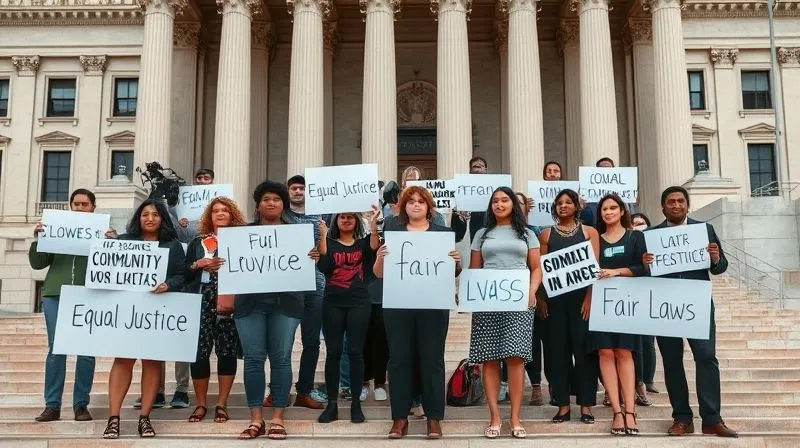
This dual approach – challenging laws in court while simultaneously advocating for legislative reform – often yields the most sustainable and impactful results. It recognizes that legal victories are important, but true systemic change often requires shifts in policy and public consciousness.
Frequently Asked Questions (FAQ)
Question: Is it always necessary to prove discriminatory intent for a facially neutral law to be unconstitutional? Answer: For challenges under the Equal Protection Clause of the Fourteenth Amendment, yes, generally proving discriminatory intent is required, as established by Washington v. Davis. However, some federal statutes (like Title VI, Title VII, and the Fair Housing Act) and certain state constitutional provisions allow for challenges based solely on disparate impact, making intent unnecessary in those specific contexts. It's crucial to identify the correct legal avenue for your challenge.
Question: What kind of statistical evidence is most compelling in these cases? Answer: The most compelling statistical evidence demonstrates a stark, statistically significant disparity in outcomes for different racial groups that cannot be explained by legitimate, non-racial factors. This often involves comparing the impact of the challenged law on the protected group versus other groups, controlling for relevant variables, and potentially using sophisticated regression analyses. Expert statisticians are essential for analyzing and presenting this data effectively to a court.
Question: Can "coded language" or "dog whistles" be used as evidence of discriminatory intent? Answer: Absolutely. Courts recognize that direct admissions of racial animus are rare. Evidence of discriminatory intent can often be inferred from coded language, euphemisms, or "dog whistle" rhetoric that, while not explicitly racial, is understood within its context to convey a racial message. This falls under the "legislative or administrative history" factor, where statements by officials are scrutinized for their true meaning and implications, especially when combined with other circumstantial evidence.
Question: How long does a typical legal challenge to a facially neutral law with disparate racial impact take? Answer: These cases are often complex and can be lengthy. From initial investigation and filing to discovery, potential motions for summary judgment, trial, and possible appeals, such litigation can easily take several years. The timeline depends on the specific facts of the case, the jurisdiction, the court's calendar, and the willingness of the parties to engage in settlement discussions. Patience and sustained commitment are vital.
Question: What if the government claims their law is necessary for a compelling interest, even if discriminatory intent is proven? Answer: If discriminatory intent is proven, the law faces "strict scrutiny." Under this standard, the government must demonstrate two things: first, that the law serves a "compelling governmental interest" (a very high bar, e.g., national security, remedying past discrimination), and second, that the law is "narrowly tailored" to achieve that interest using the "least restrictive means." This means the law must be precisely crafted to achieve the compelling interest without unnecessarily burdening the protected group. It's extremely rare for a law proven to be intentionally discriminatory to survive strict scrutiny.
Key Takeaways and Final Thoughts
- Challenging facially neutral laws with disparate racial impact under the Equal Protection Clause requires proving discriminatory intent, not just disparate effect.
- The Arlington Heights factors provide a critical framework for gathering circumstantial evidence of intent, including historical background, sequence of events, procedural and substantive departures, and legislative history.
- Statistical evidence is crucial for demonstrating disparate impact and creating an inference of intent, but it must be meticulously analyzed by expert witnesses.
- Consider alternative legal avenues, such as state equal protection clauses or federal statutes like Title VI and the Fair Housing Act, which may have lower evidentiary burdens (disparate impact only).
- Expert testimony from sociologists, psychologists, and statisticians can provide essential context and bolster your arguments.
- Strategic litigation involves thorough pre-litigation investigation, aggressive discovery, and persuasive trial presentation.
- Even if intent is proven, be prepared to challenge the government's asserted "legitimate interests" and argue that the law fails strict scrutiny.
- Remember that legal challenges are often enhanced by concurrent public advocacy and legislative engagement.
The journey to challenge facially neutral law with disparate racial impact is undeniably arduous, fraught with legal complexities and emotional weight. Yet, as an industry specialist who has dedicated years to constitutional law, I can assure you that it is a fight worth waging. The pursuit of true equal protection demands vigilance, rigorous legal strategy, and an unwavering commitment to justice. By understanding the intricacies of discriminatory intent and leveraging every available legal and advocacy tool, we can dismantle these subtle barriers and pave the way for a more equitable society for all. Your efforts in this space are not just legal battles; they are profound contributions to the ongoing struggle for civil rights.
Recommended Reading
- EIA Process: What Happens After Public Comment? The Ultimate Guide
- Hidden Fees? 7 Steps to Litigate Deceptive Subscription Billing
- 7 Strategies: Mitigating Past Misrepresentation in Visa Interviews
- Athlete Endorsements: How Moral Clauses Trigger Contract Termination
- F-1 SEVIS Termination? 7 Steps to Fix an Incorrect DSO Error




Comments
Leave a comment below. Your email will not be published. Required fields marked with *