



How to Secure Urgent Medical Care for an Injured Seafarer Abroad?
For over two decades in maritime law, I've witnessed the profound distress and complex challenges that arise when a seafarer suffers an injury far from home. It's a scenario that every shipowner, master, and crew member dreads, not just for the immediate human suffering, but for the intricate web of legal, logistical, and ethical responsibilities it immediately triggers.
The sea, while a source of livelihood for millions, is an unforgiving environment. When an accident occurs, the isolation, language barriers, varying medical standards, and the sheer bureaucracy of international shipping can turn a critical medical need into a bureaucratic nightmare. Securing timely and appropriate medical care for an injured seafarer abroad isn't merely a humanitarian act; it's a stringent legal obligation, fraught with potential pitfalls if mishandled.
In this comprehensive guide, drawing from my extensive experience in seafarer rights and maritime legal frameworks, I will provide you with a definitive roadmap. We'll explore the critical legal obligations, outline actionable steps for immediate response and long-term care, delve into the indispensable role of P&I Clubs, and equip you with the knowledge to navigate this complex landscape effectively, ensuring that an injured seafarer receives the urgent medical care they are entitled to, no matter where in the world they are.
Understanding the Maritime Legal Framework: Your First Line of Defense
Before we dive into the practicalities of securing urgent medical care for an injured seafarer abroad, it's crucial to grasp the bedrock of international maritime law that governs these situations. This isn't just about good practice; it's about compliance with legally binding conventions that protect seafarers globally. In my experience, a solid understanding of these frameworks is your first and most potent line of defense.
The cornerstone is undoubtedly the Maritime Labour Convention, 2006 (MLC, 2006), often hailed as the 'seafarers' Bill of Rights.' This convention, ratified by over 90% of the world's shipping tonnage, meticulously outlines the rights of seafarers to health protection, medical care, welfare, and social security protection. Specifically, Standard A4.1 mandates that seafarers have the right to health protection and medical care that is as comparable as possible to that which is generally available to workers ashore, including prompt access to necessary medical care while on board or when landed in a foreign port. This isn't a suggestion; it's a non-negotiable obligation for shipowners and flag states.
Beyond the MLC, other international instruments like the International Convention on Standards of Training, Certification and Watchkeeping for Seafarers (STCW), while primarily focused on competency, indirectly support this by ensuring seafarers are fit for duty and trained in basic first aid. National laws of the flag state (the country where the ship is registered) and the port state (where the vessel is currently located) also play significant roles, often supplementing or reinforcing these international standards. It's a complex tapestry, but the common thread is the seafarer's right to care.
The financial and logistical burden of providing such care often falls upon the shipowner, who is typically covered by a Protection and Indemnity (P&I) Club. These mutual insurance associations are crucial players, providing cover for liabilities such as illness, injury, and death of crew members. Engaging your P&I Club early is not just a best practice; it's an essential strategic move to ensure coordinated and financially sound medical assistance.
"The MLC, 2006 doesn't just promise medical care; it demands that such care be 'prompt' and 'adequate,' reflecting the unique dangers and isolation of life at sea. Understanding this fundamental principle is paramount." ILO: Maritime Labour Convention, 2006
I've seen situations where a lack of awareness of these fundamental rights and obligations led to devastating delays and unnecessary suffering. Knowing your legal ground empowers you to advocate effectively for the injured seafarer.
Immediate Actions Onboard: Stabilizing and Documenting
When an injury occurs, particularly in the isolated environment of a vessel, the immediate response can be life-saving. As a maritime specialist, I always emphasize that the ship's master and crew are the first responders, and their actions in the initial hours are absolutely critical. This phase is about stabilizing the seafarer and meticulously documenting every detail, which will be invaluable later for both medical and legal processes.
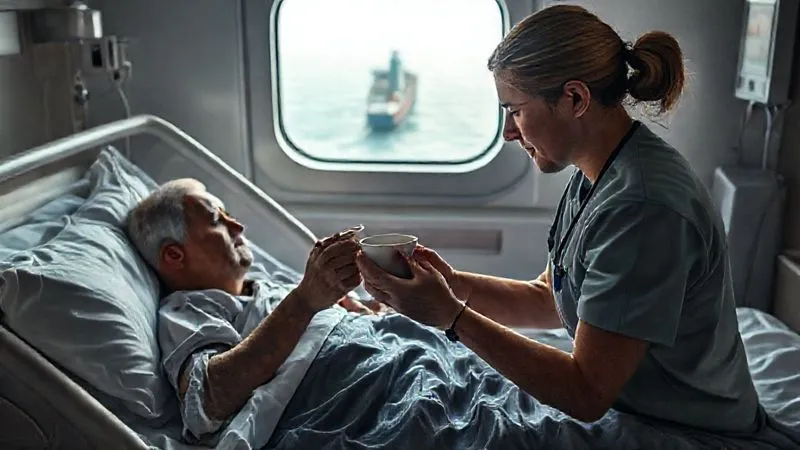
Firstly, administer immediate first aid. Every vessel is required to carry appropriate medical supplies and have crew members trained in basic first aid, often including a designated medical officer. Follow established onboard medical protocols. Assess the injury, provide initial treatment, and ensure the seafarer is made as comfortable and safe as possible. If the injury is severe, this might involve preparing for an emergency medical evacuation (MEDEVAC).
Simultaneously, meticulous documentation begins. This is not merely administrative; it's a vital part of securing urgent medical care for an injured seafarer abroad and protecting all parties involved. A detailed entry must be made in the ship's official logbook, recording the exact time, date, location, circumstances of the injury, initial symptoms, treatment administered, and the seafarer's condition. This logbook entry serves as a primary, contemporaneous record.
Beyond the logbook, a comprehensive incident report should be drafted. This report should include witness statements, photographs of the injury (if appropriate and respectful), and the scene of the accident. All medical records, including any previous medical history relevant to the injury, should be compiled. This documentation package will be essential for communicating with shore-side medical personnel, P&I Clubs, and eventually, any legal representatives.
- Assess and Administer First Aid: Immediately evaluate the seafarer's condition and provide initial treatment using onboard medical supplies and trained personnel.
- Notify the Master: The Master must be informed immediately to initiate the emergency response protocol.
- Contact Designated Medical Support: Utilize the ship's medical guide and contact shore-based telemedicine services or designated medical professionals for guidance.
- Commence Logbook Entry: Record all details of the incident, initial treatment, and seafarer's condition in the official logbook.
- Collect Witness Statements: Obtain written accounts from any witnesses to the incident.
- Photograph the Injury and Scene: Capture objective visual evidence, ensuring privacy and dignity.
- Preserve Medical Records: Compile all relevant medical documents, including the seafarer's medical history.
In my career, I've seen how a well-documented incident can expedite care and prevent disputes, while poor documentation can lead to significant delays and complications, potentially jeopardizing the seafarer's recovery and the owner's legal position.

Navigating Shore-Side Medical Evacuation and Care
Once immediate onboard stabilization is complete, the focus shifts to securing urgent medical care for an injured seafarer abroad by getting them to appropriate shore-side facilities. This is often the most challenging phase, requiring intricate coordination and a deep understanding of international logistics and local capabilities. The decision to evacuate, and how, is paramount.
The Master, in consultation with shore-based medical advisors (often provided by the P&I Club or a specialized maritime medical assistance service), must assess the urgency and feasibility of a medical evacuation (MEDEVAC). Factors include the severity of the injury, the ship's proximity to a port with adequate medical facilities, weather conditions, and the availability of air or sea evacuation resources. Communication with shore is critical; provide clear, concise updates on the seafarer's condition and the vessel's position.
Upon arrival at a port, or during a MEDEVAC operation, you'll engage with various entities. Port State Control (PSC) authorities might be involved, ensuring compliance with maritime regulations. Local shipping agents become your eyes and ears on the ground, assisting with customs, immigration, and arranging transportation to hospitals. In non-English speaking countries, the local agent's ability to arrange interpreters is invaluable. Furthermore, contacting the seafarer's national embassy or consulate can provide consular assistance, particularly if there are visa issues or extended stays required.
A critical decision point is whether the seafarer should receive treatment locally or be medically repatriated to their home country or a country with specialized medical facilities. Local treatment is often quicker if the port has excellent facilities and the injury is manageable. However, if the injury requires long-term care, specialized treatment unavailable locally, or if language barriers are insurmountable, medical repatriation becomes the preferred option, balancing the seafarer's well-being with logistical realities. This decision is always made in consultation with medical professionals and the P&I Club.
Case Study: The M/V "Neptune's Grasp" Incident
In 2021, the M/V "Neptune's Grasp," a bulk carrier, was sailing off the coast of Morocco when a deckhand suffered a severe fall, resulting in a suspected spinal injury. The Master immediately initiated first aid and contacted their P&I Club's 24/7 emergency line. The P&I Club quickly connected them with a maritime medical assistance provider who, after reviewing the ship's medical reports and telemedicine consultation, advised immediate air evacuation. Despite the vessel's remote location, the P&I Club coordinated with a local agent in Morocco to arrange a helicopter MEDEVAC to a specialized hospital in Casablanca. The seafarer received immediate surgery, and after stabilization, was medically repatriated to his home country for rehabilitation. This swift, coordinated action, driven by clear communication and P&I Club expertise, was crucial in saving the seafarer from potentially permanent paralysis and mitigating long-term legal complications for the shipowner.
This case exemplifies how seamless coordination between the vessel, P&I Club, and local resources is vital for securing urgent medical care for an injured seafarer abroad. Delays at this stage can have irreversible consequences.
International Maritime Organization (IMO) - Seafarers provides further resources on seafarer welfare.Financial Responsibilities and P&I Club Engagement
The financial implications of an injured seafarer abroad are substantial, covering medical treatment, hospitalization, repatriation, and potentially ongoing care and compensation. Understanding who bears these costs and how to manage them is paramount for both the shipowner and the injured seafarer. In this realm, the Protection and Indemnity (P&I) Club is not just an insurer; they are a critical partner.
Under international maritime law, particularly the MLC, 2006, the shipowner bears the primary responsibility for the medical care and maintenance of an injured or ill seafarer until they are cured, repatriated, or declared to be permanently unfit for duty. This includes all medical expenses, daily subsistence, and the cost of repatriation. This obligation typically extends until maximum medical cure (MMI) is reached, or for a period stipulated by national law or collective bargaining agreements, often up to 120 or 240 days.
This is where the P&I Club steps in. These mutual associations provide comprehensive third-party liability insurance for shipowners. Their coverage typically includes:
- Medical expenses, hospital fees, and doctor consultations.
- Costs of emergency medical evacuation and repatriation.
- Wages and subsistence while the seafarer is incapacitated.
- Funeral expenses in case of death.
- Compensation for permanent disability or death, often in line with contractual agreements or statutory requirements.
The process for claiming reimbursement or direct payment through the P&I Club involves submitting all collected documentation: incident reports, medical records, invoices, and repatriation details. Consistency and accuracy in this documentation are key to avoiding delays in approval and payment. I've often advised clients that the more thoroughly documented an incident is, the smoother the P&I claim process becomes. Remember, they are there to help, but they require robust evidence.
| Responsibility Area | Shipowner's Obligation | P&I Club's Role |
|---|---|---|
| Medical Treatment Costs | Primary financial responsibility | Covers costs as per policy terms, often directly pays providers |
| Emergency Evacuation (MEDEVAC) | Arrange and fund urgent transport | Coordinates and covers costs of MEDEVAC, including air ambulance |
| Repatriation Expenses | Arrange and fund return to home country | Manages logistics and covers repatriation costs |
| Wages & Subsistence | Pay wages/subsistence during incapacitation | Reimburses shipowner for these costs |
| Legal & Administrative Support | Ensure compliance with regulations | Provides legal advice, correspondent network, claims handling |
It's a common misconception that the P&I Club simply pays out. In reality, they are active participants in ensuring the best possible outcome for the seafarer, which in turn minimizes the shipowner's overall liability and reputational risk. Their expertise in navigating local medical systems and legal requirements in foreign ports is an asset you cannot afford to overlook when you need to secure urgent medical care for an injured seafarer abroad.
Legal Protections and Seafarer Rights Abroad
Beyond the immediate medical and financial aspects, it's vital to remember that an injured seafarer abroad is not just a patient; they are an individual with specific legal rights, even in a foreign jurisdiction. My work has frequently involved ensuring these rights are upheld, often against considerable odds. Understanding and advocating for these protections is a cornerstone of ethical maritime practice.
The MLC, 2006, as previously mentioned, guarantees the right to adequate medical care and, crucially, the right to repatriation at the shipowner's expense. This means that once fit to travel, the seafarer must be returned to their home country or a place agreed upon. Furthermore, seafarers have the right to access shore-based medical facilities and, importantly, the right to contact their family and trade union representatives. They should also have access to an interpreter if language barriers impede their medical care or understanding of legal processes.
In foreign ports, seafarers might be unfamiliar with local laws and customs, making them vulnerable. It's imperative that shipowners, Masters, and P&I Clubs act to protect the seafarer from potential exploitation or undue influence. This includes ensuring they are not pressured into signing documents they don't understand or waiving rights prematurely. Access to independent legal advice, especially if the injury involves potential negligence or a complex claim, is a fundamental right that must be facilitated.
I've encountered situations where seafarers, disoriented by injury and a foreign environment, were almost coerced into unfavorable settlements. This is precisely why the presence of a P&I correspondent or a welfare organization representative can be so critical. They can serve as a trusted point of contact, ensuring the seafarer's best interests are genuinely represented.
"A seafarer's vulnerability abroad mandates robust legal protection. Their right to care, repatriation, and fair treatment must be defended vigorously, reflecting the core human element of maritime law." International Transport Workers' Federation (ITF) - Seafarers' Rights
It's not enough to simply provide medical care; we must also safeguard the seafarer's dignity and legal standing throughout the entire process. This holistic approach is what truly defines responsible maritime operations when securing urgent medical care for an injured seafarer abroad.

Preventing Future Incidents: A Proactive Approach
While reacting effectively to an injury is crucial, a truly responsible maritime operation prioritizes prevention. As an expert who has spent years analyzing maritime accidents, I can unequivocally state that the best 'urgent medical care' is the care that is never needed because the injury never occurred. A proactive safety culture is the most effective strategy for shipowners.
This proactive approach starts with a robust Safety Management System (SMS), as required by the International Safety Management (ISM) Code. An effective SMS identifies potential hazards, assesses risks, and implements controls to minimize accidents. Regular safety drills, toolbox talks, and comprehensive training for all crew members on safe working practices, emergency procedures, and proper use of equipment are indispensable. I've observed that companies with strong safety cultures not only have fewer incidents but also higher morale and efficiency.
Beyond operational safety, crew health is paramount. This includes rigorous pre-employment medical examinations to ensure seafarers are fit for duty, regular health checks onboard, and maintaining well-stocked and up-to-date medical chests. Promoting a healthy lifestyle, providing access to mental health support, and ensuring adequate rest periods also contribute significantly to reducing the likelihood of accidents and illnesses at sea.
Furthermore, fostering an environment where seafarers feel empowered to report hazards or near-misses without fear of reprisal is critical. These reports provide invaluable data for continuous improvement of safety protocols. A 'just culture' encourages transparency and learning from mistakes, rather than simply assigning blame.
Investing in high-quality personal protective equipment (PPE) and ensuring its correct use is another fundamental aspect. From hard hats and safety shoes to specialized breathing apparatus, the right PPE can be the last line of defense against severe injury. Regular maintenance of machinery and equipment also reduces mechanical failures that could lead to accidents.
In my experience, the cost of prevention is always a fraction of the cost of managing an injury, both in financial terms and, more importantly, in human suffering. A commitment to proactive safety is not just a regulatory requirement; it's a moral imperative and sound business practice. It directly reduces the instances where you need to scramble to secure urgent medical care for an injured seafarer abroad.
UK P&I Club - Importance of Safety Management SystemsThe Role of Seafarer Welfare Organizations
While shipowners, P&I Clubs, and medical professionals focus on the immediate medical and legal needs, it's easy to overlook the broader human element. This is where seafarer welfare organizations play an invaluable, often unsung, role. As someone who has worked closely with these groups, I can attest to their profound impact on the well-being of injured seafarers and their families.
These organizations, such as the Mission to Seafarers, Sailors' Society, and the International Seafarers' Welfare and Assistance Network (ISWAN), provide a crucial layer of support that extends beyond the purely medical or legal. When a seafarer is injured abroad, they are often isolated, anxious about their condition, worried about their family, and struggling with language barriers or cultural differences. Welfare organizations step in to fill these gaps.
Their services can include:
- Pastoral Care: Offering emotional support, a listening ear, and companionship during difficult times.
- Communication Facilities: Helping seafarers connect with their families back home, which is vital for morale and reducing anxiety.
- Practical Assistance: Providing local information, arranging transport for hospital visits, or even supplying basic necessities.
- Advocacy: Acting as a trusted, independent voice for seafarers, ensuring their rights are respected and their concerns heard.
- Mental Health Support: Offering counseling or referral services, recognizing the psychological toll of injury and isolation.
I've seen countless instances where the simple act of a welfare visitor bringing a local SIM card or facilitating a video call home made an immense difference to an injured seafarer's recovery and mental state. These organizations embody the humanitarian spirit of the maritime industry, working tirelessly to ensure that seafarers, who dedicate their lives to global trade, are not forgotten when they are at their most vulnerable.
While not directly involved in securing urgent medical care for an injured seafarer abroad, their support network is integral to the holistic recovery process. Encouraging seafarers to be aware of and utilize these resources is a significant step towards better overall welfare.
Frequently Asked Questions (FAQ)
Q1: What if the shipowner refuses to provide adequate medical care? A: If a shipowner fails to meet their obligations under the MLC, 2006, or other applicable laws, the seafarer or their representatives should immediately contact their P&I Club, a seafarer welfare organization, or a maritime lawyer. Port State Control (PSC) authorities can also be informed, as they have the power to detain a vessel for non-compliance with MLC standards, including medical care provisions. International unions like the ITF can also provide significant support and advocacy.
Q2: Can a seafarer choose their own doctor or hospital in a foreign port? A: Generally, the shipowner, often through their P&I Club, will arrange for medical care at facilities they deem appropriate and cost-effective, while still meeting the required standard of care. However, if a seafarer is dissatisfied with the care provided, they have the right to request a second opinion. While they may not have absolute freedom to choose any doctor, their concerns about treatment quality must be taken seriously, and the P&I Club or shipowner should facilitate a review of the medical situation.
Q3: What's the difference between medical repatriation and sick leave? A: Medical Repatriation is the process of returning an injured or ill seafarer to their home country (or another agreed location) for ongoing medical treatment or recovery, funded by the shipowner. This usually occurs when the seafarer is deemed fit to travel but still requires significant medical care. Sick Leave refers to a period of absence from work due to illness or injury, during which the seafarer is typically entitled to wages and medical care. While repatriation often follows a period of sick leave and treatment abroad, sick leave can also occur at home without the need for international travel.
Q4: How long is a seafarer entitled to medical care after disembarkation? A: The entitlement period varies depending on national laws, the seafarer's employment agreement, and specific collective bargaining agreements (CBAs). Under the MLC, 2006, the shipowner is generally responsible for medical care until the seafarer is cured, repatriated, or declared to be permanently unfit for duty, typically for a period of at least 16 weeks (120 days), and often up to 24 weeks (180 days) or even longer (240 days) under some jurisdictions or CBAs. It is crucial to consult the relevant employment contract and applicable laws.
Q5: What if the injury is due to the shipowner's negligence or unseaworthiness? A: If an injury results from the shipowner's negligence, unseaworthiness of the vessel, or a breach of safety regulations, the seafarer may have grounds for a personal injury claim beyond the basic medical and repatriation entitlements. This is a complex area of maritime law, and the seafarer should seek independent legal counsel from a maritime attorney specializing in seafarer rights to understand their full legal options and potential compensation.
Key Takeaways and Final Thoughts
Navigating the complexities of securing urgent medical care for an injured seafarer abroad is a formidable challenge, demanding vigilance, swift action, and a deep understanding of international maritime law. As I've underscored throughout this guide, it's a process that intertwines immediate humanitarian response with stringent legal obligations.
- Legal Compliance is Non-Negotiable: The MLC, 2006, sets the global standard for seafarer medical care and repatriation. Adherence is not optional.
- Documentation is Your Ally: Meticulous record-keeping from the moment of injury is crucial for medical continuity, P&I claims, and legal defense.
- P&I Clubs are Indispensable Partners: Engage your P&I Club immediately for financial coverage, logistical support, and expert guidance.
- Prioritize Seafarer Rights: Ensure the injured seafarer's rights to adequate care, communication, and legal representation are upheld at all times.
- Prevention is Paramount: A robust safety management system and a proactive safety culture are the most effective ways to mitigate risks.
- Welfare Organizations Offer Vital Support: Leverage these groups for holistic care, emotional support, and crucial connections for the seafarer.
In my extensive career, I've seen firsthand that while the maritime industry is built on steel and logistics, its true strength lies in its people. Protecting these individuals, especially when they are most vulnerable far from home, is not just a regulatory obligation but a moral imperative. By implementing the strategies and insights shared here, you are not just securing urgent medical care for an injured seafarer abroad; you are upholding the fundamental dignity and rights of those who power our global economy. Stay informed, stay prepared, and always prioritize the welfare of your crew.
Recommended Reading
- 7 Steps: Prove Latent Defect for Your Denied Implied Warranty Claim
- Rectify Past Corporate Tax Errors: A 7-Step Expert Framework
- Business License Revoked? Your 7-Step Expert Action Plan for Reinstatement
- School Suicide & Bullying: 7 Legal Defense Pillars for Institutions
- Client's Fraudulent Accounts? 7 Legal Steps to Dispute Them Effectively



Comments
Leave a comment below. Your email will not be published. Required fields marked with *