


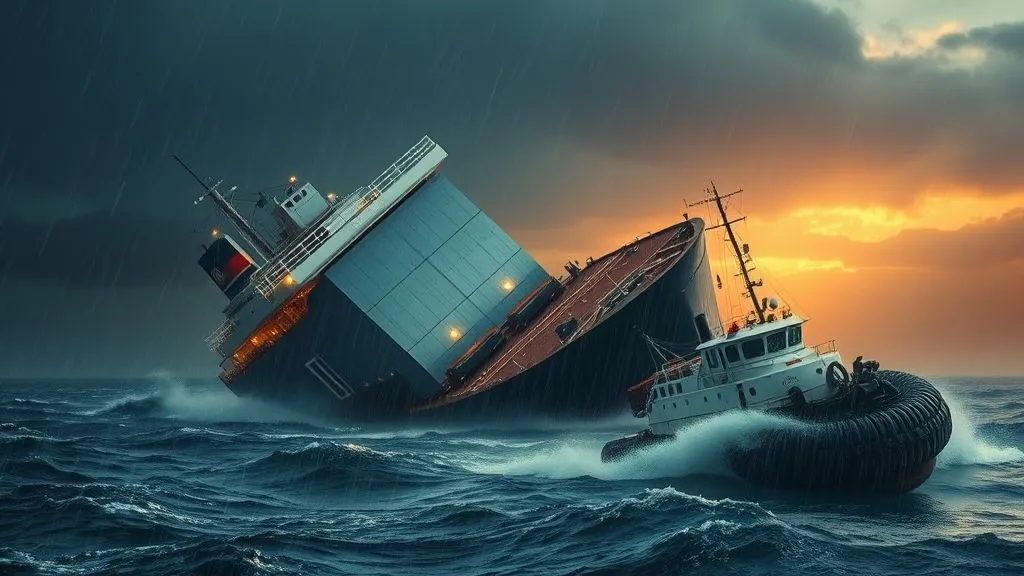
Urgent: How to Legally Appoint a Salvor After a Maritime Casualty?
For over three decades in maritime law, I've witnessed the devastating ripple effects of maritime casualties. From grounding and collisions to fires and mechanical failures, these incidents are not just operational nightmares; they are complex legal battlegrounds where every decision, particularly the appointment of a salvor, carries immense weight.
The immediate aftermath of a maritime casualty is a maelstrom of stress, uncertainty, and urgent decisions. Owners and operators often find themselves under immense pressure, navigating the treacherous waters of safety, environmental protection, and financial liability. The critical challenge isn't just finding someone to help; it's legally appointing a competent salvor in a way that protects your interests, minimizes further damage, and ensures compliance with a labyrinth of international and national laws.
In this definitive guide, I will walk you through the essential legal frameworks, practical steps, and critical considerations for legally appointing a salvor. My goal is to equip you with the actionable insights and expert perspective needed to make informed decisions under duress, safeguard your assets, and navigate the complex legalities of maritime salvage with confidence.
The Immediate Aftermath: Assessing the Casualty and Initial Steps
When a maritime casualty strikes, the clock starts ticking. Your first priority, even before considering a salvor, must be the safety of life at sea. This includes your crew and anyone else potentially impacted. Once human life is secured, attention must turn to the vessel, its cargo, and the marine environment.
I've seen situations where the panic of the moment leads to hasty, ill-advised actions. Instead, a structured approach is vital. Immediately assess the extent of the damage, the stability of the vessel, potential for pollution, and the immediate risks. Simultaneously, notify all relevant parties: your flag state, the coastal state authorities, your insurers (hull and machinery, and P&I), and any other stakeholders.
Understanding the gravity of the situation is paramount. Is the vessel taking on water rapidly? Is there a risk of breaking up? Is hazardous cargo involved? These initial observations will heavily influence the urgency and type of salvage operation required. Remember, every moment counts, not just for the physical preservation of the vessel, but for controlling the narrative and legal implications that follow.
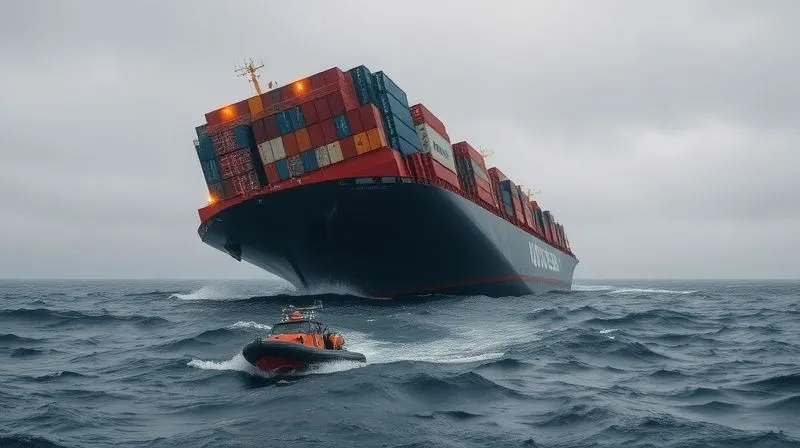
Understanding Salvage Law: The 'No Cure, No Pay' Principle and Its Nuances
At the heart of maritime salvage law lies the venerable principle of 'no cure, no pay.' This means a salvor is only entitled to remuneration if their efforts are successful in saving property from maritime peril. If they fail, they get nothing. This principle, enshrined in the International Convention on Salvage 1989, encourages salvors to undertake risky operations without fear of incurring unrecoverable costs for unsuccessful attempts.
However, 'no cure, no pay' isn't as simple as it sounds. The 1989 Salvage Convention, which most maritime nations have ratified, introduced important nuances. Notably, Article 14 provides for 'special compensation' for salvors who prevent or minimize environmental damage, even if they don't successfully save the vessel. This was a crucial development following major pollution incidents, incentivizing salvors to prioritize environmental protection.
It's vital to distinguish between 'pure salvage' and 'contract salvage.' Pure salvage occurs when there's no pre-existing agreement, and the salvor acts voluntarily, with the reward determined by a court or arbitrator based on various factors. Contract salvage, on the other hand, involves a specific agreement between the salvor and the owner, outlining the terms of remuneration and other conditions. As an expert, I always advise clients to aim for contract salvage where possible, as it provides far greater certainty.

Choosing the Right Salvor: Beyond Just Capability
Selecting a salvor is arguably the most critical decision you'll make in the immediate aftermath of a casualty. It's not merely about who can get there fastest; it's about competence, integrity, and legal standing. I've often seen owners make decisions based purely on proximity or a low initial quote, only to face far greater headaches and costs down the line.
Here are the key criteria I always emphasize when advising clients on salvor selection:
- Proven Capability and Experience: Does the salvor have the right equipment (tugs, barges, pumps, dive teams) and the necessary expertise for your specific casualty type (e.g., refloating, fire-fighting, pollution control)? A strong track record is non-negotiable.
- Reputation and Industry Standing: Research their past operations. Are they known for professionalism, ethical conduct, and successful outcomes? Consult with your insurers and P&I Club for recommendations.
- Adequate Insurance Coverage: This is crucial. Ensure the salvor carries sufficient liability insurance to cover potential damage to your vessel or third-party liabilities during the operation. This protects you from their potential negligence.
- Financial Stability: Can they sustain a potentially lengthy and expensive operation without demanding unreasonable interim payments or abandoning the job?
- Legal and Regulatory Compliance: Confirm they operate within all relevant national and international regulations, hold necessary licenses, and have a clear understanding of environmental protection laws.
A thorough vetting process, even under pressure, will save you significant grief. Don't hesitate to ask for references, equipment lists, and proof of insurance. This due diligence is a cornerstone of responsible maritime casualty management.
| Criteria | Description | Importance |
|---|---|---|
| Capability & Experience | Specialized equipment, skilled personnel, proven track record for casualty type. | High |
| Reputation & Integrity | Industry standing, ethical conduct, positive client feedback. | High |
| Insurance Coverage | Adequate liability insurance for operations and potential damages. | Critical |
| Financial Stability | Ability to fund operations without undue pressure on owner. | Medium-High |
| Legal Compliance | Adherence to national/international maritime and environmental laws. | High |
The Critical Decision: Pure Salvage vs. Contract Salvage
Once you've identified potential salvors, the next critical step is determining the legal basis for their engagement. As I mentioned, the choice between pure salvage and contract salvage has profound implications for your legal and financial exposure.
Pure Salvage: When Time is of the Essence (and No Agreement Exists)
Pure salvage typically arises in extreme emergencies where there's no time or opportunity to negotiate a contract. A salvor may act voluntarily, or the Master may give implied consent. In such cases, the salvor's remuneration is determined after the fact by a court or arbitrator, based on factors like the degree of danger, skill and efforts of the salvors, the value of the property salved, and the resources employed. While sometimes unavoidable, pure salvage introduces uncertainty regarding the final cost and scope of work.
Contract Salvage: The Preferred Path to Certainty
Whenever possible, I strongly advocate for contract salvage. This involves a clear agreement that defines the scope, terms, and remuneration for the salvage operation. The most widely recognized and frequently used form of contract salvage is the Lloyd's Open Form (LOF).
The LOF is a 'no cure, no pay' agreement, but it offers significant advantages:
- Speed: It's designed for rapid deployment, often agreed verbally and confirmed later.
- Impartiality: It mandates arbitration in London under the rules of the Lloyd's Salvage Arbitration Branch, providing a well-established and impartial forum for dispute resolution.
- Security: It sets out clear provisions for security to be provided by the owner for the salvor's claim, usually by way of a guarantee from the owner's insurers.
- SCOPIC Clause: Most LOF contracts now incorporate the Special Compensation P&I Club (SCOPIC) clause. This is a crucial addition that allows salvors to claim special compensation from the vessel's P&I Club for expenses incurred in preventing or minimizing pollution, even if the salvage operation is unsuccessful in saving the vessel. This provides a safety net for salvors and strongly incentivizes environmental protection.
While LOF is prevalent, other forms like TOWCON or TOWHIRE can be adapted for salvage, or bespoke contracts can be drafted. The key is to have *something* in writing, even if it's a simple agreement outlining the basics, to avoid future disputes.
- Assess the Urgency: Is there immediate danger to life, property, or environment that precludes negotiation? If so, pure salvage might be the only option initially.
- Contact Insurers/P&I Club: Immediately involve your insurers. They have a vested interest in mitigating loss and often have preferred salvors or legal counsel who can assist with contract negotiations.
- Seek Legal Counsel: Even for an LOF, which is largely standardized, having expert maritime legal counsel review the situation and advise on the implications is invaluable. They can clarify the SCOPIC clause and other complex provisions.
- Negotiate if Possible: If time permits, negotiate a fair and reasonable contract. Be clear on the scope of work, expected outcomes, and remuneration structure.
- Document Everything: Regardless of the contract type, maintain meticulous records of all communications, assessments, and actions taken throughout the casualty and salvage operation.
Legally Appointing a Salvor: Key Contractual Elements and Pitfalls
When entering into a salvage contract, particularly one other than the standard LOF, understanding the critical legal elements is paramount. I've encountered numerous cases where a lack of clarity in the agreement led to protracted and costly disputes.
Authority to Contract
The first and foremost question is: who has the legal authority to bind the vessel owner to a salvage contract? Generally, the Master of the vessel has implied authority to contract for salvage services when the vessel is in peril and communication with the owner is impossible or impractical. However, if the owner is contactable and can give instructions, their direct authorization is typically required. Misunderstanding this can invalidate a contract or create liability issues. As per Article 6 of the 1989 Salvage Convention, the master has the authority to conclude contracts for salvage operations.
Essential Contractual Terms
A robust salvage contract should clearly address:
- Identification of Parties: Salvor and the owner of the salved property.
- Scope of Work: What exactly is the salvor expected to do? Refloating, fire fighting, pollution prevention, towage to a safe port? Be specific.
- Remuneration: How will the salvor be paid? 'No cure, no pay' (pure salvage or LOF), fixed fee, daily rate, or a combination?
- Jurisdiction and Governing Law: Which country's laws will apply, and in which courts or arbitration forums will disputes be resolved? This is critical.
- Security: How will the salvor's claim be secured? Typically through a guarantee from the vessel's insurers.
- Salvage Convention 1989: Explicitly state that the contract is subject to the provisions of the Convention, especially regarding special compensation.
Case Study: The "M/V Neptune's Folly" and the Unclear Agreement
I recall a case involving the M/V Neptune's Folly, a bulk carrier that suffered an engine room fire far from port. The Master, under immense pressure and without direct communication with the owner, engaged the first tug that arrived. The verbal agreement was simply "to save the ship." After a successful tow to port, the salvor presented an astronomical bill, claiming it was pure salvage, while the owner believed it was a fixed-rate towage. The lack of clear terms regarding remuneration, scope, and governing law led to a two-year arbitration battle. The owner ultimately paid significantly more than a properly negotiated contract would have cost, primarily due to the ambiguity of the initial agreement.
Expert Insight: "In the high-stakes world of maritime salvage, a poorly drafted or ambiguous contract is not just a risk; it's a guaranteed path to dispute and inflated costs. Always prioritize clarity and, when in doubt, seek immediate legal counsel."
The Role of Insurers and P&I Clubs in Salvage Operations
Your relationship with your insurers and P&I Club becomes absolutely critical during a maritime casualty. They are not just passive payers of claims; they are active partners in mitigating loss and navigating the legal complexities of salvage. I cannot overstate the importance of notifying them immediately.
Hull & Machinery (H&M) Insurers
Your H&M insurers have a direct interest in the preservation of the vessel and its machinery. They will typically cover the costs of salvage operations to save the ship itself. They often have established relationships with reputable salvors and can provide invaluable advice on selecting a contractor and negotiating terms. Their approval of the salvage contract is often a prerequisite for coverage.
Protection & Indemnity (P&I) Clubs
P&I Clubs cover third-party liabilities, which are particularly relevant in salvage operations involving potential pollution or damage to other property. This is where the SCOPIC clause (Special Compensation P&I Club) becomes vital. If your vessel is under an LOF contract with SCOPIC, the P&I Club will be responsible for the special compensation element, which covers the salvor's expenses and an uplift for preventing or minimizing environmental damage. Their expertise in pollution response and liability management is unparalleled. Many P&I Clubs, such as Gard P&I Club, provide detailed guidance on these clauses.
Involving your insurers early means you benefit from their expertise, resources, and often, their legal teams. They can help scrutinize salvage contracts, advise on the reasonableness of claims, and manage the provision of security required by salvors.

Navigating the Salvage Award Process and Dispute Resolution
Once the salvage operation is complete and the vessel and cargo are brought to safety, the focus shifts to determining the salvor's remuneration. This can be a complex process, especially in pure salvage cases or when negotiating the final award under contract salvage.
Factors Influencing the Salvage Award
Under the 1989 Salvage Convention, several factors are considered when assessing a salvage award:
- Value of the Salved Property: The market value of the vessel, cargo, and freight at the time they were brought to a place of safety.
- Skill and Efforts of the Salvors: The expertise, speed, and diligence applied to the operation.
- Degree of Danger: The peril faced by the salved property and by the salvors themselves.
- Resources Employed: The type and value of the salvors' equipment and personnel used.
- Time and Expenses: The time taken and the costs incurred by the salvors.
- Prevention of Environmental Damage: The success in preventing or minimizing pollution.
It's a balancing act, and experienced maritime lawyers play a crucial role in presenting your case, whether you are the salvor or the owner of the salved property.
Dispute Resolution
For LOF contracts, arbitration in London is the standard. The Lloyd's Salvage Arbitration Branch provides a specialized forum with experienced arbitrators. This system is generally efficient and respected globally. For other contract types, the agreement will specify the jurisdiction and method of dispute resolution (e.g., litigation in a specific court, mediation, or arbitration elsewhere).
I always advise clients to engage maritime legal experts early in this process. They can help gather evidence, prepare arguments, and represent your interests effectively. The nuances of salvage law and the interpretation of contractual terms require specialized knowledge, as detailed by leading maritime publications.
Emergency Protocols and Preparedness for Future Incidents
While this guide focuses on the urgent response, a truly experienced operator knows that preparedness is key to mitigating future risks. I've seen firsthand how a well-thought-out emergency response plan can turn a potential disaster into a manageable incident.
Proactive Measures:
- Pre-agreed Salvage Contracts: Where feasible, consider framework agreements with preferred salvors for your operating regions. This can expedite deployment and remove negotiation pressures during a crisis.
- Robust Emergency Response Plan (ERP): Develop a comprehensive ERP that includes clear communication protocols, contact lists for all stakeholders (insurers, P&I, flag state, coastal state, legal counsel, preferred salvors), and detailed procedures for various casualty scenarios.
- Crew Training: Ensure your crew is thoroughly trained not just in casualty response, but also in initial damage assessment, reporting procedures, and the Master's authority regarding salvage.
- Regular Drills: Practice your ERP regularly. This ensures that when a real emergency strikes, everyone knows their role and can act decisively and effectively.
- Legal Review: Periodically review your standard contracts, insurance policies, and ERP with maritime legal experts to ensure they are up-to-date with current laws and best practices. ITIC's guidance on claims management can be very insightful here.
Remember, the best way to handle an urgent salvage situation is to have laid the groundwork long before the emergency sirens blare. Preparedness is your strongest ally against the unpredictable nature of the sea.
Frequently Asked Questions (FAQ)
Q: What if the Master appoints a salvor without the owner's direct approval, and the owner later disputes it? A: The Master generally has implied authority to contract for salvage services in an emergency when communication with the owner is impossible or impractical. If the Master acts reasonably and in good faith to save the vessel from peril, the contract is likely binding on the owner. However, if the owner was contactable and could have given instructions, or if the Master acted outside the scope of reasonable necessity, the owner might have grounds to dispute the contract's validity or terms. This underscores the importance of clear communication channels and an updated ERP.
Q: Can I negotiate the terms of an LOF, or is it a take-it-or-leave-it agreement? A: While the Lloyd's Open Form is a standardized document designed for speed and simplicity, certain aspects can be negotiated, particularly if there's no immediate life-threatening peril or if the casualty is less severe. For instance, the inclusion or exclusion of the SCOPIC clause might be discussed, or specific conditions for the scope of work. However, in a dire emergency, salvors will often insist on the standard LOF to avoid delays. Any deviation should be carefully considered with legal advice.
Q: What is SCOPIC and why is it important in salvage operations? A: SCOPIC stands for Special Compensation P&I Club. It's a clause often incorporated into the Lloyd's Open Form (LOF) that provides a safety net for salvors. Under 'no cure, no pay,' if a salvor attempts to prevent pollution but fails to save the vessel, they might get no reward. SCOPIC ensures that salvors receive 'special compensation' (based on a daily rate for their equipment and personnel, plus an uplift) from the vessel's P&I Club for expenses incurred in preventing or minimizing environmental damage, even if the main salvage operation is unsuccessful. It's crucial because it incentivizes salvors to prioritize environmental protection without fear of financial ruin.
Q: How does environmental damage or its prevention affect the salvage award? A: The 1989 Salvage Convention explicitly recognizes the importance of preventing environmental damage. Article 13 states that factors such as the skill and efforts in preventing or minimizing damage to the environment should be taken into account when assessing a salvage award. Furthermore, Article 14 provides for 'special compensation' for salvors who successfully prevent or minimize environmental damage, even if they don't succeed in saving the vessel itself. This means that environmental protection efforts can significantly increase a salvor's remuneration.
Q: What's the fundamental difference between salvage and towage, and why is it legally significant? A: The key distinction lies in the presence of 'maritime peril.' Towage is a service performed under contract to move a vessel that is not in any immediate danger. Salvage, on the other hand, involves assisting a vessel or property that is in actual or apprehended danger at sea. This legal difference is significant because salvage operations are subject to specific maritime laws (like 'no cure, no pay' and the 1989 Salvage Convention), which allow for a potentially much higher remuneration (a salvage award) than a standard towage fee. Misclassifying a salvage operation as towage can lead to significant legal and financial repercussions.
Key Takeaways and Final Thoughts
Navigating a maritime casualty and the urgent need to legally appoint a salvor is one of the most challenging situations a vessel owner or operator will face. However, with the right knowledge and a structured approach, you can mitigate risks and protect your interests.
- Act Decisively, Not Hastily: Prioritize safety, then assess the situation thoroughly before engaging a salvor.
- Understand the Law: Grasp the 'no cure, no pay' principle, the 1989 Salvage Convention, and the critical distinction between pure and contract salvage.
- Choose Wisely: Select a salvor based on proven capability, reputation, insurance, and compliance, not just speed or cost.
- Contract Clearly: Whenever possible, opt for contract salvage, ideally using the Lloyd's Open Form (LOF) with the SCOPIC clause, and ensure all terms are unambiguous.
- Engage Experts Early: Immediately inform your insurers and P&I Club, and seek expert maritime legal counsel to guide you through every step.
- Prepare Proactively: Implement a robust Emergency Response Plan, conduct regular drills, and maintain current contact lists to ensure readiness.
In my experience, the difference between a controlled resolution and a prolonged, costly nightmare often hinges on these critical decisions made in the initial hours and days. By understanding the legal landscape and acting with informed precision, you can ensure that when the unexpected happens, you are not merely reacting, but strategically managing a complex maritime challenge. The sea is unforgiving, but with preparedness and expert guidance, you can navigate even its most treacherous legal currents.
Recommended Reading
- 7 Steps: Prevent Business Liability from Employee Assault Charges
- Adoption Disrupted? What Happens Legally If An Adoption Fails
- 7 Proven Ways to Shield Assets from Elder Care Costs Legally
- Student Protests: 7 Legal Strategies for Safe, Rights-Respecting Management
- Unlock Your Rights: How to Contest a Federal Administrative Agency Ruling Effectively

Comments
Leave a comment below. Your email will not be published. Required fields marked with *