


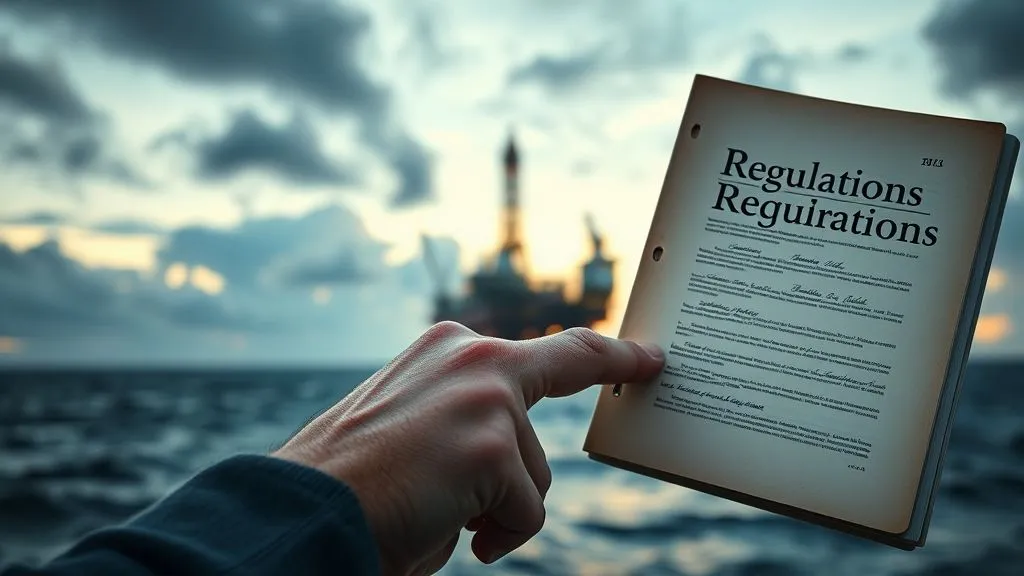
Urgent Legal Response to New Offshore Drilling Safety Regulations?
For over two decades in maritime law, I've witnessed firsthand the seismic shifts that redefine offshore operations. From the aftermath of Piper Alpha to the profound lessons of Deepwater Horizon, each incident has etched new layers onto the regulatory landscape. The current wave of new offshore drilling safety regulations isn't just another bureaucratic hurdle; it's a critical inflection point demanding an immediate, strategic, and an urgent legal response to new offshore drilling safety regulations?
The pain point for operators is clear: navigating these complex changes without a robust legal framework risks not just hefty fines and operational delays, but potentially catastrophic incidents and irrevocable damage to reputation. The stakes are higher than ever, with regulators scrutinizing every aspect of deepwater exploration and production, pushing for unprecedented levels of safety and environmental protection. Ignoring or underestimating these shifts is a gamble no responsible operator can afford.
In this comprehensive guide, I will share my insights and provide you with an actionable framework to address these new mandates. We'll delve into strategic compliance, risk mitigation, leveraging technology, and fostering a proactive safety culture. My goal is to equip you with the expert knowledge and practical steps needed to transform regulatory challenges into operational resilience, ensuring your fleet not only complies but thrives in this evolving environment.
Understanding the Regulatory Landscape Shift: What's New and Why It Matters
The genesis of these new regulations lies in a continuous pursuit of preventing future tragedies and minimizing environmental impact. Post-Deepwater Horizon, agencies like the Bureau of Safety and Environmental Enforcement (BSEE) and the U.S. Coast Guard (USCG) intensified their focus, leading to a series of updates and entirely new mandates. These aren't minor adjustments; they represent a fundamental shift towards more stringent design, operational, and maintenance standards.
Key areas of focus include enhanced well control requirements, stricter equipment certification, comprehensive safety and environmental management systems (SEMS), and increased oversight on human factors. The emphasis has moved from reactive incident response to proactive risk identification and mitigation, often leveraging advanced technologies. Understanding the 'why' behind these changes is as crucial as understanding the 'what' – it informs the spirit of compliance.
According to a recent BSEE report, the goal is to create a "culture of safety beyond compliance," pushing operators to internalize safety as a core value, not just a checklist item. This means that legal teams must now interpret regulations not only for their letter but also for their underlying intent, integrating safety principles deeply into corporate governance and operational practices. The BSEE's regulatory framework page provides an excellent overview of their ongoing efforts.
"In my experience, the most successful offshore operators don't just react to regulations; they anticipate them, integrating future safety trends into their current operational planning. Proactive engagement saves millions in potential penalties and builds an invaluable reputation for responsibility."

Immediate Legal Audit: Pinpointing Your Vulnerabilities and Gaps
When new regulations hit, the first and most critical step is a comprehensive legal audit. This isn't just about reviewing documents; it's about a deep dive into your current operations, comparing them against every new mandate. I've seen countless companies stumble here, assuming their existing compliance programs are sufficient. They rarely are.
Here’s an actionable framework for your immediate legal audit:
- Review All Existing Permits and Licenses: Scrutinize every permit for clauses or conditions that might be impacted by the new regulations. Are there any grandfathering provisions, or do you need to reapply or amend existing permissions?
- Assess Safety and Environmental Management Systems (SEMS): Compare your current SEMS against the updated regulatory requirements. Look for specific gaps in risk assessment methodologies, incident reporting protocols, and management review processes.
- Evaluate Equipment Certification and Maintenance Records: New regulations often mandate stricter certification for critical equipment (e.g., Blowout Preventers, well control systems) and more rigorous maintenance schedules. Ensure all documentation is up-to-date and aligns with the new standards.
- Scrutinize Training and Competency Programs: Are your personnel adequately trained on the new procedures and technologies? This includes drilling crews, maintenance staff, and emergency responders. Gaps here are a common source of non-compliance.
- Examine Emergency Response and Oil Spill Contingency Plans: These plans are always a high-priority area for regulators. Update them to reflect new requirements for equipment, personnel, communication, and environmental protection measures.
- Contractual Review: Analyze all contracts with third-party vendors, suppliers, and contractors. Do their obligations and indemnities align with your heightened regulatory responsibilities?
Case Study: How Triton Energy Navigated a Major Regulatory Overhaul
Triton Energy, a mid-sized independent operator, faced a significant challenge when stringent new well control regulations were introduced following an industry incident. Their initial internal audit revealed several critical gaps in equipment certification and crew training. Instead of panicking, their legal team, working closely with operations, implemented a rapid, phased response.
They immediately initiated a third-party audit for all critical well control equipment, simultaneously launching an accelerated training program for their drilling superintendents and well control specialists. Legally, they engaged with regulators early to clarify ambiguous clauses and demonstrate a good-faith effort towards compliance. This proactive and transparent approach not only avoided penalties but also positioned Triton as an industry leader in safety, ultimately enhancing their relationships with both regulators and insurers.
Developing a Robust Compliance Strategy: From Policy to Practice
An audit reveals the gaps; a robust compliance strategy fills them. This involves not just updating policies on paper but embedding the new requirements into the very fabric of your operations. It’s about creating a living, breathing system that evolves with the regulatory environment.
- Integrated Management Systems: Don't create parallel systems. Integrate new regulatory requirements directly into your existing Safety and Environmental Management System (SEMS). This ensures consistency and avoids confusion.
- Clear Communication Channels: Establish unambiguous communication channels to disseminate regulatory updates from legal to operational teams, and feedback loops from the field to legal.
- Dedicated Compliance Officer/Team: Depending on your scale, consider appointing a dedicated compliance officer or a cross-functional team responsible for monitoring regulatory changes and overseeing implementation.
- Regular Internal Audits and Reviews: Compliance isn't a one-time event. Schedule regular internal audits and management reviews to ensure ongoing adherence and identify emerging issues before they become problems.
Effective documentation and meticulous record-keeping are your best defense in any regulatory inquiry. Every training session, every equipment inspection, every risk assessment – it all needs to be recorded, easily retrievable, and demonstrate a clear chain of compliance. This is where legal and operational teams must work hand-in-hand.
| Compliance Area | New Reg. Impact | Action Item | Responsible Dept. | Deadline |
|---|---|---|---|---|
| Well Control Systems | Stricter certification, enhanced monitoring | Schedule third-party recertification; integrate real-time data feeds | Operations, Legal | Q3 2024 |
| Personnel Training | Mandatory advanced well control courses | Develop and roll out accredited training modules for all drilling staff | HR, Training | Q4 2024 |
| Emergency Response Plans | Expanded spill response capabilities | Update contingency plans; conduct simulated drills with new protocols | HSE, Operations | Q1 2025 |
| Environmental Monitoring | Increased reporting frequency and scope | Implement automated data collection for emissions and discharges | Environmental, IT | Q2 2025 |
Leveraging Technology for Enhanced Safety and Compliance Monitoring
The digital transformation isn't just for Silicon Valley; it's a game-changer for offshore drilling. New regulations increasingly encourage, and sometimes mandate, the use of advanced technologies for real-time monitoring, predictive maintenance, and data-driven decision-making. Embracing these tools is not just about efficiency; it's a critical component of a modern urgent legal response to new offshore drilling safety regulations?
Consider the power of IoT sensors on critical equipment, providing continuous data streams on pressure, temperature, and structural integrity. Artificial intelligence can analyze this data to predict potential failures before they occur, shifting from reactive repairs to proactive maintenance. Digital twins of drilling rigs can simulate various scenarios, allowing for safer operational planning and training.
However, leveraging technology also introduces new legal considerations. Data privacy, cybersecurity, and the legal admissibility of automated sensor data become paramount. You need robust IT governance and legal frameworks to protect sensitive operational data and ensure the integrity of your digital compliance records. A recent whitepaper by Deloitte on Digital Transformation in Oil & Gas highlights the dual benefits and challenges of this shift.

Navigating Enforcement and Penalties: What to Do When Regulators Call
Despite best efforts, regulatory scrutiny is inevitable. How you respond to an inspection, a notice of non-compliance, or an incident investigation can significantly impact the outcome. This is where your legal team's expertise becomes indispensable.
- Pre-Inspection Preparation: Maintain an "audit-ready" posture at all times. Ensure all documentation is organized, accessible, and up-to-date. Conduct mock inspections to identify weaknesses in your processes and personnel responses.
- During the Inspection: Designate a single point of contact for regulators. Accompany inspectors at all times, taking detailed notes and photographs. Be cooperative but do not volunteer information beyond what is requested.
- Responding to Notices of Non-Compliance (NOCs): An NOC is not an admission of guilt, but a formal notification. Engage legal counsel immediately. Develop a detailed, time-bound corrective action plan, and communicate it clearly to the regulator.
- Negotiation and Appeals: If penalties are levied, your legal team can assess the validity of the findings, negotiate reduced penalties, or pursue administrative appeals. Strong documentation and a clear demonstration of good-faith efforts are crucial here.
"The golden rule in regulatory encounters is simple: Be prepared, be professional, and be represented. Never underestimate the importance of legal privilege and the strategic advantage of having experienced counsel guide your interactions from day one."
Insurance and Liability: Reassessing Your Coverage in a New Regulatory Era
New offshore drilling safety regulations invariably impact your insurance landscape. Increased regulatory risk translates directly into potential changes in policy terms, premiums, and even the availability of certain coverages. A thorough review of your insurance portfolio is an integral part of your urgent legal response to new offshore drilling safety regulations?
Key areas to reassess include your Protection & Indemnity (P&I) club coverage, Hull & Machinery (H&M) insurance, and especially your pollution liability and environmental impairment liability (EIL) policies. New regulations might introduce specific requirements for coverage limits, or new exclusions might emerge related to non-compliance.
I advise working closely with both your legal counsel and a specialized maritime insurance broker. They can help you understand how new mandates affect your risk profile, identify potential gaps in coverage, and negotiate favorable terms. Don't assume your existing policies will automatically cover new regulatory exposures. A detailed report by Marsh on Global Maritime Risk often touches upon these evolving challenges.
Fostering a Culture of Safety: Beyond Legal Mandates
While compliance is about meeting legal requirements, true resilience and long-term success in offshore operations hinge on fostering a deeply ingrained culture of safety. This goes beyond punitive measures; it’s about creating an environment where every individual, from the CEO to the roustabout, feels empowered and responsible for safety.
- Leadership Commitment: Safety must start at the top. Leaders must visibly champion safety initiatives, allocate necessary resources, and hold themselves accountable.
- Employee Empowerment: Encourage open reporting of near misses, hazards, and safety concerns without fear of reprisal. Value employee input and involve them in safety improvement processes.
- Continuous Improvement: Implement robust systems for learning from incidents (both yours and others'), conducting root cause analyses, and continuously refining safety procedures.
- Training and Competency: Beyond mandatory training, invest in ongoing professional development that emphasizes critical thinking, problem-solving, and adaptive safety behaviors.
A strong safety culture doesn't just prevent accidents; it also acts as a powerful legal shield. Regulators and courts often look favorably upon companies that can demonstrate a genuine, systemic commitment to safety, even when an incident occurs. It mitigates the perception of negligence and strengthens your defense.

Proactive Engagement: Shaping Future Regulations and Industry Standards
The most forward-thinking operators don't just react to regulations; they actively participate in shaping them. Engaging with industry associations, regulatory bodies, and even academic institutions allows you to contribute your expertise, influence policy direction, and gain invaluable early insights into upcoming changes. This proactive stance is a sophisticated component of an urgent legal response to new offshore drilling safety regulations?
Membership in organizations like the American Petroleum Institute (API), the International Association of Drilling Contractors (IADC), or regional maritime safety forums provides a platform for collective advocacy. These bodies often develop industry best practices that, while not legally binding, often become de facto standards and influence future regulatory mandates. Your voice, combined with others, can help ensure regulations are practical, effective, and scientifically sound.
Furthermore, early engagement demonstrates a commitment to responsible operations, enhancing your standing with regulators and the public. It's an investment in your long-term operational license and social license to operate. For example, the American Petroleum Institute plays a crucial role in developing industry standards that often precede or complement government regulations.
Frequently Asked Questions (FAQ)
What's the biggest mistake companies make when new offshore drilling safety regulations are introduced? In my experience, the gravest error is underestimating the scope and impact of the changes, leading to a reactive rather than proactive approach. Many companies assume their existing compliance frameworks are sufficient, only to find critical gaps during an audit or, worse, after an incident. This inertia often results in rushed, costly, and less effective implementation, alongside increased exposure to penalties.
How quickly should an offshore operator act on new regulations? Immediately. The moment new regulations are announced or even rumored to be in development, your legal and operational teams should begin assessment. A swift, organized legal audit and strategic planning phase can be the difference between seamless transition and significant operational disruption or legal challenges. Delay is your biggest enemy in this environment.
Can small offshore operators manage these new regulations without a large in-house legal team? Absolutely, but it requires smart resource allocation. Small operators may not have the luxury of a large in-house legal department, but they can leverage specialized external maritime law firms. These firms bring expertise, efficiency, and a broader perspective on industry trends and regulatory interpretations that an in-house team might lack. Focus on outsourcing the complex interpretative and strategic aspects, while empowering internal operational staff with clear, actionable guidelines.
How do these new regulations impact drilling permits and operational approvals? Significantly. New regulations often introduce additional requirements for permit applications, renewals, and modifications. This could include stricter environmental impact assessments, updated safety case submissions, or demonstrations of enhanced well control capabilities. Failure to meet these new criteria can lead to delays in permit approvals, conditional permits, or even outright rejections, directly impacting your operational timelines and profitability. Proactive review and amendment of permit applications are essential.
What are the international implications of new national offshore drilling safety regulations? While national regulations primarily govern operations within a country's jurisdiction, they can have international ripple effects. For companies operating globally, compliance in one region often sets a precedent for best practices elsewhere. Furthermore, some regulations, particularly those related to vessel design, equipment standards, or environmental protection, may align with international conventions (e.g., IMO, SOLAS, MARPOL), creating a harmonizing effect. However, it's crucial to treat each jurisdiction's regulations distinctly, as direct reciprocity is rare, and local nuances are always critical.
Key Takeaways and Final Thoughts
- Proactivity is Paramount: Don't wait for an incident or an inspection. Implement an urgent legal response to new offshore drilling safety regulations? by conducting immediate audits and developing a robust, integrated compliance strategy.
- Leverage Expertise and Technology: Engage specialized legal counsel and embrace cutting-edge technologies for monitoring, compliance, and predictive risk management.
- Foster a Safety Culture: Move beyond mere compliance to embed safety as a core organizational value, empowering employees and demonstrating leadership commitment.
- Engage and Influence: Actively participate in industry forums and regulatory discussions to contribute your expertise and gain early insights into future trends.
The evolving landscape of offshore drilling safety regulations presents undeniable challenges, but also opportunities for those who approach them strategically. By adopting a proactive, comprehensive, and legally sound framework, operators can not only ensure compliance and mitigate risks but also enhance their operational efficiency, protect their reputation, and solidify their position as responsible stewards of our oceans. The path forward demands vigilance, expertise, and a steadfast commitment to safety – a commitment that ultimately benefits us all.
Recommended Reading
- New Evidence: How to Legally Disestablish Paternity in 7 Steps
- AI & Due Process: 5 Constitutional Challenges You Need to Know
- Unmasking the Legal Minefield: Essential TikTok Influencer Risks You Can't Ignore
- 5 Strategies: Mitigating Legal Risks When Collective Bargaining Stalls
- Concussion Lawsuits: Proving Team Negligence & Securing Justice




Comments
Leave a comment below. Your email will not be published. Required fields marked with *