



Unraveling the Maritime Mystery: What is General Average in Shipping Law and How Does It Work?
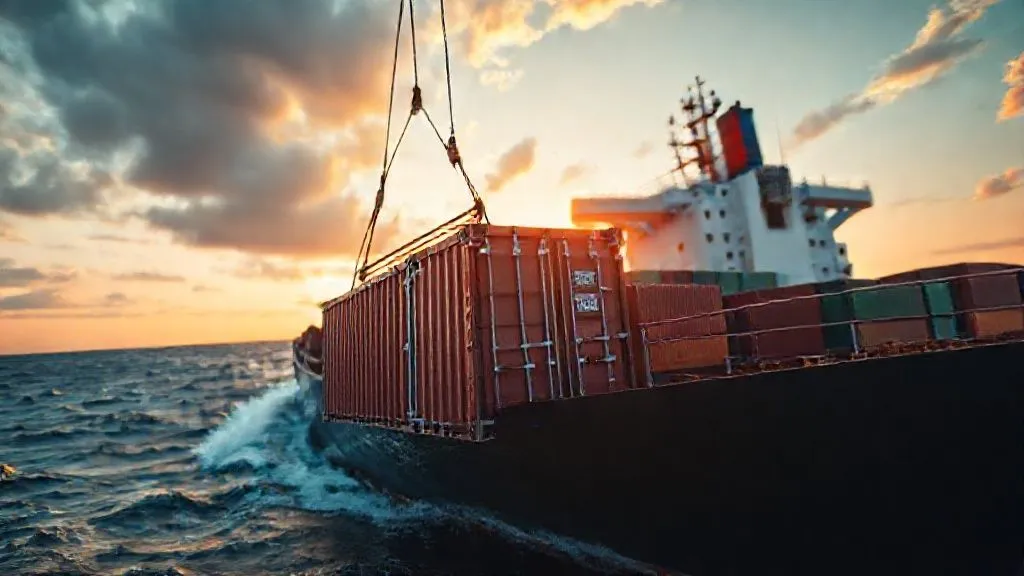
Imagine a colossal cargo ship, laden with millions of dollars worth of goods, traversing the vast, unpredictable ocean. Suddenly, a catastrophic fire erupts in the engine room, threatening to engulf the entire vessel and its precious cargo. To save the ship and the remaining freight, the captain makes a swift, agonizing decision: to jettison a portion of the cargo overboard to lighten the load and stabilize the vessel, or perhaps flood a compartment to contain the fire. Who bears the cost of this deliberate sacrifice?
This isn't just a dramatic scenario from a Hollywood movie; it's a very real and complex situation known in maritime law as 'General Average.' It’s a principle as old as seafaring itself, yet one that remains a cornerstone of international shipping, often misunderstood by those outside the industry. The 'problem' it addresses is how to fairly distribute the costs of a voluntary sacrifice made for the common safety of all interests involved in a maritime venture.
By the end of this comprehensive guide, you will not only understand what is general average in shipping law and how it works, but you'll also grasp its historical significance, the intricate mechanics of its application, the roles of key players, and its profound implications for ship owners, cargo owners, and insurers worldwide. Prepare to navigate the depths of this fascinating legal concept.
The Ancient Roots of Shared Sacrifice: A Historical Perspective
The concept of General Average isn't a modern invention; its roots stretch back over two millennia to ancient maritime traditions. The principle stems from the idea that when a sacrifice is made for the common good of a venture, all parties benefiting from that sacrifice should contribute proportionately to the loss incurred.
From Rhodes to Modern Maritime Law
The earliest known codification of this principle can be found in the Rhodian Law, dating back to 900 BC. This ancient maritime code, developed on the island of Rhodes, stipulated that if cargo was jettisoned to save a ship, the loss should be borne by all who had goods on board. This foundational idea was later adopted into Roman law and subsequently influenced medieval maritime codes across Europe.
Over centuries, as global trade expanded and maritime voyages became more frequent and complex, the need for a standardized approach to General Average grew. This evolution culminated in the development of the York-Antwerp Rules, which serve as the primary international framework governing General Average today.
The Core Principle: Mutual Benefit and Shared Loss
At its heart, General Average embodies the principle of mutual benefit and shared loss. It's an equitable solution to an otherwise unjust outcome. Without it, the party whose property was sacrificed (e.g., cargo jettisoned) would bear the entire burden, while others whose property was saved would escape scot-free. This system ensures that the financial consequences of a necessary, voluntary act to save the entire venture are distributed fairly among all stakeholders.
It's a testament to the enduring human need for fairness, even in the face of maritime disaster. The collective nature of the venture demands a collective response to extraordinary peril.
Defining General Average: Beyond the Basics
So, what exactly defines a General Average event? It's more than just any damage or loss at sea. It requires specific conditions to be met for the principle to apply. Understanding these conditions is crucial for anyone involved in shipping or marine insurance.
What Constitutes a General Average Act?
A General Average act occurs when, and only when, any extraordinary sacrifice or expenditure is intentionally and reasonably made or incurred for the common safety for the purpose of preserving from peril the property involved in a common maritime adventure. This definition, derived from the York-Antwerp Rules, highlights several critical components:
- Extraordinary Sacrifice or Expenditure: The act must be unusual and not part of the ordinary costs of operating the vessel.
- Intentional and Reasonable: The action must be a deliberate choice, not an accidental occurrence, and it must be a reasonable response to the peril.
- Common Safety: The sacrifice must be made to save the entire venture – the ship, its cargo, and freight – from an imminent peril. It cannot be for the benefit of only one party.
- Preserving from Peril: There must be a real and substantial danger threatening the ship and cargo.
For example, if a ship's engine breaks down due to poor maintenance, and a tugboat is called, that's generally not a General Average act. However, if the ship is caught in a severe storm, loses power, and is drifting towards rocks, and the captain deliberately scuttles a portion of the cargo to gain buoyancy and avoid grounding, that would likely qualify.
Key Elements: Intent, Extraordinary Sacrifice, and Common Safety
Let's delve deeper into these three pivotal elements:
- Intent: The act must be a conscious, voluntary decision by the master of the vessel or another authorized person. It's not about damage caused by an accident or negligence, but a calculated choice to avert a greater disaster.
- Extraordinary Sacrifice or Expenditure: This distinguishes General Average from 'Particular Average,' which refers to accidental losses borne solely by the owner of the damaged property. An extraordinary sacrifice might involve jettisoning cargo, cutting away a mast, or intentionally stranding the vessel. An extraordinary expenditure could be the cost of salvage operations or port of refuge expenses incurred to repair the ship after an incident, all for the common safety.
- Common Safety: The ultimate goal of the General Average act must be the preservation of all property involved in the voyage. If the act only benefits a specific part of the cargo or the ship, it does not qualify as General Average. The danger must be common to all interests.
Understanding these nuances is vital because they determine whether the complex machinery of General Average adjustment is set in motion.
The York-Antwerp Rules: The Global Standard
While the principle of General Average is ancient, its modern application is largely governed by the York-Antwerp Rules. These rules provide a comprehensive framework for the adjustment and apportionment of General Average losses, ensuring consistency and predictability across international shipping.
Evolution and Importance of the Rules
The York-Antwerp Rules originated from a series of international conferences starting in the mid-19th century, with the first set adopted in York in 1864 and subsequently revised in Antwerp in 1877. They have undergone numerous revisions since, with the latest significant updates occurring in 1994, 2004, and 2016. These revisions reflect changes in shipping practices, technology, and legal interpretations.
The importance of these rules cannot be overstated. They provide a universally recognized set of guidelines, allowing for the complex calculations of General Average contributions to be performed consistently, regardless of the nationality of the ship, cargo, or owners. Most maritime contracts of carriage (bills of lading, charter parties) explicitly incorporate the York-Antwerp Rules by reference, making them contractually binding on all parties.
Key Provisions and Their Impact
The York-Antwerp Rules cover a wide array of aspects related to General Average, including:
- What constitutes a General Average act (Rule A, B, C).
- Specific types of sacrifices and expenditures that are allowable (e.g., jettison of cargo, damage caused by extinguishing fire, port of refuge expenses, salvage remuneration).
- How values are assessed for contributions (contributory values) and for losses (allowable values).
- The treatment of interest and commissions.
- Provisions for security and deposits.
For instance, Rule VI specifically deals with salvage remuneration, stating that salvage charges incurred to save property from a common peril are to be allowed in General Average. Rule XIV addresses the cost of temporary repairs. These detailed provisions leave little room for ambiguity, which is crucial given the high financial stakes involved.
The rules are not a statute, but rather a set of internationally accepted customs and practices. Their widespread adoption is a testament to their utility in resolving complex multi-party financial claims arising from maritime casualties. For further detailed information, you can refer to resources such as the Wikipedia page on General Average, which provides a good overview of its history and the York-Antwerp Rules.
How General Average Works in Practice: A Step-by-Step Guide
When a General Average event occurs, it triggers a detailed and often lengthy process. This process requires specialized expertise and cooperation from all parties involved. Understanding these steps is key to comprehending what is general average in shipping law and how it works on a practical level.
The Declaration of General Average
The first step is typically the declaration of General Average by the shipowner or their representative. This declaration is made when a General Average act has occurred, and the shipowner intends to recover contributions from the cargo owners and other beneficiaries. This declaration is a formal notice that sets the entire process in motion.
Upon declaration, the vessel will often proceed to a port of refuge where the damage can be assessed, and the General Average adjusters can begin their work. Cargo discharge may be delayed until security is provided.
The Role of the Average Adjuster
Central to the General Average process is the Average Adjuster. This is an independent, highly specialized professional or firm appointed by the shipowner to determine the General Average losses and contributions. Their role is akin to that of an accountant and legal expert combined, meticulously examining all facts, documents, and expenses related to the incident.
The Average Adjuster:
- Investigates the circumstances of the incident to confirm it qualifies as a General Average act under the York-Antwerp Rules.
- Collects evidence, survey reports, and financial documents from all parties.
- Calculates the total General Average expenditure and sacrifices.
- Determines the contributory values of the property saved (ship, freight at risk, and cargo).
- Prepares the General Average Adjustment Statement, a detailed document outlining all calculations and the final contributions due from each party.
This process can be incredibly complex, involving numerous variables and often taking months, if not years, to complete, especially for major casualties.
The Calculation of Contributions
The core of the Average Adjuster's work is the calculation of contributions. This involves two main sets of figures:
- General Average Losses/Expenditures: These are the total costs incurred due to the General Average act (e.g., value of jettisoned cargo, salvage fees, port of refuge expenses, damage to the ship incurred in the act).
- Contributory Values: These are the net values of the property saved, meaning the value of the ship, the cargo, and the freight at risk, all at the termination of the adventure and after deducting any particular average losses.
Each contributing party (shipowner, each cargo owner) contributes to the General Average fund in proportion to the value of their saved property relative to the total saved value. The formula is essentially: (Individual Contributory Value / Total Contributory Value) * Total General Average Losses = Individual Contribution.
Security and Guarantees
Before cargo can be released to its owners, security must be provided for their potential General Average contribution. This is a critical step to ensure that all parties pay their share and that the shipowner can recover the costs incurred. Common forms of security include:
- General Average Bond: A formal document signed by the cargo owner, agreeing to pay their share of the General Average contribution as determined by the Average Adjuster.
- General Average Guarantee: Issued by the cargo owner's insurer, this guarantees payment of the contribution. This is the most common form of security.
- General Average Deposit: A cash deposit paid by the cargo owner, often into a joint account, as security. This is less common now, largely replaced by guarantees.
Without providing adequate security, cargo typically will not be released. This can create significant delays and financial pressure on cargo owners, highlighting the importance of marine insurance.
Who Pays? Understanding the Parties Involved
The principle of General Average dictates that all parties who benefit from the sacrifice must contribute. But who exactly are these parties, and what is their financial exposure?
Ship Owners, Cargo Owners, and Other Interests
The primary contributors to a General Average fund are:
- Ship Owners: They contribute based on the value of the ship and the freight earned or at risk. They are often the party that incurs the initial General Average expenditure (e.g., salvage costs, port of refuge expenses) and then seeks contributions from others.
- Cargo Owners: Each individual cargo owner contributes based on the value of their specific cargo that was saved. This is why General Average can be a significant concern for any importer or exporter.
- Other Interests: In some cases, other parties might also contribute, such as charterers if they have a financial interest in the safe arrival of the vessel or its cargo, or even bunker fuel suppliers if their fuel is considered part of the saved property.
The calculation ensures that the burden is shared proportionally, reflecting the value of the property each party had at risk and ultimately saved.
The Critical Role of Marine Insurance
Given the potentially enormous costs associated with General Average, marine insurance plays a paramount role. Most standard marine insurance policies (both hull & machinery for the ship and cargo insurance for the goods) include coverage for General Average contributions.
- For Cargo Owners: If their cargo is insured, their insurer will typically issue the General Average Guarantee, relieving the cargo owner of the immediate financial burden of a cash deposit. The insurer then pays the contribution as determined by the Average Adjuster. Without cargo insurance, the cargo owner is directly responsible for their share, which can be financially devastating.
- For Ship Owners: Their hull & machinery insurance will cover their share of the General Average contribution and often the initial expenses incurred. Protection and Indemnity (P&I) Clubs, which provide liability insurance for shipowners, also play a significant role in handling General Average claims and providing security.
It is almost universally recommended that any party involved in international shipping ensure they have comprehensive marine insurance coverage that explicitly addresses General Average. This mitigates the financial exposure and simplifies the complex process of providing security and making payments.
Common Scenarios Leading to General Average
While the principles remain constant, General Average situations can arise from a variety of maritime incidents. Here are some of the most common scenarios:
Fire on Board
Perhaps the most classic General Average scenario. If a fire breaks out on a ship, the master may order the flooding of holds, the use of vast quantities of water (which can damage non-burnt cargo), or the jettison of burning cargo to prevent the fire from spreading and save the entire vessel and its remaining contents. The damage caused by firefighting efforts, as well as the value of the jettisoned cargo, would be considered General Average sacrifices.
Grounding and Salvage Operations
When a vessel runs aground, it is in peril. Costs incurred to refloat the vessel, such as salvage remuneration paid to professional salvors, expenses for lightening the ship (e.g., offloading cargo to barges), or damage sustained by the vessel or cargo during the refloating attempt, are often treated as General Average expenditures. The deliberate act of running aground to avoid a greater peril (like collision or sinking) would also fall under this category.
Heavy Weather Damage Requiring Jettison
In severe storms, a ship might become unstable, perhaps due to a shift in cargo or damage to its structure. To prevent capsizing or breaking apart, the master might make the difficult decision to jettison cargo overboard to improve the ship's stability or reduce its draft. The value of the lost cargo, though deliberately sacrificed, is then shared among all remaining interests.
Other Scenarios
Other situations that can trigger General Average include:
- Port of Refuge Expenses: Costs incurred for diverting to a port of refuge to carry out repairs necessary for the safe continuation of the voyage, which were necessitated by a General Average act. This includes pilotage, tugs, port charges, crew wages, and provisions during the stay.
- Voluntary Stranding: Deliberately running a ship aground to avoid an even greater peril, like sinking in deep water.
- Damage by Tug Assistance: Damage caused to the ship or cargo by tugs assisting in a General Average operation.
Each scenario underscores the fundamental principle: a deliberate, extraordinary act for the common safety of the maritime venture.
Challenges and Controversies in General Average
Despite its long history and established rules, General Average is not without its challenges and controversies. Its complexity can lead to disputes and significant financial burdens.
Disputes Over Causation and Necessity
One of the most common areas of dispute revolves around whether the General Average act was truly necessary and directly caused by an imminent peril. Insurers, particularly, may scrutinize the circumstances to ensure that the sacrifice or expenditure was reasonable and not due to pre-existing unseaworthiness or negligence on the part of the shipowner that would preclude recovery. The burden of proof often lies with the party claiming General Average.
Delays and Financial Burdens
As mentioned, the General Average adjustment process can be protracted, sometimes taking years. During this time, cargo owners may face significant delays in receiving their goods, leading to commercial losses. Furthermore, even with insurance, the initial declaration can cause stress and uncertainty. For uninsured cargo, the demand for contributions can be a severe financial blow, potentially leading to abandonment of the cargo.
The Future of General Average in a Digital Age
In an era of increasing data transparency, automation, and advanced risk management, some question the continued relevance and efficiency of General Average. While its fundamental principle remains sound, the manual, often slow adjustment process seems out of step with modern logistics. Discussions within the maritime industry often touch upon potential reforms to streamline the process, perhaps through greater use of technology or alternative risk transfer mechanisms. However, the deep-rooted nature of the York-Antwerp Rules and the intricate web of international maritime law means any significant changes are likely to be slow and carefully considered. For more insights on the legal complexities, authoritative sources like the International Maritime Organization (IMO) provide vast resources on maritime conventions and practices.
Mitigating Risks: Prevention and Preparation
While General Average is an unpredictable event, parties involved in shipping can take proactive steps to mitigate their exposure and ensure a smoother process should a claim arise.
Robust Vessel Maintenance
For shipowners, adhering to the highest standards of vessel maintenance and operational safety is paramount. Unseaworthiness caused by a lack of due diligence can potentially invalidate a General Average claim or shift liability. Regular inspections, adherence to classification society rules, and proper crew training are essential. A well-maintained ship is less likely to encounter the perils that necessitate a General Average act in the first place.
Comprehensive Insurance Coverage
This cannot be stressed enough. For both shipowners and cargo owners, comprehensive marine insurance is the single most effective way to manage the financial risks associated with General Average. Ensure your policy explicitly covers General Average contributions and that your insurance broker is knowledgeable in this area. Review policy terms carefully and understand deductibles and exclusions. Having proper coverage ensures that, in the event of a General Average declaration, your insurer can provide the necessary guarantee, allowing your cargo to be released without undue delay and protecting you from direct financial outlay.
Due Diligence and Legal Counsel
For cargo owners, understanding the terms of your bill of lading and other shipping contracts is crucial. These documents often incorporate the York-Antwerp Rules and outline the responsibilities of all parties. In the event of a General Average declaration, engaging experienced maritime legal counsel or consulting with your insurer immediately can help navigate the complex process, ensure your rights are protected, and expedite the release of your cargo. Being prepared means understanding the potential risks and having a clear plan for how to respond.
Frequently Asked Questions (FAQ)
Is General Average mandatory? No, General Average is not a statutory law that is universally mandatory in all jurisdictions. However, it is almost universally incorporated into maritime contracts of carriage (like bills of lading and charter parties) through clauses that refer to the York-Antwerp Rules. By agreeing to these contracts, parties contractually bind themselves to the principles of General Average.
What happens if a cargo owner refuses to pay their General Average contribution? If a cargo owner refuses to provide security or pay their contribution, the shipowner has a lien on the cargo. This means the cargo will not be released until the security is provided or the contribution is paid. In extreme cases, the cargo may eventually be sold to cover the contribution, though this is a last resort.
How long does a General Average claim take to settle? The duration varies significantly depending on the complexity of the case, the number of parties involved, and the nature of the incident. Simple cases might be resolved in a few months, but complex ones, especially those involving significant damage or numerous cargo owners, can take several years to finalize.
Can General Average be avoided? General Average is an inherent risk in maritime transport and cannot be entirely avoided, as it arises from unpredictable perils at sea. However, its financial impact can be mitigated through comprehensive marine insurance, which covers the cargo owner's or shipowner's contribution.
What is the difference between General Average and Particular Average? General Average refers to a loss that results from a voluntary sacrifice or expenditure made for the common safety of the entire maritime adventure, with the cost shared by all parties saved. Particular Average, in contrast, refers to an accidental or partial loss that is borne solely by the owner of the property damaged or lost, without any contribution from other parties.
Recommended Reading
- Sports Team Acquisition: Why Legal Due Diligence is Your Secret Weapon
- Tax Audit Triggers in 2024: What You MUST Know to Stay Safe!
- Unlock Your Child's Future: How to Request an Independent Educational Evaluation?
- The Definitive Guide: Can You Get a Car Loan After Chapter 13 Discharge?
- Can the Government Take Your Land? Understanding Eminent Domain Rights
Conclusion
The concept of General Average, with its ancient roots and modern application through the York-Antwerp Rules, remains a fundamental and often complex aspect of international shipping law. It embodies a unique principle of shared sacrifice and collective responsibility, ensuring that the financial burden of saving a maritime venture from peril is equitably distributed among all benefiting parties. Understanding what is general average in shipping law and how it works is not merely an academic exercise; it's a critical piece of knowledge for anyone involved in global trade, from shipowners and charterers to cargo owners and marine insurers.
While the process can be lengthy and financially demanding, proper marine insurance coverage serves as the most effective shield against its potentially devastating effects. By embracing robust safety practices, securing comprehensive insurance, and understanding the intricate mechanics of General Average, stakeholders in the maritime industry can navigate the unpredictable seas of commerce with greater confidence and resilience.

Comments
Leave a comment below. Your email will not be published. Required fields marked with *