


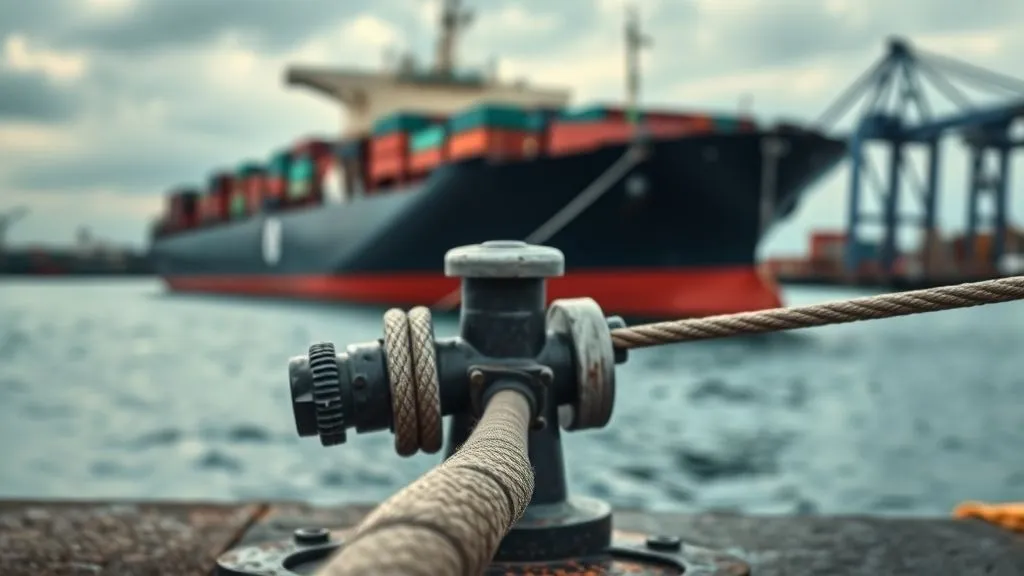
What to Do When Your Vessel is Arrested in a Foreign Port: An Expert's Guide
For over three decades in the demanding world of maritime law and commerce, I've witnessed firsthand the sheer panic and operational paralysis that grips a shipping company when the dreaded call comes: "Your vessel has been arrested in a foreign port." This isn't just a minor inconvenience; it's a full-blown crisis, capable of derailing schedules, incurring massive costs, and severely damaging reputations.
The problem is multifaceted: a vessel arrest halts operations, triggers demurrage claims, endangers cargo, and places immense pressure on crew and management. The legal frameworks are complex, the financial implications severe, and the emotional toll on all involved can be overwhelming. It’s a situation fraught with uncertainty, where every decision, or lack thereof, can have profound consequences.
In this definitive guide, I will share my accumulated experience and expertise to provide you with a clear, actionable framework for exactly what to do when your vessel is arrested in a foreign port. We'll delve into the immediate steps, the critical legal and financial strategies, and the preventative measures necessary to navigate this treacherous maritime challenge, transforming potential disaster into a manageable situation.
Understanding the Grounds for Vessel Arrest
Before we discuss action, it's crucial to grasp why a vessel might be arrested. An arrest isn't a criminal charge against the ship itself, but rather a legal mechanism to secure a maritime claim against the vessel owner. This allows the claimant to ensure there's an asset available to satisfy a judgment, should they win their case.
Common Causes: Maritime Liens, Collisions, Environmental Infractions
The vast majority of vessel arrests stem from maritime liens. These are preferential claims against a vessel for services rendered to it or damages caused by it. Examples include unpaid bunker fuel bills, crew wages, port charges, salvage operations, or claims arising from collisions, cargo damage, and pollution incidents.
Beyond liens, a vessel might be detained by Port State Control (PSC) authorities for serious deficiencies related to safety, security, or environmental protection. While technically a detention, not an arrest, these often precede or run concurrently with formal arrests, especially if fines or damages are involved. Understanding the specific legal basis for the arrest is the very first step in formulating your defense.
Jurisdictional Nuances: Why Foreign Ports are Different
The concept of vessel arrest is recognized internationally, primarily through the 1952 and 1999 Arrest Conventions, but their application varies significantly across jurisdictions. Countries may have ratified these conventions with reservations or have their own unique national laws governing maritime arrests. This creates a complex patchwork of legal requirements.
For instance, some jurisdictions allow “sister ship” arrests, where a vessel owned by the same beneficial owner as the one giving rise to the claim can be arrested. Others may have different rules regarding the priority of maritime liens. This legal diversity underscores why a generic approach simply won't work when your vessel is arrested in a foreign port; localized, expert advice is paramount.
Immediate Actions Post-Arrest: Your First 24-48 Hours
The initial hours following a vessel arrest are critical. Panic is a natural reaction, but it must be replaced by swift, systematic action. Here's a structured approach based on my years of experience:

- Confirm the Arrest Order: Immediately verify the legitimacy and specific grounds of the arrest. Request a copy of the official court order or documentation from the port authorities or the arresting party's lawyers. Understand who the claimant is, the nature of their claim, and the amount sought.
- Notify Key Stakeholders: Inform your P&I (Protection & Indemnity) Club, hull & machinery insurers, charterers, cargo owners, and internal legal/management teams without delay. Transparency and timely communication are essential for coordinating a response and managing expectations.
- Secure the Vessel and Crew: Ensure the vessel is safely moored and all necessary safety and security protocols are maintained. Reassure the crew and ensure their welfare, explaining the situation clearly and addressing any immediate needs.
- Gather All Relevant Documentation: Start compiling all documents related to the claim: charter parties, bills of lading, bunker receipts, crew contracts, logbooks, survey reports, communication records, and any evidence pertinent to the dispute. This will be invaluable for your legal team.
- Appoint Local Legal Counsel: This is arguably the most crucial step. You need a reputable maritime law firm in the specific jurisdiction where the arrest occurred. Do not attempt to navigate foreign legal systems on your own. Your P&I Club will often have a list of trusted correspondents.
- Instruct the Master: Advise the Master to cooperate fully with the arresting authorities and their representatives, but to refrain from making any statements or signing documents without legal counsel’s approval. The Master should only provide factual information as requested.
Securing Expert Legal Counsel: Non-Negotiable
I cannot stress this enough: attempting to resolve a vessel arrest without specialized legal representation is akin to navigating a minefield blindfolded. The complexities of international maritime law, combined with local jurisdictional specifics, demand expert guidance.
The Role of a Local Maritime Lawyer
A local maritime lawyer is your indispensable advocate. They understand the intricacies of the local courts, the language, the cultural nuances, and the precise legal procedures for challenging an arrest or arranging for release. Their role includes:
- Reviewing the arrest order and assessing its validity.
- Advising on the claimant's legal standing and the merits of their claim.
- Negotiating with the claimant's lawyers for a consensual release.
- Preparing and filing necessary court documents to contest the arrest or provide security.
- Representing your interests in court proceedings.
- Facilitating the provision of security for release.
Leveraging Your P&I Club and Insurers
Your P&I Club is a vital partner in this crisis. They cover a vast array of liabilities, including claims for cargo damage, collision liability, pollution, and crew injury – many of which can lead to vessel arrests. They will typically:
- Appoint and manage local legal correspondents on your behalf.
- Provide financial guarantees (Letters of Undertaking or LOU) to secure the vessel's release, subject to the terms of your policy.
- Offer expert advice and support throughout the process.
Similarly, your hull & machinery (H&M) insurers should be engaged if the arrest relates to physical damage to the vessel. Coordinating with both your P&I Club and H&M insurers ensures a unified and financially backed response.
| Aspect | Local Maritime Lawyer | P&I Club Correspondent |
|---|---|---|
| Jurisdictional Knowledge | Deep expertise in local laws, courts, and procedures | Extensive network, often provides initial contact and oversight |
| Negotiation & Litigation | Directly handles court filings, arguments, and settlement negotiations | Guides strategy, approves financial guarantees, monitors progress |
| Financial Security | Advises on local security requirements and forms | Primary provider of Letters of Undertaking (LOUs) or cash deposits |
| Communication | Direct liaison with local authorities and opposing counsel | Centralized communication hub for owner, insurers, and legal team |
Navigating the Legal and Financial Maze
Once legal counsel is engaged, the real work of navigating the claim begins. This involves a deep dive into the legal arguments and, inevitably, the financial implications of securing your vessel's release.
Understanding Maritime Liens and Claims
Your legal team will meticulously examine the claimant's assertions. Is the claim legitimate? Is the amount reasonable? Are there any counterclaims you can assert? This detailed analysis is crucial for developing a robust defense strategy and determining the appropriate level of security for release. Different types of maritime liens have different priorities; understanding this hierarchy is key, especially in cases where multiple claimants might emerge.
The Dreaded Security for Release: Bonds, Guarantees, and Deposits
To obtain the release of an arrested vessel, the owner typically must provide security for the claimant's demand. This security acts as a substitute for the vessel itself, allowing the ship to sail while the underlying dispute is litigated or settled. Common forms of security include:
- P&I Club Letters of Undertaking (LOUs): The most common form, essentially a guarantee from your P&I Club to pay up to a certain amount if the claim is successful.
- Bank Guarantees: A financial institution guarantees payment.
- Cash Deposits: Direct payment into a court or escrow account, often the least preferred option due to tying up capital.
Expert Insight: "The negotiation of the security amount is often the first significant battle. A claimant will typically demand a sum that includes their claim amount, interest, and legal costs. Your legal team's skill in negotiating this down to a reasonable, defensible figure can save you millions, especially when your vessel is arrested in a foreign port."
The goal is always to provide the minimum acceptable security to secure release, allowing the vessel to resume trading and mitigate ongoing losses. This process requires delicate negotiation and a keen understanding of local legal precedents.
Case Study: The M/V 'Sea Serpent' and the Delayed Cargo Claim
How a Proactive Approach Saved Millions
I recall a challenging case involving the M/V 'Sea Serpent', a bulk carrier arrested in a South American port due to a cargo damage claim. A consignee alleged significant contamination of a grain shipment, demanding $5 million in damages plus interest and costs. The vessel owner, a small to medium-sized operator, was understandably distraught.
Upon notification, their P&I Club immediately engaged local counsel. Our team's first action was to secure a detailed survey of the cargo and the vessel's holds, revealing that the alleged contamination was pre-existing and likely occurred during loading, not during the sea voyage. Crucially, the Master had meticulously documented the cargo's condition upon loading with photographic evidence and detailed remarks on the Bill of Lading.
Armed with this evidence, our local counsel was able to negotiate with the claimant's lawyers. Instead of demanding the full $5 million as security, we presented a compelling argument for a significantly reduced figure, eventually agreeing on a Letter of Undertaking for $1.5 million. The vessel was released within 72 hours of the LOU being provided, minimizing demurrage and operational losses. The subsequent litigation, supported by the strong initial evidence, eventually led to the claim being dismissed with minimal financial outlay for the owner.
This case vividly illustrates the power of immediate, coordinated action, robust documentation, and expert legal intervention when facing the crisis of what to do when your vessel is arrested in a foreign port.
Communication and Crew Welfare During Detention
While the legal battles rage, it's easy to overlook the human element. The crew on board an arrested vessel are in a highly stressful situation, isolated and uncertain about their future. Effective communication and unwavering attention to their welfare are paramount.
Maintaining Morale and Ensuring Basic Needs
The Master plays a crucial role in maintaining crew morale. Regular, honest updates from the company and legal team, even if the news isn't ideal, help alleviate anxiety. Ensuring access to medical care, fresh provisions, and communication with their families are non-negotiable responsibilities. In some prolonged arrests, crew changes may become necessary, which can present its own set of logistical and immigration challenges in a foreign port.
It's also important to be aware of potential psychological impacts. The uncertainty of detention can lead to stress, boredom, and feelings of helplessness. Providing recreational activities, access to internet/phones, and mental health support, if needed, reflects good stewardship and fulfills your duty of care as an employer.

Managing External Communications (Owners, Charterers, Cargo Interests)
Beyond the crew, a consistent and transparent communication strategy must be maintained with all external stakeholders. Charterers will be concerned about delays and potential breaches of charter party. Cargo owners will demand updates on their goods. Port authorities will require ongoing liaison. Your P&I Club and legal team can help draft official communications to ensure accuracy and legal prudence.
Managing these relationships proactively can prevent further claims or disputes from escalating. For instance, explaining the steps being taken to secure release and providing realistic timelines can often de-escalate tensions with charterers and cargo interests, preventing them from initiating their own parallel legal actions.
Preventing Future Arrests: Best Practices for Maritime Commerce
The best way to deal with a vessel arrest is to prevent it from happening in the first place. While not all claims can be avoided, robust preventative measures can significantly reduce your exposure.
Due Diligence in Charter Parties and Contracts
Many arrests stem from contractual disputes. Therefore, meticulous attention to detail in your charter parties, bills of lading, and other commercial contracts is paramount. Ensure clauses related to jurisdiction, arbitration, lien prevention, and indemnities are clearly drafted and understood. For example, “no-lien” clauses in time charter parties, while not always foolproof, can offer a layer of protection against claims from suppliers to the charterer.
Always conduct thorough due diligence on your commercial partners. Are they financially stable? Do they have a history of disputes? Understanding who you are doing business with can prevent costly surprises down the line. As Harvard Business Review often emphasizes, proactive risk management is far more effective than reactive crisis management.
Adherence to International Regulations (ISM, ISPS, MARPOL)
Compliance with international conventions like the International Safety Management (ISM) Code, the International Ship and Port Facility Security (ISPS) Code, and the International Convention for the Prevention of Pollution from Ships (MARPOL) is not just a regulatory obligation; it's a critical preventative measure against arrests. Breaches of these conventions can lead to port state control detentions, fines, and potentially, claims for damages or pollution, which can trigger an arrest.
Regular internal audits, crew training, and maintaining up-to-date certification are essential. A vessel with a clean compliance record is less likely to be targeted by authorities or claimants looking for an easy asset to secure a claim. The International Maritime Organization (IMO) provides comprehensive resources on these regulations.

Robust Documentation and Record Keeping
As seen in the M/V 'Sea Serpent' case, diligent record-keeping is your best defense. Every communication, every survey, every bunker receipt, every crew contract, and every logbook entry could be a critical piece of evidence. Implement rigorous systems for documenting all aspects of your vessel's operations, cargo handling, and crew activities.
Digitalization of records can greatly enhance accessibility and integrity. When a claim arises, the ability to quickly retrieve accurate and comprehensive documentation can be the difference between a swift resolution and a prolonged, costly legal battle. This diligence is especially vital when considering what to do when your vessel is arrested in a foreign port, where evidence collection can be challenging.
Regular Legal and Compliance Audits
Periodically engage external maritime legal experts to conduct compliance audits of your operations, contracts, and internal procedures. These audits can identify potential vulnerabilities before they lead to an arrest. Think of it as a legal health check for your fleet. BIMCO, a leading maritime organization, offers various standard contracts and clauses that can help standardize and strengthen your agreements.
Staying informed about changes in international maritime law and local regulations in key trading areas is also crucial. A proactive approach to legal and compliance matters is an investment that pays dividends by preventing costly detentions and arrests.
Frequently Asked Questions (FAQ)
Q: Can I negotiate directly with the claimant or their lawyers to release my vessel? While it might seem quicker, I strongly advise against direct negotiation without your legal counsel present. You could inadvertently make concessions or statements that weaken your legal position. Your P&I Club and appointed lawyers are best equipped to handle these delicate discussions.
Q: What's the average cost of a vessel arrest? The costs vary enormously depending on the jurisdiction, the nature and amount of the claim, the duration of the arrest, and legal fees. It can range from tens of thousands to several millions of dollars, including port charges, crew wages, legal fees, and lost earnings. The faster you secure release, the lower the costs.
Q: How long does a vessel arrest typically last? The duration is highly variable. A consensual release with security can happen within days. If the arrest is contested or if negotiations for security are protracted, it could last weeks or even months. In rare, complex cases, vessels have remained under arrest for over a year while disputes are resolved.
Q: What if the claim leading to the arrest is baseless or fraudulent? If you believe the claim is baseless, your legal team will immediately work to challenge the arrest and seek its expedited lifting. In some jurisdictions, you may even be able to claim damages for wrongful arrest, but proving this can be challenging and requires strong evidence.
Q: Can I move my vessel to another port once arrested? Absolutely not. An arrested vessel is under the jurisdiction of the arresting court and port authorities. Moving the vessel without a formal release order would be a serious legal offense, potentially leading to severe penalties, including fines and criminal charges against the Master and owners.
Key Takeaways and Final Thoughts
Navigating a vessel arrest in a foreign port is undoubtedly one of the most challenging situations a shipping company can face. However, with the right knowledge, preparation, and expert support, it is a challenge that can be effectively managed and overcome.
- Act Swiftly and Decisively: The first 24-48 hours are crucial for information gathering and initiating your response.
- Engage Experts Immediately: Your P&I Club and local maritime lawyers are your most valuable assets.
- Understand the Legal Landscape: Appreciate the nuances of foreign jurisdictions and the grounds for arrest.
- Prioritize Crew Welfare: Maintain communication and ensure the well-being of your seafarers.
- Prevent, Don't Just React: Implement robust compliance, documentation, and contractual due diligence to minimize future risks.
Remember, an arrest is a legal process, not a death sentence for your voyage. By following these expert guidelines and maintaining a calm, strategic approach, you can successfully navigate these turbulent waters and ensure your vessel, crew, and commerce continue their journey. Stay prepared, stay informed, and always seek professional counsel.
Recommended Reading
- Unlock M&A Success: Your Essential Guide to Legal Advisory for Mergers and Acquisitions
- 5 Legal Steps: Challenging Government's Warrantless Cloud Data Access
- GDPR & Public Blockchains: 7 Key Answers for Data Privacy Compliance
- How to Legally Challenge Arbitrary Public Agency Rulemaking: A 7-Step Guide
- 7 Proven Strategies: How to Stop Former Employees From Using Your Trade Secrets Unfairly?


Comments
Leave a comment below. Your email will not be published. Required fields marked with *