


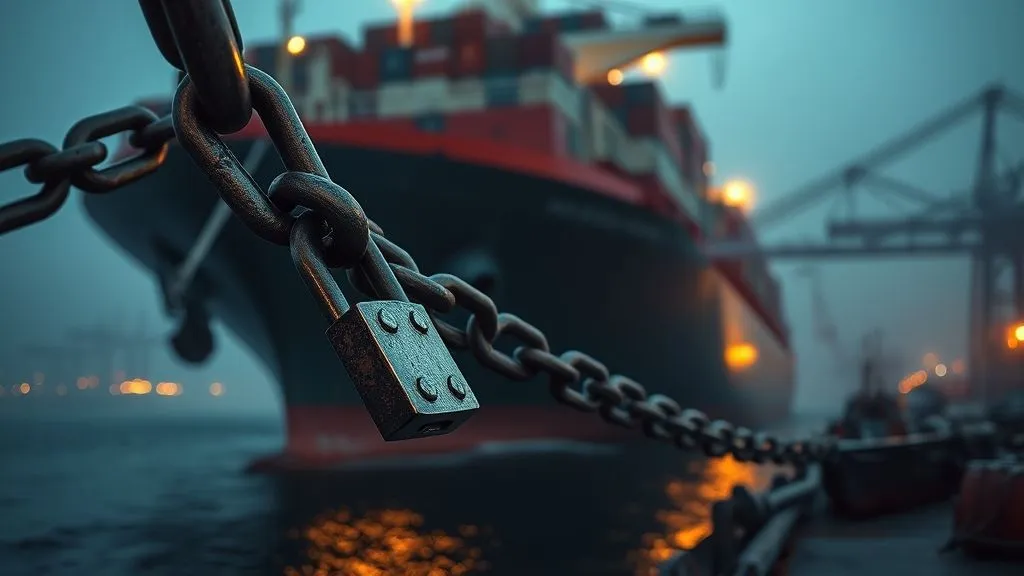
What to do when your vessel is arrested in a foreign port?
For over two decades in maritime law, I've witnessed firsthand the devastating impact a sudden vessel arrest in a foreign port can have. It's not merely a legal inconvenience; it's a profound disruption that can halt operations, cripple cash flow, and inflict severe reputational damage. The scene is often chaotic: frantic calls, bewildered crew, and the looming threat of escalating costs.
The problem is multifaceted. You're operating in an unfamiliar legal jurisdiction, grappling with local customs, language barriers, and often aggressive claimants. The clock is ticking, and every hour of delay can cost tens of thousands of dollars, not to mention the potential loss of charters and trust with clients. The stress on owners, operators, and crew is immense, and a misstep can lead to prolonged detention or even the forced sale of your valuable asset.
This comprehensive guide isn't just a theoretical overview; it's a battle-tested framework forged from years of navigating these treacherous waters. I'll walk you through the critical, actionable steps you must take immediately and strategically, offering expert insights, real-world analogies, and practical advice to help you protect your vessel, mitigate losses, and secure a swift release. You'll learn not just what to do when your vessel is arrested in a foreign port, but precisely how to do it effectively.
1. The Immediate Aftermath: First Steps Upon Notification
The moment you receive notification of a vessel arrest is critical. Panic is a luxury you cannot afford. Your immediate actions will set the tone for the entire resolution process. I've seen countless situations where initial delays or incorrect information exacerbated the problem significantly.
Confirm the Arrest Details
Your first priority is to gather precise information. Do not rely on hearsay. Demand official documentation. This means getting a copy of the arrest warrant, court order, or official detention notice. This document will typically state the claimant, the nature of the claim, the amount claimed, and the arresting authority.
Expert Insight: A common mistake is to assume the reason for arrest. Always verify the legal grounds directly from the official papers. This detail is paramount for your legal team.
Secure the Vessel and Crew
While legal matters unfold, the safety and well-being of your vessel and crew remain paramount. Ensure the crew understands the situation, but instruct them to remain calm and cooperative with port authorities. Any resistance or perceived obstruction can complicate matters further.
- Inform the Master: Ensure the vessel's Master is fully aware of the arrest and understands their obligations under local law, particularly regarding access for surveyors or legal representatives.
- Maintain Vessel Security: Despite the arrest, the vessel remains your responsibility. Ensure normal security protocols are maintained to prevent theft, damage, or further incidents.
- Address Crew Welfare: Access to provisions, medical care, and communication with home must be maintained. Crew morale can quickly deteriorate during prolonged detention, impacting safety and operational continuity.
- Document Everything: From the moment of notification, maintain a detailed log of all communications, instructions, and events. This documentation will be invaluable for your legal defense.
2. Engaging Expert Maritime Legal Counsel: Your Non-Negotiable First Move
Once the initial shock subsides and basic information is gathered, your next, most critical step is to engage competent maritime legal counsel. This is not a task for general practitioners. You need specialists deeply versed in international maritime law and, crucially, with strong local connections in the port of arrest. I've seen companies attempt to cut corners here, only to find themselves entangled in legal quagmires that cost far more in the long run.
Why Local Expertise is Crucial
International maritime law provides a framework, but its application varies significantly across jurisdictions. Local lawyers understand the specific statutes, court procedures, and even unwritten customs that can make or break your case. They can navigate the bureaucracy, communicate effectively with local authorities, and often have established relationships that can expedite processes.
Selecting the Right Legal Team
Choosing the right legal representation is paramount. This isn't just about finding a lawyer; it's about assembling a crisis management team. Here's what to look for:
- Specialized Maritime Law Experience: They must have a proven track record in vessel arrest and release cases.
- Local Presence/Network: Direct access to the port's legal system and authorities is vital.
- 24/7 Availability: Arrests happen at any time, and swift action is often required outside of normal business hours.
- Language Proficiency: Ability to communicate fluently in both your operational language and the local legal language.
- Clear Communication: They should be able to explain complex legal processes in an understandable manner.
Don't hesitate to seek recommendations from your P&I Club, maritime insurance provider, or industry associations. Organizations like BIMCO often have extensive networks of trusted maritime lawyers globally. BIMCO's legal resources can be a valuable starting point for finding reputable counsel.
3. Understanding the Grounds for Arrest: Know Your Adversary
Before any meaningful action can be taken, you must thoroughly understand the legal basis for the arrest. This involves dissecting the claimant's allegations and identifying the specific type of claim that led to the detention. This isn't just about knowing the 'why'; it's about understanding the 'how' and 'what next' from a legal perspective.
Common Reasons for Vessel Arrest
Vessels can be arrested for a myriad of reasons, broadly categorized under maritime claims. These often stem from unpaid debts or damages. Some of the most frequent grounds include:
- Unpaid Bunkers or Supplies: Non-payment for fuel, provisions, or other essential services.
- Crew Wages: Outstanding salaries or benefits owed to the crew.
- Collision Damages: Claims arising from a maritime collision.
- Salvage Claims: Remuneration sought by salvors for saving a vessel or cargo.
- Pollution Incidents: Claims for environmental damage caused by oil spills or other pollutants.
- Breach of Charter Party or Bill of Lading: Disputes over contractual agreements for cargo transport or vessel hire.
- Shipbuilding or Repair Debts: Unpaid invoices for construction or maintenance work.
- Mortgage Claims: Default on a ship mortgage, allowing the mortgagee to arrest the vessel.
The Role of Maritime Liens
Many vessel arrests are based on the concept of a 'maritime lien.' This is a privileged claim against a vessel, independent of its ownership, for services rendered to it or injuries caused by it. Maritime liens 'travel with the ship,' meaning they can be enforced against the vessel even if ownership changes. This is a powerful tool for claimants, as it allows them to pursue the vessel itself, rather than just the owner.
Expert Insight: Accurately identifying whether the claim constitutes a maritime lien under the local jurisdiction's law is crucial. This dictates the priority of the claim and the complexity of its release.
Your legal team will analyze the arrest warrant against the backdrop of local maritime law to determine the validity and strength of the claim. This analysis will guide the strategy for negotiation and release. Understanding these nuances is key to effectively addressing what to do when your vessel is arrested in a foreign port.
| Grounds for Arrest | Typical Claimants | Impact on Vessel | Release Mechanism |
|---|---|---|---|
| Unpaid Bunkers | Bunker Suppliers, Creditors | Immediate detention, potential sale | Payment or security for debt |
| Crew Wages | Crew Members, Unions | High priority claim, severe reputational risk | Payment of outstanding wages and repatriation costs |
| Collision Damages | Other Vessel Owners, Cargo Owners | Detention, extensive investigations | Security for damages, often via P&I Club |
| Pollution Incident | Environmental Agencies, Affected Parties | Heavy fines, environmental cleanup costs | Security for fines and cleanup, often via P&I Club |
| Breach of Charter Party | Charterers, Cargo Owners | Commercial dispute, operational delays | Security for alleged damages, arbitration |
4. Navigating Financial Security: The Key to Release
The primary mechanism for releasing an arrested vessel is the provision of adequate financial security. This isn't an admission of guilt, but rather a practical step to allow the vessel to resume operations while the underlying dispute is resolved. The claimant wants assurance that if their claim is eventually proven, they will be paid. Your goal is to provide this assurance in the most efficient and cost-effective way possible.
Forms of Security: Bail, Bank Guarantees, P&I Club Letters
Several forms of security are commonly accepted, though local laws and claimant preferences can influence the choice:
- Cash Bail: The most straightforward but often the least desirable due to the immediate impact on cash flow. The money is usually deposited with the court or a designated third party.
- Bank Guarantee: A commitment from a reputable bank to pay the claimant up to a certain amount if the claim is proven. This is a common and generally accepted form of security.
- P&I Club Letter of Undertaking (LOU): For claims covered by your Protection and Indemnity (P&I) insurance, your P&I Club can often issue an LOU. This is usually the most efficient and preferred method, as it leverages your existing insurance coverage and reputation.
- Surety Bond: A bond issued by a specialized surety company, guaranteeing payment.
Calculating the Security Amount
The amount of security required is usually the sum of the claimant's alleged damages, plus interest and legal costs, often with an additional buffer. Your legal team will negotiate this amount. It's crucial to resist inflated demands and ensure the security is proportionate to the actual, justifiable claim. Over-securing means tying up more capital than necessary. This negotiation phase requires expertise and a firm hand.
Case Study: The M/V 'Ocean Sentinel's Swift Release
Case Study: The M/V 'Ocean Sentinel's Swift Release
The M/V 'Ocean Sentinel', a bulk carrier, was arrested in Rotterdam due to a disputed bunker bill of $500,000. The local agent panicked, considering a cash deposit. However, their experienced maritime legal team, in conjunction with the vessel's P&I Club, immediately engaged with the claimant's lawyers. Through swift negotiation and leveraging the P&I Club's strong standing, an LOU for $550,000 (covering the claim plus a buffer for costs) was issued within 36 hours. This avoided a cash outlay, minimized port charges, and allowed the vessel to depart with only a minor delay, saving the owners significant operational losses and reputational damage. This success hinged on immediate expert legal engagement and the efficient deployment of P&I coverage.
Your P&I Club is an invaluable partner in these situations. They are accustomed to dealing with vessel arrests and can provide expert advice, legal assistance, and the necessary financial guarantees. Understanding the scope of your P&I coverage is vital. The International Group of P&I Clubs is a key resource for understanding this aspect of maritime insurance.
5. The Release Process: From Negotiation to Departure
Once security has been agreed upon, the path to release becomes clearer, but it still requires meticulous attention to detail. The process involves legal formalities, administrative steps, and careful coordination to ensure the vessel can resume its voyage without further impediment. This is where the local legal team's procedural knowledge becomes indispensable.
Negotiating with Claimants
While providing security allows for the vessel's release, it doesn't resolve the underlying dispute. Often, the claimant will agree to release the vessel upon receipt of security, with the understanding that the main case will be heard later, either through litigation or arbitration. Your lawyers will draft and negotiate the terms of this agreement, ensuring it clearly states that the security replaces the vessel as the object of the claim and that the vessel will be released unconditionally.
Court Orders and Formalities
After the security is in place and the agreement with the claimant is finalized, your legal team will present these documents to the arresting court or authority. The court will then issue an order for the vessel's release. This order must be formally served on the port authorities, the arresting officer, and any other relevant parties. This is a critical administrative step where delays can still occur if not handled efficiently.
- Secure Release Order: Obtain the official court order or document explicitly stating the vessel's release.
- Serve Documentation: Ensure the release order is properly served on all relevant port and customs authorities.
- Clear Port Dues: Settle any outstanding port dues, pilotage fees, or other charges that may have accumulated during the arrest period.
- Prepare for Departure: Coordinate with the Master, pilots, and tugs to ensure a smooth departure as soon as the release is confirmed.
Expert Insight: Never assume the vessel is free to go until you have explicit, written confirmation of release from the court and all relevant port authorities. A premature departure can lead to severe legal repercussions.
6. Post-Release Procedures and Dispute Resolution
The vessel's release is a major victory, but it's not the end of the journey. The underlying dispute that led to the arrest still needs to be resolved. This phase transitions from crisis management to strategic legal dispute resolution, a crucial aspect of understanding what to do when your vessel is arrested in a foreign port in its entirety.
Addressing Underlying Disputes
With the vessel free, you can now focus on the merits of the claim without the immediate pressure of daily port costs. Your legal team will work to build your defense, gather evidence, and strategize the best approach to resolve the dispute. This might involve:
- Evidence Gathering: Collecting all relevant contracts, logs, communications, and expert reports.
- Expert Opinions: Engaging surveyors, technical experts, or forensic accountants to support your case.
- Settlement Negotiations: Attempting to reach an amicable settlement with the claimant, often through mediation.
Arbitration vs. Litigation
The method of dispute resolution will depend on contractual clauses and the nature of the claim. Many shipping contracts stipulate arbitration (e.g., London Maritime Arbitrators Association - LMAA, or Singapore International Arbitration Centre - SIAC) as the preferred method, which can be faster and more private than traditional court litigation. If no such clause exists, or if the claim falls outside its scope, litigation in the relevant court may be necessary.
Choosing between arbitration and litigation involves weighing factors like cost, speed, confidentiality, and the enforceability of awards. Your legal team will advise on the most advantageous path forward. The London Maritime Arbitrators Association (LMAA) is a globally recognized body for resolving maritime disputes.
| Feature | Arbitration | Litigation |
|---|---|---|
| Speed | Generally faster | Often slower, subject to court schedules |
| Cost | Can be high due to arbitrator fees, but often more predictable | Can be very high and unpredictable due to court fees, appeals |
| Confidentiality | Private | Public record |
| Expertise | Arbitrators often have industry-specific expertise | Judges may lack specialized maritime knowledge |
| Enforcement | Arbitral awards generally easier to enforce internationally (New York Convention) | Court judgments can be more challenging to enforce across borders |
7. Proactive Measures: Preventing Future Arrests
While knowing what to do when your vessel is arrested in a foreign port is crucial, the ultimate goal is to prevent such an event from occurring in the first place. Prevention is always less costly and less disruptive than cure. As an experienced industry specialist, I can tell you that most arrests stem from identifiable, and often avoidable, weaknesses in operational or contractual management.
Robust Contract Management
Many arrests arise from disputes over contractual obligations. Ensure all your contracts – charter parties, bunker supply agreements, crewing contracts, repair agreements – are meticulously drafted, clearly define responsibilities, and include effective dispute resolution clauses. Regularly review these contracts with legal counsel to ensure they are up-to-date and protect your interests in various jurisdictions.
- Clear Payment Terms: Avoid ambiguity regarding payment dates, methods, and currencies.
- Dispute Resolution Clauses: Specify jurisdiction and method (e.g., arbitration in London) to avoid unexpected court proceedings in foreign ports.
- Indemnity Clauses: Ensure you are protected against claims arising from the actions of third parties.
Due Diligence and Compliance
Operating internationally means adhering to a complex web of national and international regulations. Neglecting compliance can lead to port state control detentions, which can quickly escalate to arrests if deficiencies are not rectified or fines are unpaid. Regular due diligence on your partners, suppliers, and agents is equally vital to mitigate risks.
Regular Legal Audits
Consider conducting periodic legal audits of your operations, contracts, and internal procedures. This proactive approach can identify potential vulnerabilities before they manifest as costly arrests. An audit might review:
- Your standard contract templates.
- Crew employment agreements and wage payment records.
- Bunker and supply procurement processes.
- Vessel certification and compliance records.
Frequently Asked Questions (FAQ)
Can I resist a vessel arrest in a foreign port? No, absolutely not. Attempting to resist a lawful arrest order, whether by ignoring it or trying to sail away, can lead to severe legal consequences, including criminal charges for the Master and crew, heavy fines, and even a forced sale of the vessel. Cooperation with authorities and immediate engagement of legal counsel are the only correct responses.
How long does a vessel arrest typically last? The duration of an arrest can vary widely, from a few days to several months, or even years in complex cases. It depends on the nature of the claim, the claimant's willingness to negotiate, the efficiency of the local legal system, and your ability to provide suitable security promptly. Swift action and appropriate legal counsel are key to minimizing detention time.
What happens if I cannot provide security for the vessel's release? If you are unable to provide the required security, the vessel will remain under arrest. This leads to accumulating port charges, crew wages, and potential deterioration of the vessel. Eventually, if the claim is proven and security is still not provided, the arresting court may order the judicial sale of the vessel to satisfy the claimant's debt.
Does my P&I club cover vessel arrests? Generally, P&I Clubs cover liabilities that can lead to vessel arrests, such as collision damages, pollution, cargo claims, and crew injury or wage claims. They often provide Letters of Undertaking (LOU) as security, which is usually the most efficient way to secure release. However, not all claims (e.g., purely commercial disputes outside the scope of P&I rules) are covered, so it's essential to understand your specific policy.
What's the difference between a vessel arrest and a port state control (PSC) detention? A PSC detention is an administrative action by port authorities due to non-compliance with international safety, environmental, or crewing standards (e.g., ISM Code, SOLAS, MARPOL). An arrest is a judicial action initiated by a private party (a claimant) through a court to secure a maritime claim against the vessel. While a PSC detention can sometimes lead to an arrest if fines are unpaid or deficiencies are not rectified, they are distinct legal processes.
Key Takeaways and Final Thoughts
Navigating a vessel arrest in a foreign port is undeniably one of the most stressful and complex challenges a shipowner or operator can face. However, with the right knowledge, immediate action, and expert guidance, it is a challenge that can be overcome efficiently, minimizing both financial and operational disruption.
- Act Swiftly and Decisively: Your immediate response is paramount. Gather facts, secure the vessel, and engage counsel without delay.
- Prioritize Expert Legal Counsel: Local maritime law specialists are your indispensable allies. Their expertise and connections are non-negotiable.
- Understand the Claim: Know the precise legal grounds and the nature of the maritime lien to formulate an effective defense.
- Leverage Financial Security Strategically: Use P&I Club LOUs or bank guarantees to secure release, carefully negotiating the amount.
- Plan for Post-Release Resolution: The vessel's release is just one step; the underlying dispute requires a strategic approach.
- Implement Proactive Prevention: Robust contracts, due diligence, and regular legal audits are your best defense against future arrests.
While the prospect of your vessel being arrested in a foreign port is daunting, remember that you are not alone. By following this expert framework, you can transform a potential catastrophe into a manageable legal process. Stay informed, stay prepared, and empower yourself with the right team to safeguard your maritime assets. The seas may be unpredictable, but your response to challenges doesn't have to be.
Recommended Reading
- Executive Family Visa Denied? 7 Steps to Reverse Course
- Denied FMLA, Then Fired? 7 Steps to Prove Wrongful Termination
- Unveiling the Power: What Are the Constitutional Limits on Executive Orders?
- 7 Urgent Steps: Securing Temporary Guardianship for Abused Children
- Navigating PTSD Causation: 7 Critical Steps for Post-Accident Claims

Comments
Leave a comment below. Your email will not be published. Required fields marked with *