



What to do when your vessel's General Average is declared?
For over three decades in maritime law, I've witnessed the profound impact a General Average declaration can have. It often strikes unexpectedly, turning a routine voyage into a maelstrom of legal, financial, and logistical challenges. The initial panic is palpable, but I've learned that a calm, structured response is your most powerful asset.
The problem is multifaceted: a General Average event isn't just a physical casualty; it's a complex legal and financial mechanism designed to distribute losses across all parties with an interest in the voyage. Without a clear understanding and swift action, cargo owners, vessel owners, and even freight forwarders can face significant financial exposure and protracted disputes. It's a situation where missteps can be incredibly costly.
This article will serve as your definitive guide, drawing from my extensive experience to provide actionable frameworks, real-world insights, and a step-by-step approach to navigate the turbulent waters of a General Average declaration. You'll learn not just what to do, but why, ensuring you protect your interests effectively and efficiently.
Understanding the Core Concept: What is General Average?
Before we delve into the 'what to do', it's crucial to grasp the fundamental concept of General Average (GA). Simply put, GA is a principle of maritime law whereby all stakeholders in a sea venture (vessel, cargo, and freight) proportionally share any sacrifices or expenditures voluntarily and reasonably made to save the entire venture from an impending peril.
This ancient principle dates back to the Rhodian Law of the Sea, around 900 B.C., where it was established that if goods were thrown overboard to lighten a ship in a storm, the loss should be borne by all whose goods were saved. It’s a testament to the enduring challenges of sea travel and the need for collective responsibility.
In modern maritime commerce, the application of General Average is primarily governed by the York-Antwerp Rules, a set of international rules that provide a framework for the adjustment of General Average. These rules, while not legally binding on their own, are almost universally incorporated into bills of lading and charter parties, making them contractually binding for the parties involved.
"General Average is not merely a legal concept; it's an embodiment of the maritime spirit of mutual aid. When the ship is in peril, all hands and all interests are, quite literally, in the same boat. The principle ensures that no single party bears an undue burden for a sacrifice made for the common good."
The Immediate Aftermath: First Steps Post-Declaration
When a General Average is declared, the clock starts ticking. Your immediate actions are critical to mitigating losses and protecting your legal position. Panic is a natural reaction, but it must be quickly replaced with a structured, informed response.
- Secure the Scene and Ensure Safety: The absolute first priority is always human life and the safety of the vessel and remaining cargo. Ensure that all immediate dangers are addressed, and necessary repairs or salvage operations are underway. This is often the precipitating event for the GA declaration itself.
- Notify All Relevant Parties Promptly: As the vessel owner or operator, you must immediately notify your Hull & Machinery insurers, the P&I Club, and, crucially, the owners of the cargo on board. Cargo owners, in turn, must notify their own marine cargo insurers. Delays in notification can severely prejudice your position.
- Appoint an Average Adjuster: This is perhaps the most critical initial step. An Average Adjuster is an independent, highly specialized professional whose role is to collect all relevant information, determine if a General Average act occurred, quantify the sacrifices and expenditures, and calculate the contributions due from each party. Appointing one swiftly demonstrates your commitment to a proper resolution and is essential for the entire process.
Remember, prompt and accurate communication with all stakeholders is paramount. This initial phase sets the tone for the entire, often lengthy, General Average process.
Navigating the Documentation Nightmare: Bonds & Guarantees
Once General Average is declared and the vessel reaches a port of refuge or destination, the cargo cannot be delivered until security for General Average contributions has been provided. This is where the complexities of General Average Bonds and Guarantees come into play.
The shipowner has a common law lien on the cargo for its contribution to General Average. To release the cargo, security must be provided. This security typically takes one of two forms, or a combination thereof.
General Average Bond (GA Bond)
A General Average Bond is a legal document signed by the cargo owner, promising to pay their proportional share of the General Average once it has been adjusted. It's a personal undertaking, often accompanied by a deposit, especially if the cargo is uninsured or the insurer's standing is unknown. The amount of the deposit is usually an estimate of the cargo's potential contribution, often a percentage of its value.
Securing a GA Bond can be a meticulous process, requiring precise valuation of the cargo and a clear understanding of the terms. It's a commitment to financial responsibility, and its proper execution is vital for the eventual release of goods and the smooth progression of the adjustment.

General Average Guarantee (GA Guarantee)
For insured cargo, a General Average Guarantee is far more common and usually preferred. This is a document issued by the cargo owner's marine insurer, guaranteeing to pay the cargo's General Average contribution once it has been finalized by the Average Adjuster. This bypasses the need for a cash deposit, significantly expediting the release of cargo.
As an expert, I always advise cargo owners to have robust marine insurance precisely for this reason. A reputable insurer's guarantee is generally accepted by shipowners, preventing costly delays and demurrage. Without it, cargo can sit at the port indefinitely, incurring storage fees and potentially leading to commercial disputes.
"The provision of adequate and timely security is not merely a bureaucratic step; it's the gateway to recovering your cargo and minimizing further financial strain. Understanding the nuances between a GA Bond and a GA Guarantee is critical for effective post-casualty management."
The Role of the Average Adjuster: Your Indispensable Guide
I cannot overstate the importance of the Average Adjuster in a General Average situation. They are not merely accountants; they are quasi-judicial experts in maritime law, insurance, and complex financial analysis. Their independence and impartiality are cornerstones of the General Average system.
Their primary responsibilities include: investigating the circumstances of the casualty to determine if a valid General Average act occurred; collecting all necessary documentation, including logs, surveys, invoices for repairs, and cargo manifests; assessing the values of the property sacrificed and the expenses incurred for the common safety; and ultimately, calculating the final General Average statement, detailing each party's contribution.
Your cooperation with the Average Adjuster is paramount. Provide all requested documents promptly, accurately, and transparently. Any delays or obfuscation can prolong the adjustment process, increasing costs and frustration for all parties involved. Think of them as the orchestrators of a complex symphony, ensuring every instrument plays its part harmoniously.
Case Study: The "MV Steadfast" and a Swift Resolution
In 2018, the bulk carrier MV Steadfast encountered a severe engine room fire mid-Atlantic. The crew, acting heroically, activated CO2 suppression systems and eventually brought the fire under control, but not without significant damage to the engine and a portion of the vessel's structure. A General Average was promptly declared.
The shipowner immediately appointed a highly experienced Average Adjuster. From day one, there was clear, consistent communication between the shipowner, their insurers, the cargo owners, and their respective insurers. All documentation, from vessel logs to repair invoices, was meticulously compiled and submitted to the Adjuster without delay.
Cargo owners, all with comprehensive marine insurance, swiftly provided General Average Guarantees. This proactive approach allowed the Adjuster to complete their preliminary assessment and issue the GA statement within 18 months, significantly faster than the typical 2-5 year timeframe. The result was minimal delays in cargo delivery, reduced demurrage, and a far smoother, less contentious resolution for all parties. This case exemplifies how early engagement and transparent cooperation with an Adjuster can minimize the financial and logistical burden.
Calculating Contributions: The York-Antwerp Rules in Practice
The heart of the Average Adjuster's work lies in calculating the contributions due from each party. This process is meticulously governed by the York-Antwerp Rules (YAR), which provide a detailed framework for what constitutes a General Average act, what expenses and sacrifices are admissible, and how values are to be assessed.
The Adjuster will first determine the total amount of "General Average losses," which includes both the sacrifices (e.g., cargo jettisoned, damage to ship components to fight fire) and the expenditures (e.g., salvage fees, port of refuge expenses, temporary repairs). Then, they will establish the "contributory values" of all saved property – the vessel, the cargo, and the freight at risk – as they stood at the termination of the adventure.
Each party's contribution is then calculated proportionally based on the ratio of their contributory value to the total contributory value of the entire venture. It's an equitable distribution of a shared loss. For instance, if the total General Average loss is $1,000,000 and the total contributory value of all saved property is $100,000,000, the General Average contribution rate would be 1%.
| Contributing Interest | Contributing Value (USD) | General Average Contribution Rate (%) | Estimated Contribution (USD) |
|---|---|---|---|
| Vessel (Hull & Machinery) | 50,000,000 | 2.5 | 1,250,000 |
| Cargo Owner A (Container Shipments) | 15,000,000 | 2.5 | 375,000 |
| Cargo Owner B (Bulk Goods) | 10,000,000 | 2.5 | 250,000 |
| Freight at Risk | 2,000,000 | 2.5 | 50,000 |
"The York-Antwerp Rules ensure a standardized and fair approach to loss apportionment. While complex, their application aims to prevent arbitrary decisions and provide a predictable framework for international maritime trade. Trusting the Adjuster's expertise in these rules is paramount."
Insurers and Claims: Activating Your Coverage
Your marine insurance policies are your primary line of defense against the financial implications of a General Average declaration. Both vessel owners (Hull & Machinery insurance) and cargo owners (Cargo insurance) typically have coverage that includes General Average contributions.
For vessel owners, your Hull & Machinery policy will generally cover your vessel's contribution to General Average. It is imperative to notify your insurers as soon as the General Average is declared, providing them with all details of the incident and the appointed Average Adjuster. Your P&I (Protection & Indemnity) Club may also be involved, particularly if there are liabilities to third parties arising from the GA event.
Cargo owners must immediately contact their marine cargo insurers. As discussed, your insurer will typically provide the General Average Guarantee, which is crucial for the timely release of your cargo. They will then liaise directly with the Average Adjuster and ultimately pay your assessed contribution. Without cargo insurance, cargo owners bear the full burden of providing security and paying the contribution out of pocket.
Understanding the specific clauses in your policies related to General Average is vital. Do not assume coverage; verify it. I've seen situations where inadequate coverage led to significant financial distress for otherwise well-prepared companies. Consulting with your insurance broker or legal counsel promptly can clarify your position.

For further insights into marine insurance practices, consider reviewing resources from the International Union of Marine Insurance (IUMI), a leading professional body in the field.
Common Pitfalls and How to Avoid Them
Even with expert guidance, the General Average process is fraught with potential missteps. Based on my experience, here are some of the most common pitfalls and how to steer clear of them:
- Delaying Notification: Procrastination is your worst enemy. Any delay in notifying your insurers, cargo owners, or appointing an Average Adjuster can complicate the process, incur additional costs (like demurrage), and potentially prejudice your claim.
- Incomplete or Inaccurate Documentation: The Average Adjuster relies heavily on detailed records. Missing log entries, survey reports, repair invoices, or cargo manifests can significantly prolong the adjustment process and lead to disputes over admissible claims.
- Not Appointing a Qualified Average Adjuster: Attempting to manage the complexities of GA without a specialist is a recipe for disaster. Their expertise is indispensable for navigating the York-Antwerp Rules and ensuring a fair adjustment.
- Underestimating the Complexity: General Average is not a simple insurance claim. It's a specialized area of maritime law requiring expert knowledge. Treating it casually can lead to serious financial repercussions.
- Ignoring Communication: A breakdown in communication between shipowners, cargo owners, and their respective insurers and legal teams can create mistrust and unnecessary friction, delaying resolution.
By being proactive, meticulous with documentation, and relying on expert advice, you can mitigate these risks. For more detailed insights into avoiding disputes, resources from reputable maritime legal firms like Informa Law's Maritime Law International Journal often publish articles on common GA issues.
Preventing Future General Average Declarations (Proactive Measures)
While some perils of the sea are unavoidable, many General Average events stem from preventable causes. As an industry specialist, I strongly advocate for robust proactive measures to minimize the likelihood of future declarations. Prevention is always more cost-effective than cure.
- Robust Risk Management Frameworks: Implement comprehensive risk assessment and management protocols for all voyages. This includes weather routing, contingency planning for equipment failures, and thorough pre-voyage checks.
- Regular and Meticulous Vessel Maintenance: A significant number of GA events are linked to mechanical failures. Adhering strictly to maintenance schedules, regular inspections, and investing in preventative maintenance can drastically reduce the risk of engine breakdowns, fires, or structural issues.
- Comprehensive Crew Training and Competency: A well-trained and competent crew is your first line of defense. Regular drills for fire fighting, abandon ship, and emergency procedures ensure that in a crisis, immediate actions are effective and minimize damage.
- Adequate and Comprehensive Insurance Coverage: While insurance doesn't prevent GA, it provides the financial safety net. Ensure your Hull & Machinery and Cargo policies are comprehensive, up-to-date, and adequately cover potential GA contributions.
- Contingency Planning for Port of Refuge: Have pre-arranged contacts and plans for potential ports of refuge. Knowing where to go, who to contact, and what services are available can save critical time and reduce expenses in an emergency.
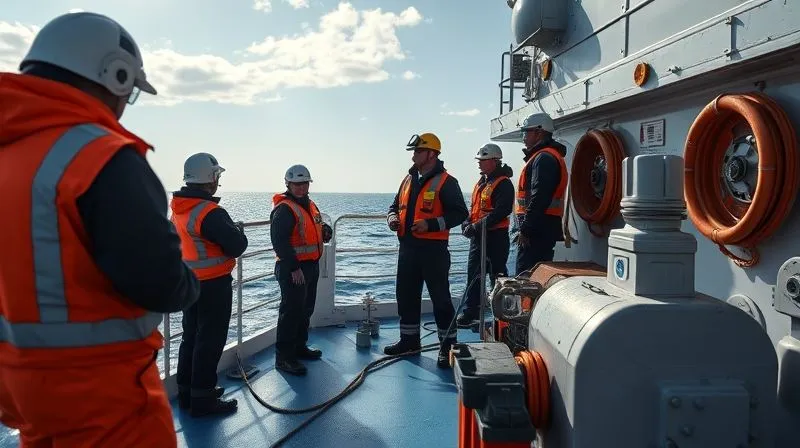
Investing in safety and preparedness is not an expense; it's an investment in the resilience and continuity of your maritime operations. Guidelines from organizations like the International Maritime Organization (IMO) offer invaluable resources for enhancing maritime safety and preventing incidents.
Frequently Asked Questions (FAQ)
Is General Average covered by standard marine insurance? Yes, typically. Both Hull & Machinery policies for shipowners and Cargo policies for cargo owners usually include coverage for General Average contributions. However, it is crucial to review your specific policy wording and limits, and to notify your insurer immediately upon a GA declaration.
What happens if a cargo owner refuses to pay their General Average contribution? If a cargo owner refuses to provide security or pay their assessed contribution, the shipowner has a lien on the cargo. This means the cargo will not be released until security is provided or payment is made. This can lead to significant delays, demurrage charges, and potential legal action to recover the contribution. For uninsured cargo, this can be a severe financial burden.
How long does a General Average adjustment process typically take? The General Average adjustment process can be notoriously lengthy, often taking anywhere from two to five years, and sometimes even longer for very complex cases. This is due to the extensive investigation, collection of documentation, and detailed calculations required by the Average Adjuster, as well as potential disputes among contributing parties.
Can General Average be declared even if no cargo is lost? Absolutely. General Average is declared when a sacrifice or expenditure is voluntarily and reasonably made for the common safety of the entire venture, even if no cargo is ultimately lost. For example, if a vessel takes refuge in a port to repair a damaged engine, the port charges, tug fees, and temporary repair costs could be General Average expenditures, even if all cargo remains intact.
What's the difference between salvage and General Average? While both involve saving property at sea, they are distinct. Salvage is the voluntary act of saving property from maritime peril, and the salvor is entitled to a reward. General Average, conversely, is the deliberate sacrifice or expenditure made by the master of the vessel or shipowner to save the entire venture from a common peril, and the costs are then shared proportionally by all beneficiaries. Salvage costs, if incurred for the common safety, can become an element of General Average.
Key Takeaways and Final Thoughts
A General Average declaration is a serious maritime event that demands immediate, informed, and strategic action. My years in this specialized field have taught me that preparedness and clear execution are the cornerstones of a successful resolution.
- Act Swiftly and Decisively: Immediate notification and the prompt appointment of an Average Adjuster are non-negotiable first steps.
- Understand Your Obligations: Be prepared to provide General Average Bonds or Guarantees to secure the release of cargo.
- Leverage Your Insurers: Your marine insurance is your financial shield; ensure you understand its scope and activate it without delay.
- Cooperate Fully with the Adjuster: Provide all documentation accurately and promptly to facilitate a timely adjustment.
- Proactive Prevention: Invest in robust safety protocols, maintenance, and crew training to minimize future risks.
Navigating a General Average event can be daunting, but with the right knowledge, expert guidance, and a proactive approach, you can protect your interests, minimize financial exposure, and ensure the continuity of your maritime operations. Stay vigilant, stay informed, and always prioritize safety and compliance in the complex world of maritime law.
Recommended Reading
- 5 Proven Strategies to Challenge Cruise Forum Clauses After Injury
- Age Workplace Discrimination: What is Considered & How to Fight It
- 5 Legal Steps to Convert 1099 Contractors to W2 Employees Safely
- Unmasking the Culprits: Who is Legally Responsible for Contaminated Land Cleanup?
- Unlocking Sports Media: Navigating Legal Challenges in Digital Rights Acquisition


Comments
Leave a comment below. Your email will not be published. Required fields marked with *