



How to Sue Credit Bureau for FCRA Violation After Multiple Disputes
For over two decades in consumer law, particularly in the intricate world of credit reporting, I've witnessed countless individuals grapple with the frustration of inaccurate credit reports. It's a battle that often feels insurmountable, a David vs. Goliath scenario where consumers, armed with legitimate grievances, face off against massive credit reporting agencies (CRAs).
The sheer power imbalance can be disheartening. You've done everything right: identified the error, filed your disputes, provided evidence, and waited patiently. Yet, despite your diligent efforts, the CRAs – Experian, Equifax, and TransUnion – have denied your claims, leaving the inaccurate information festering on your credit report, impacting your financial life, and eroding your peace of mind.
This article isn't about the initial dispute process; it's for those who've navigated that frustrating maze and emerged with no resolution. Here, I'll walk you through the essential, actionable steps you need to take when you're ready to escalate your fight: how to sue a credit bureau for FCRA violation after multiple disputes. We'll delve into the legal frameworks, the practicalities of litigation, and what you can realistically expect on your journey to financial justice.
Understanding the FCRA: Your Shield Against Inaccurate Reporting
Before considering a lawsuit, it's crucial to grasp the bedrock of consumer protection in credit reporting: the Fair Credit Reporting Act (FCRA). Enacted in 1970, the FCRA is a federal law designed to promote the accuracy, fairness, and privacy of information in the files of consumer reporting agencies. It grants you significant rights and imposes strict obligations on CRAs and furnishers (the companies that provide information to CRAs, like banks or lenders).
The FCRA mandates that CRAs conduct a “reasonable reinvestigation” of disputed information. If, after your multiple disputes, they've failed to remove inaccurate information or correct errors, and their reinvestigation was not reasonable, they may be in violation of the FCRA. This is your leverage.
Key Provisions and Your Rights Under FCRA
Your rights under the FCRA are extensive. They include the right to:
- Access your credit report: You are entitled to a free copy of your credit report from each CRA every 12 months.
- Dispute inaccurate information: If you find errors, you have the right to dispute them with both the CRA and the furnisher.
- Reasonable reinvestigation: Once you dispute, the CRA must investigate, usually within 30 days, and correct or delete inaccurate information.
- Notice of results: The CRA must inform you of the results of their reinvestigation.
- Damages for violations: If a CRA or furnisher violates the FCRA, you may be able to sue for actual damages, statutory damages, punitive damages, and attorney's fees.
Understanding these rights is your first line of defense and the basis for any legal action you might consider. It's not just about an error; it's about a violation of your federally protected rights.
| FCRA Right | CRA Obligation | Consumer Action |
|---|---|---|
| Access to Reports | Provide free reports annually | Request reports from AnnualCreditReport.com |
| Dispute Inaccuracies | Investigate disputed items | Submit written disputes with evidence |
| Reasonable Reinvestigation | Complete investigation within 30-45 days | Monitor reinvestigation outcome and timelines |
| Deletion of Inaccurate Data | Remove unverified or inaccurate information | Seek legal counsel if uncorrected after multiple disputes |
The Foundation: Documenting Your Multiple Disputes
When you're preparing to sue a credit bureau for FCRA violation after multiple disputes, meticulous documentation isn't just helpful; it's absolutely critical. I've seen many strong cases falter because the consumer couldn't adequately prove their prior efforts. Think of every dispute letter, every response, every piece of evidence as a brick in your legal foundation.
Building Your Case File: A Step-by-Step Approach
Here's how to ensure your documentation is ironclad:
- Keep copies of everything: This includes all dispute letters sent to CRAs and furnishers, certified mail receipts, return receipts, and any evidence you submitted (account statements, police reports, identity theft affidavits).
- Log all communications: Maintain a detailed log of every phone call, noting the date, time, person you spoke with, what was discussed, and any reference numbers.
- Save all responses: Keep every letter, email, or notification you receive from the CRAs or furnishers regarding your disputes and reinvestigations. Pay close attention to denial letters and explanations.
- Maintain credit report copies: Download and save copies of your credit reports from all three bureaus before your initial disputes, after each dispute, and after each reinvestigation. This visually demonstrates the persistence of the error.
- Document damages: Keep records of any financial harm you've suffered due to the inaccurate information – denied loans, higher interest rates, missed opportunities, emotional distress.
This comprehensive file will serve as undeniable proof of your persistent efforts and the CRAs' failure to uphold their FCRA obligations.

When the Bureau Fails: Identifying a Clear FCRA Violation
The core of your lawsuit will rest on proving that the credit bureau violated the FCRA. It's not enough that an item is inaccurate; you must show that the CRA acted negligently or willfully in failing to correct it after you initiated a proper dispute. This is where the 'multiple disputes' aspect becomes crucial.
Common Violations After Reinvestigation
In my experience, typical FCRA violations after multiple disputes often include:
- Failure to conduct a reasonable reinvestigation: The CRA may have simply rubber-stamped the furnisher's response without truly verifying the information.
- Ignoring evidence: You provided clear documentation (e.g., proof of payment, identity theft report), but the CRA disregarded it.
- Reinserting previously deleted information: An item was removed, only to reappear later without proper justification.
- Failure to delete unverified information: If the furnisher cannot verify the disputed information, the CRA must delete it. Failure to do so is a violation.
- Reporting inaccurate information after notification: Continuing to report incorrect data even after being made aware of its inaccuracy multiple times.
Expert Insight: "The FCRA doesn't demand perfect accuracy, but it does demand reasonable procedures. When a CRA repeatedly fails to correct clear inaccuracies after a consumer's diligent efforts, that 'unreasonableness' becomes the cornerstone of a strong FCRA claim."
Seeking Legal Counsel: Finding Your Champion
This is arguably the most critical step. Attempting to sue a credit bureau for FCRA violation after multiple disputes without legal representation is like trying to navigate a dense jungle without a map or guide. FCRA litigation is complex, requiring specialized knowledge of federal law, court procedures, and the tactics employed by large corporate legal teams. An experienced FCRA attorney will be your advocate, your strategist, and your voice.
What to Look for in an FCRA Attorney
When selecting legal representation, consider these factors:
- Specialization in FCRA: Ensure the attorney has significant experience specifically with FCRA cases, not just general consumer law.
- Contingency fee basis: Most reputable FCRA attorneys work on a contingency fee basis, meaning they only get paid if you win or settle, and their fees (and often costs) are paid by the defendant if you prevail. This makes legal action accessible.
- Track record: Ask about their success rate and experience taking cases to trial, not just settling.
- Communication: Choose an attorney who communicates clearly, sets realistic expectations, and keeps you informed.
- Reputation: Check reviews and professional affiliations. Resources like the National Association of Consumer Advocates (NACA) can help you find qualified attorneys.
Don't hesitate to interview several attorneys. This is a significant decision that will impact the outcome of your case. For more information on finding legal assistance, you can consult resources from organizations like the National Consumer Law Center.
The Pre-Litigation Dance: Demand Letters and Negotiation
Once you have an attorney, they will typically initiate the pre-litigation phase. This often begins with a formal demand letter sent to the credit bureau. This isn't just a repeat of your dispute; it's a legal document outlining the FCRA violations, the damages you've incurred, and a demand for specific relief (e.g., deletion of inaccurate items, monetary compensation).
Steps in the Pre-Litigation Phase:
- Attorney Review of Documentation: Your attorney will meticulously review your entire case file, ensuring every piece of evidence supports your claim.
- Crafting the Demand Letter: This letter will clearly articulate the FCRA violations, citing specific sections of the law, and detail the actual and potential damages. It serves as a final warning before formal litigation.
- Negotiation Attempts: The demand letter often opens a channel for negotiation. The credit bureau might offer a settlement to avoid a lawsuit, which could include removing the disputed item and offering a monetary sum.
- Assessing Offers: Your attorney will advise you on the merits of any settlement offers, weighing the benefits of a quick resolution against the potential gains (and risks) of litigation.
It's important to understand that while a settlement can be a favorable outcome, it's not guaranteed. The CRAs are large entities with vast legal resources, and they often push back. However, a well-crafted demand letter from an experienced attorney often carries more weight than individual consumer disputes.

Filing Your Lawsuit: The Path to the Courthouse
If pre-litigation efforts fail to yield a satisfactory resolution, your attorney will proceed with filing a lawsuit. This involves drafting a formal complaint, outlining the facts of your case, the FCRA violations, and the relief you seek, and then filing it with the appropriate court.
Understanding Jurisdiction and Venue
FCRA lawsuits are typically filed in federal district court, as the FCRA is a federal law. However, in some instances, state courts may also have jurisdiction. Your attorney will determine the correct court (jurisdiction) and the specific geographic location (venue) where the lawsuit should be filed.
Case Study: How Sarah Won Her FCRA Battle
Sarah, a marketing professional, discovered a collection account on her credit report that wasn't hers. She disputed it with all three bureaus multiple times over six months, providing bank statements and an affidavit of fraud. Each time, the bureaus claimed the furnisher verified the debt. Her credit score plummeted, preventing her from refinancing her mortgage at a lower rate, costing her thousands. Frustrated, Sarah contacted an FCRA attorney. Her attorney sent a demand letter, detailing the CRAs' failure to conduct a reasonable reinvestigation despite clear evidence. When the bureaus offered a minimal settlement, Sarah's attorney advised against it, emphasizing the clear FCRA violations and documented damages. They filed a lawsuit. During discovery, the attorney uncovered that the bureaus had simply relied on an automated system to 'verify' the debt without actually reviewing Sarah's evidence. Facing this evidence, two bureaus settled, deleting the item and paying Sarah for her damages and attorney fees. The third bureau, unwilling to settle, eventually conceded after further legal pressure, resulting in a similar outcome. This case demonstrates the power of persistent, legally-backed action.
What Damages Can You Seek?
When you sue a credit bureau for FCRA violation after multiple disputes, the goal isn't just to correct your credit report; it's also to recover damages for the harm you've suffered. The FCRA provides for several types of damages:
- Actual Damages: These are quantifiable financial losses directly caused by the inaccurate reporting. Examples include denial of credit, higher interest rates, lost job opportunities, or out-of-pocket expenses incurred while trying to correct the error.
- Statutory Damages: If the violation is proven to be willful, the FCRA allows for statutory damages between $100 and $1,000 per violation, even if you can't prove specific actual damages.
- Punitive Damages: In cases where the CRA's conduct is found to be particularly egregious, reckless, or malicious (willful disregard for your rights), punitive damages may be awarded to punish the defendant and deter similar behavior.
- Attorney's Fees and Costs: A significant provision of the FCRA is that if you win your case, the credit bureau is typically responsible for paying your reasonable attorney's fees and litigation costs. This is why many FCRA attorneys can work on a contingency basis.
- Emotional Distress: While harder to quantify, many courts recognize that severe credit report inaccuracies can cause significant emotional distress, anxiety, and humiliation, for which compensation may be awarded.
Your attorney will help you identify and document all potential damages to maximize your claim. For official guidance on consumer rights and remedies, consult the Consumer Financial Protection Bureau (CFPB) website.
Navigating Discovery and Settlement
Once a lawsuit is filed, the next major phase is 'discovery.' This is where both sides exchange information and evidence relevant to the case. It's a critical period where your attorney gathers more facts to strengthen your position and assesses the credit bureau's defense.
The Discovery Process
- Interrogatories: Written questions that each party must answer under oath.
- Requests for Production of Documents: Demands for specific documents, such as internal CRA policies, reinvestigation files, and communication logs.
- Depositions: Out-of-court, sworn testimony taken from witnesses (including you, CRA employees, or furnishers) before a court reporter.
During discovery, settlement discussions often intensify. As more information comes to light, both parties gain a clearer picture of the strengths and weaknesses of their cases. Many FCRA lawsuits settle during or after discovery, avoiding the time and expense of a trial.
| Discovery Phase | Purpose | Key Action |
|---|---|---|
| Interrogatories | Obtain factual answers under oath | Your attorney drafts and reviews responses |
| Requests for Production | Access relevant documents | CRA must provide internal records, reinvestigation files |
| Depositions | Live, sworn testimony from witnesses | Prepare with your attorney, testify truthfully |
| Motions | Ask court to make rulings | Your attorney may file motions to compel discovery or for summary judgment |
Preparing for Trial (If Settlement Fails)
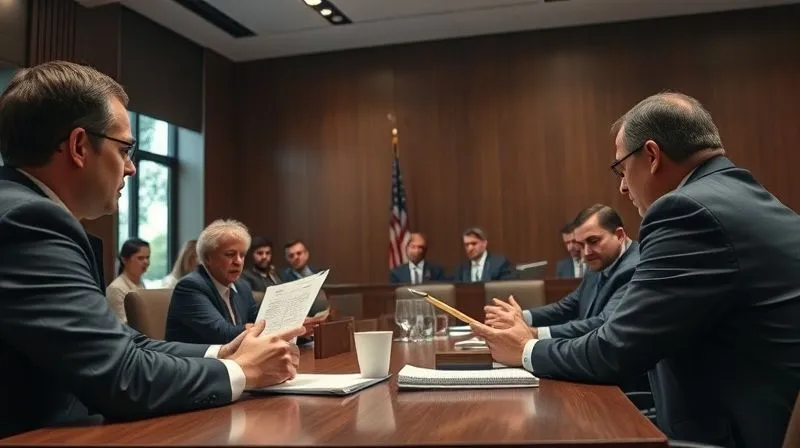
While most FCRA cases settle before trial, it's essential to be prepared for the possibility. If negotiations fail, your case will proceed to trial, where a judge or jury will hear the evidence and determine liability and damages. This is where your attorney's trial experience becomes paramount.
Key Elements of a Successful FCRA Trial
- Clear evidence of inaccuracy: You must unequivocally prove the information on your credit report was incorrect.
- Proof of dispute: Your meticulous documentation of multiple disputes will be presented.
- Failure of reasonable reinvestigation: Your attorney will demonstrate how the CRA's reinvestigation procedures were inadequate or unreasonable.
- Causation of damages: You must show a direct link between the inaccurate reporting and the actual damages you suffered.
- Willfulness (for statutory/punitive damages): If seeking higher damages, your attorney will need to prove the CRA acted with willful disregard for the FCRA.
Going to trial can be a long and emotionally taxing process, but with a dedicated and skilled FCRA attorney, it's a path that can lead to significant justice and compensation.
Frequently Asked Questions (FAQ)
Question: How long does an FCRA lawsuit typically take? Answer: The timeline for an FCRA lawsuit can vary significantly. Some cases settle in a few months, while others can take a year or more, especially if they go to trial. Factors like the complexity of the case, the court's calendar, and the willingness of both parties to negotiate all play a role. Your attorney can provide a more specific estimate based on your particular circumstances.
Question: Can I sue a credit furnisher (e.g., a bank or collection agency) directly under the FCRA? Answer: Yes, the FCRA also imposes obligations on furnishers. If a furnisher provides inaccurate information to a CRA after you've directly disputed it with them, or if they fail to properly investigate a dispute received from a CRA, they can be held liable. Often, lawsuits name both the CRA and the furnisher as defendants.
Question: What if I don't have actual monetary damages? Can I still sue? Answer: Yes, if the FCRA violation was willful, you may still be entitled to statutory damages (between $100 and $1,000 per violation), even without proving specific actual damages. Additionally, you may still be able to recover for emotional distress and, if you prevail, your attorney's fees.
Question: Will suing a credit bureau hurt my credit score further? Answer: No, filing a lawsuit for an FCRA violation will not directly harm your credit score. The lawsuit itself is not a factor in credit scoring models. In fact, if you win, the inaccurate items will be removed, which should ultimately improve your score.
Question: What's the statute of limitations for an FCRA lawsuit? Answer: Generally, an FCRA lawsuit must be filed within two years from the date you discover the violation, or within five years from the date the violation occurred, whichever is earlier. It's crucial to consult with an attorney as soon as possible, as these deadlines are strict and can impact your ability to pursue a claim.
Key Takeaways and Final Thoughts
- Meticulous documentation of all disputes and communications is the bedrock of your FCRA lawsuit.
- Identifying a clear FCRA violation, particularly the failure of a 'reasonable reinvestigation' after multiple disputes, is essential.
- Hiring an experienced FCRA attorney, ideally on a contingency basis, is crucial for navigating the complex legal landscape.
- Be prepared for a multi-stage process, including pre-litigation negotiations, discovery, and potentially trial.
- You can seek various damages, including actual losses, statutory damages, punitive damages, and attorney's fees.
The journey to sue a credit bureau for FCRA violation after multiple disputes is not for the faint of heart, but it is a necessary and often rewarding path for those whose financial lives have been unjustly impacted. Remember, you have rights, and the FCRA is a powerful tool designed to protect them. Don't let the size of the credit bureaus intimidate you. With the right legal counsel and a well-prepared case, you can hold them accountable and reclaim your financial integrity. For further legal support, consider reaching out to your local bar association or legal aid societies for referrals.
Recommended Reading
- Unlock Financial Freedom: How to Structure Personal Debt to Avoid Bankruptcy
- Unpaid Alimony: What Happens If Spousal Support Is Not Paid?
- 7 Ways to Challenge Novel Forensic Evidence: A Courtroom Guide
- 8 Legal Steps: How Public Agencies Revoke a License Legally
- Unpacking 5 Legal Hurdles: Prosecuting Cyber Warfare at the ICJ



Comments
Leave a comment below. Your email will not be published. Required fields marked with *